
What are the processing methods for large-scale CNC Machining?
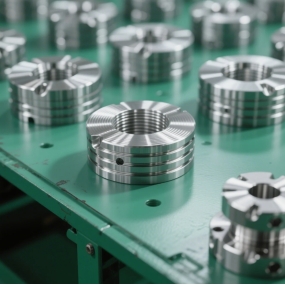
Large-scale CNC machining plays an important role in modern manufacturing. Many industries need large and complex components that require high strength, accurate dimensions, and reliable performance. CNC machining uses computer-controlled equipment to remove material from large workpieces with high precision, helping manufacturers produce parts for aerospace, power generation, marine, oil and gas, and heavy equipment industries.
Many customers are confused when choosing a machining method because large-scale components often have different shapes, materials, and technical requirements. Understanding the main processing methods, their applications, and selection factors can help companies make better decisions. This article explains the common methods, including turning in large-scale CNC machining, milling in large-scale CNC machining, and drilling in large-scale CNC machining, with practical examples.
1. Introduction to Large-scale CNC Machining
The Significance of Large-scale CNC Machining
Large-scale CNC machining is the process of manufacturing large-sized parts using advanced CNC machines. Compared with traditional machining, CNC technology provides better control over accuracy, repeatability, and production efficiency.
Large CNC machines can process heavy and oversized components, such as turbine shafts, aircraft structures, industrial machine beds, and large hydraulic parts. These components often require strict dimensional accuracy because even a small error can affect the performance and safety of the final equipment.
For example, a large generator rotor must have precise dimensions and excellent surface quality to rotate smoothly. CNC machining methods make it possible to achieve these requirements through controlled cutting operations.
2. Turning in Large-scale CNC Machining
Operation and Application of Turning
Turning in large-scale CNC machining is a process where the workpiece rotates while a cutting tool removes material. This method is mainly used to create cylindrical shapes, including shafts, rollers, and other round components.
A common example is the production of large-diameter shafts used in power generation turbines. During this process, a CNC lathe controls the shaft diameter, length, and surface finish to ensure the part meets design requirements.
Turning is especially important for industries that use rotating components, such as engines, transmission systems, and energy equipment. A correctly machined cylindrical part helps reduce vibration and improves equipment service life.
Tooling and Parameters for Turning
Large-scale turning requires strong and durable cutting tools because the machining forces are much higher than those in small-part machining. Tool materials, cutting speed, feed rate, and cutting depth must be carefully selected.
- Tool material: Carbide tools are often used because they provide good wear resistance during heavy machining.
- Spindle speed: A suitable speed prevents overheating and extends tool life.
- Feed rate: Proper adjustment improves machining efficiency while maintaining surface quality.
- Depth of cut: A suitable cutting depth balances productivity and tool performance.
For example, when machining a large steel shaft, a lower spindle speed may be selected because steel creates higher cutting resistance and heat. Proper parameter control improves both accuracy and production efficiency.
3. Milling in Large-scale CNC Machining
Operations and Capabilities of Milling
Milling in large-scale CNC machining uses a rotating cutting tool to remove material from a fixed workpiece. Unlike turning, milling can create many different shapes, including flat surfaces, grooves, pockets, and complex three-dimensional structures.
For example, large machine tool beds require precise flat surfaces, which are commonly produced through milling. In the aerospace industry, large wing components with complex aerodynamic designs are also manufactured using advanced milling processes.
The main advantage of milling is flexibility. It can handle components with multiple features and complex geometries, making it one of the most widely used large-scale CNC machining methods.
Multi-axis Milling
Large-scale CNC machining often uses multi-axis milling, especially 5-axis milling, to produce highly complex parts. Multi-axis machines allow the cutting tool to move in more directions, improving access to difficult areas.
For example, when producing large impellers, 5-axis milling can accurately machine curved blades without requiring multiple setups. This reduces production time and improves dimensional accuracy.
Multi-axis milling is widely used in aerospace, energy, and precision equipment industries because it can create complicated shapes that are difficult to produce with traditional methods.
4. Drilling in Large-scale CNC Machining
Hole-making Applications
Drilling in large-scale CNC machining is used to create accurate holes in large workpieces. These holes may be needed for assembly, fastening, fluid channels, or other functional purposes.
For example, large steel structures often require many holes for bolts and connection points. CNC drilling machines can precisely control hole diameter, depth, and position, ensuring correct assembly between different components.
Accurate drilling is essential because incorrect hole locations can create problems during installation and reduce the strength of the final structure.
Deep-hole Drilling
Some large components require holes with a high depth-to-diameter ratio. In these cases, deep-hole drilling techniques are used.
For example, hydraulic cylinders often require long internal holes with smooth surfaces. Special deep-hole drills and cooling systems help remove chips, reduce heat, and maintain hole accuracy during machining.
Deep-hole drilling is important for industries that require reliable internal channels, including hydraulic equipment, energy systems, and heavy machinery.
5. Application of Large-scale CNC Machining Methods
Aerospace Industry
The application of large-scale CNC machining methods is very important in aerospace manufacturing. Aircraft components require high strength, low weight, and extremely accurate dimensions.
Large CNC machining methods are used to manufacture parts such as wing spars, fuselage sections, and engine casings. For example, a large wing spar requires accurate milling and drilling to ensure proper installation and structural safety.
Because aircraft operate under extreme conditions, manufacturers must maintain strict quality standards throughout the machining process.
Power Generation Industry
Large-scale CNC machining is also widely used in power generation equipment. Components such as turbine blades, generator rotors, and heat exchanger parts require excellent precision.
For example, turning is used to manufacture large generator rotors that must rotate smoothly at high speeds. Milling and drilling processes are also used to create complex features and assembly holes.
High-quality CNC machining helps improve equipment efficiency, reliability, and operating life.
6. Choosing the Right Method for Large-scale CNC Machining
Consider Component Requirements
Choosing the right method for large-scale CNC machining depends first on the design and function of the component.
- A large cylindrical shaft usually requires turning as the main machining method.
- A complex part with flat surfaces, curves, or multiple features may require milling.
- A component that needs accurate connection holes will require drilling.
- Some parts need a combination of turning, milling, and drilling to complete all features.
For example, an aerospace structural component may require milling for its shape and drilling for assembly holes. Selecting the correct combination of processes improves efficiency and reduces manufacturing risks.
Consider Material Properties
The material of the workpiece also affects the machining method. Different materials have different hardness, cutting resistance, and heat characteristics.
For example, aluminum components are softer than steel components. Aluminum machining can usually use higher cutting speeds, while steel machining may require stronger tools and slower cutting conditions.
Understanding material properties helps manufacturers select suitable tools, optimize machining parameters, improve surface quality, and extend tool life.
7. EMAR's Proficiency in Large-scale CNC Machining Methods
Comprehensive Machining Capabilities
EMAR has professional experience in large-scale CNC machining and understands the requirements of different machining methods. Whether the project requires turning, milling, drilling, or combined machining operations, EMAR can provide suitable solutions based on part design, material, and production needs.
For example, when producing large components for industries such as oil and gas, EMAR can apply advanced CNC equipment and skilled machining processes to achieve accurate dimensions and reliable quality.
Quality-assured Machining Services
Quality control is a key part of large-scale CNC machining. EMAR focuses on quality management throughout the entire manufacturing process, including material inspection, tool selection, machining control, and final measurement.
For large components used in industries such as marine equipment, every detail matters. Checking dimensions, surface finish, and material performance helps ensure that finished parts meet customer expectations.
With strong machining knowledge and strict quality control practices, EMAR is able to support customers with high-quality large-scale CNC machining services for different industrial applications.
Conclusion
So, what are the processing methods for large-scale CNC machining? The main methods include turning, milling, and drilling, with each method serving different manufacturing needs. Turning is ideal for cylindrical parts, milling is suitable for complex shapes, and drilling provides accurate holes for assembly and function.
The best machining solution depends on component design, material, accuracy requirements, and production goals. By understanding these factors and working with an experienced machining partner like EMAR, companies can achieve reliable, precise, and efficient large-scale CNC machining results.