Wholesale Price of CNC Precision Machining of Aluminum Alloy: A Complete Guide for Buyers
When purchasing CNC precision machined aluminum alloy parts in bulk, many customers want to know the wholesale price of CNC precision machining of aluminum alloy. However, there is no fixed price because machining costs depend on many factors, including material selection, part design, order quantity, tolerance requirements, surface finishing, and supplier capabilities.
Choosing the right machining partner is important because a low price does not always mean the best value. A reliable supplier should provide stable quality, reasonable lead times, and professional technical support. This guide explains the main cost factors and how buyers can get a better wholesale price while maintaining product quality.
What Factors Influence the Wholesale Price of CNC Precision Machined Aluminum Alloy?
The factors influencing the wholesale price of CNC precision machined aluminum alloy are closely related to production requirements. Understanding these factors helps buyers prepare accurate budgets and avoid unexpected costs.
1. Aluminum Alloy Material Grade
The type of aluminum alloy has a direct impact on machining costs. Common materials include 6061 aluminum alloy and 7075 aluminum alloy.
- 6061 aluminum alloy: This material has good machinability, corrosion resistance, and cost performance. It is widely used for general industrial parts.
- 7075 aluminum alloy: This alloy offers higher strength and is suitable for aerospace and high-performance applications, but the material cost and machining difficulty are higher.
When choosing materials, buyers should balance performance requirements and budget. Selecting an appropriate alloy instead of simply choosing the most expensive option can reduce overall production costs.
2. Part Design Complexity
Complex part structures usually require more machining time and advanced programming skills. Features such as deep holes, thin walls, internal threads, and complex curved surfaces increase production difficulty.
Simple aluminum alloy parts can often be produced faster, while complicated designs may require multiple machining steps, additional inspection, and special tooling, which increases the final wholesale price.
3. Order Quantity and Production Volume
Batch size is one of the most important factors affecting the wholesale price range of CNC precision machined aluminum alloy parts.
- Small orders usually have higher unit costs because setup and programming expenses are distributed across fewer parts.
- Large-volume orders can reduce the average cost because machines, tools, and labor are used more efficiently.
- Long-term cooperation with manufacturers may provide more stable pricing and production support.
For example, a prototype order may cost significantly more per piece than a production order of thousands of parts.
4. Tolerance and Precision Requirements
Higher accuracy requirements increase machining costs. Parts requiring extremely tight tolerances need more precise equipment, skilled operators, and stricter inspection processes.
If a part tolerance changes from general accuracy requirements to ultra-precision requirements, machining time may increase because additional finishing operations and quality checks are needed.
5. Surface Treatment Requirements
Surface finishing can also influence the total machining price. Common treatments for aluminum alloy parts include:
- Anodizing for better corrosion resistance and appearance.
- Powder coating for additional protection and color options.
- Electroplating for special performance requirements.
- Polishing for improved surface smoothness.
Buyers should clearly define surface treatment requirements before requesting a quotation to receive a more accurate price.
What Is the Typical Wholesale Price Range of CNC Precision Machined Aluminum Alloy Parts?
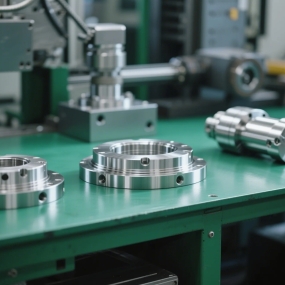
The wholesale price range of CNC precision machined aluminum alloy parts can vary widely depending on specifications. In general, basic aluminum CNC parts may cost less, while high-precision and complex components require higher investment.
Typical pricing factors include:
- Material cost and availability.
- Machining hours required for each part.
- Number of production steps.
- Inspection and quality control requirements.
- Packaging and delivery needs.
Because every project is different, the most accurate way to get pricing is to provide 3D drawings, material information, quantity, tolerance requirements, and finishing requirements to a professional CNC Machining supplier.
How Can Buyers Get a More Favorable Wholesale Price?
Many companies want to know how to get a favorable wholesale price for CNC precision machined aluminum alloy without reducing product quality. The following methods can help control costs.
- Prepare complete technical information: Providing detailed drawings and specifications helps manufacturers calculate costs accurately and avoid unnecessary changes.
- Optimize part design: A design that reduces unnecessary machining steps can lower production costs.
- Choose suitable materials: Select aluminum alloys based on actual application needs instead of choosing expensive materials without reason.
- Increase order quantity when possible: Larger batches usually provide better unit pricing.
- Work with experienced manufacturers: Professional suppliers can recommend cost-saving solutions based on production experience.
How to Compare Wholesale Prices from Different CNC Machining Suppliers?
The comparison of wholesale prices for CNC precision machining of aluminum alloy should not focus only on the quotation number. A cheaper supplier may have problems with delivery time, accuracy, or product consistency.
When comparing suppliers, consider:
- Machining capability: Does the supplier have suitable CNC equipment for your parts?
- Quality control: Can the manufacturer provide inspection reports and stable product quality?
- Production experience: Has the supplier worked on similar aluminum alloy projects?
- Communication efficiency: Can engineers quickly understand requirements and provide solutions?
- After-sales support: Does the company help solve problems after delivery?
A reliable supplier provides more than a low price. They provide a complete manufacturing solution that reduces risks during production.
Cost-Effective Options in Wholesale CNC Precision Machining of Aluminum Alloy
Finding cost-effective options in wholesale CNC precision machining of aluminum alloy requires balancing price, quality, and production efficiency.
Some practical approaches include:
- Using standard aluminum materials when special performance is not required.
- Improving part design to reduce unnecessary machining operations.
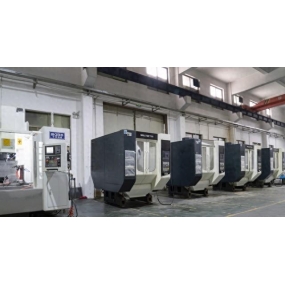
- Choosing a manufacturer with advanced equipment to improve production efficiency.
- Building long-term cooperation with a trusted machining partner.
EMAR provides professional CNC machining services for aluminum alloy components. With advanced CNC equipment, experienced technicians, and strict quality management, EMAR can help customers develop suitable machining solutions for different industries. From prototypes to batch production, professional support can help control costs while maintaining reliable product quality.
How to Choose the Right CNC Precision Machining Supplier?
The right supplier should have both technical ability and a strong commitment to quality. Before placing an order, buyers should check the manufacturer's machining experience, equipment condition, quality inspection process, and customer service capability.
A trusted CNC machining partner can help customers avoid common problems such as unstable dimensions, delayed delivery, and unexpected cost increases.
Understanding the wholesale price of CNC precision machining of aluminum alloy is not only about finding the lowest quotation. It is about selecting a supplier that can provide consistent quality, reasonable costs, and long-term manufacturing support.