Spanish
 Arabic
 French
 Portuguese
 Belarusian
 Japanese
 Russian
 Malay
Malay Icelandic
 Bulgarian
 Azerbaijani
 Estonian
 Irish
Irish Polish
 Persian
 Boolean
 Danish
 German
 Filipino
 Finnish
 Korean
 Dutch
Dutch Galician
 Catalan
 Czech
Czech Croatian
 Latin
Latin Latvian
 Romanian
 Maltese
 Macedonian
 Norwegian
 Swedish
 Serbian
 Slovak
 Slovenian
 Swahili
 Thai
Thai Turkish
 Welsh
Welsh Urdu
Urdu Ukrainian
 Greek
Greek Hungarian
 Italian
 Yiddish
 Indonesian
 Vietnamese
 Haitian Creole
 Spanish Basque

HTML
CNC Machining Stainless Steel Parts: A Complete Guide from Design to Quality Control
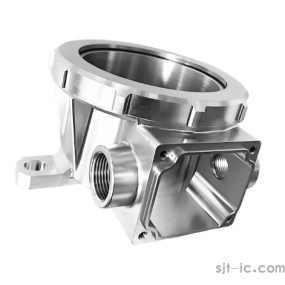
CNC Machining Stainless Steel Parts is widely used in industries that need strong, corrosion-resistant, and highly accurate components. However, machining stainless steel is not always easy. Stainless steel is tough, has high strength, and can create challenges such as tool wear, poor surface finish, and dimensional errors if the machining process is not properly controlled.
For manufacturers and engineers, choosing the right machining method, material grade, cutting parameters, and quality control process is essential. Professional CNC machining suppliers, such as EMAR, help customers produce stainless steel parts with reliable accuracy, consistent quality, and solutions designed for different industrial applications.
Why CNC Machining Is a Good Choice for Stainless Steel Parts
Stainless steel is used in many demanding applications because it offers excellent strength, corrosion resistance, and durability. However, these same properties make it more difficult to machine compared with softer metals. CNC machining provides the control and precision needed to process stainless steel successfully.
One major advantage of CNC machining is its ability to achieve high precision even when working with tough stainless steel materials. Advanced CNC machines can maintain tight tolerances and produce parts that fit correctly in complex assemblies.
CNC machining is also suitable for producing complex shapes. Stainless steel parts often require features such as deep holes, curved surfaces, thin walls, grooves, threads, and complicated geometries. CNC milling and turning equipment can create these designs efficiently without requiring expensive special tooling.
- High accuracy: CNC machines can maintain stable dimensions for critical stainless steel components.
- Complex geometry capability: Multi-axis machining allows the production of detailed and customized designs.
- Small and medium batch efficiency: CNC machining is economical for prototypes and production runs.
- Consistent quality: Automated processes reduce human errors and improve repeatability.
Design Considerations for CNC-Machined Stainless Steel Parts
The design stage has a major influence on machining cost, performance, and final quality. Good design considerations for CNC-machined stainless steel parts help avoid manufacturing problems before production begins.
Engineers should first understand the part's working environment and purpose. Different industries require different stainless steel properties.
- Architectural applications: Parts may require excellent corrosion resistance, attractive appearance, and a high-quality surface finish.
- Automotive applications: Components often need high strength, wear resistance, and reliable performance under vibration and temperature changes.
- Medical applications: Parts require strict cleanliness, biocompatibility, corrosion resistance, and compatibility with sterilization processes.
During design, important factors include wall thickness, hole size, tolerance requirements, machining accessibility, and surface finish requirements. Designs that allow proper tool access and avoid unnecessary complexity can reduce machining time and cost.
Stainless Steel Grade Selection for CNC Machining
Choosing the correct material is one of the most important steps in stainless steel manufacturing. Proper stainless steel grade selection for CNC machining ensures the final part has the required strength, corrosion resistance, and machinability.
304 Stainless Steel
304 stainless steel is one of the most commonly used grades. It provides good corrosion resistance, good formability, and balanced mechanical properties.
- Suitable for general industrial parts
- Commonly used in architectural components, food equipment, and machine parts
- Provides a good balance between cost and performance
316 Stainless Steel
316 stainless steel offers better corrosion resistance than 304 because it contains molybdenum. It performs well in harsh environments involving chemicals or salt water.
- Ideal for marine equipment and chemical processing parts
- Frequently used in medical and pharmaceutical applications
- Provides improved resistance to corrosion and pitting
410 Stainless Steel
410 stainless steel is a harder martensitic stainless steel grade with good strength and wear resistance.
- Suitable for shafts, valves, fasteners, and mechanical components
- Provides higher hardness after heat treatment
- Useful where strength and wear resistance are more important than maximum corrosion resistance
Main CNC Machining Operations for Stainless Steel Parts
Stainless steel parts can require several machining processes depending on their design. Selecting the correct operation and cutting tools is important for maintaining accuracy and extending tool life.
Turning Operations for Stainless Steel Parts
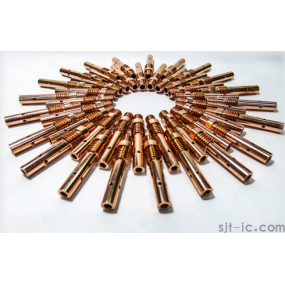
Turning operations for stainless steel parts are commonly used for cylindrical components such as shafts, bushings, and threaded parts. During turning, the workpiece rotates while a cutting tool removes material.
Carbide-tipped cutting tools are often used because stainless steel creates high cutting forces and generates heat during machining. Proper tool selection helps achieve better surface finish and longer tool life.
Milling
Milling is used to create flat surfaces, pockets, slots, and complex shapes. CNC milling machines can produce detailed stainless steel components with high repeatability.
Drilling
Drilling creates holes for assembly and functional requirements. Stainless steel drilling requires careful control because excessive pressure can cause work hardening and shorten tool life.
Grinding
Grinding is used when extremely accurate dimensions or smooth surface finishes are required. It is often applied after rough machining to achieve final precision.
Recommended CNC Cutting Parameters for Stainless Steel
Cutting parameters must be adjusted according to stainless steel grade, part size, machine capability, and tool type. Incorrect settings can increase heat, cause tool damage, and reduce accuracy.
- Spindle speed: Generally ranges from 500 to 2000 rpm depending on the operation and part size.
- Feed rate: Commonly ranges from 0.05 to 0.3 mm/rev.
- Depth of cut: Usually controlled between 0.1 and 2 mm depending on roughing or finishing operations.
- Cutting tools: Carbide-tipped tools are recommended for better wear resistance and stable performance.
Coolant selection and chip control are also important. Proper cooling reduces heat buildup and helps maintain stable machining conditions.
Common Challenges in Stainless Steel CNC Machining
Although CNC machining provides excellent results, stainless steel has several machining challenges that must be managed carefully.
Preventing Work Hardening
Stainless steel has a strong tendency to work-harden. When the cutting tool does not remove material effectively, the surface can become harder, making further machining more difficult.
To reduce work hardening:
- Use sharp, high-quality cutting tools.
- Maintain proper feed rates.
- Avoid repeated cutting over the same area.
- Use stable machining setups to reduce vibration.
Handling Tool Wear in Stainless Steel CNC Machining
Handling tool wear in stainless steel CNC machining requires careful monitoring because stainless steel generates high temperatures and cutting forces.
- Select wear-resistant carbide tools.
- Use suitable cutting speeds and feeds.
- replace worn tools before they affect part accuracy.
- Monitor cutting conditions during production.
Experienced CNC machining providers use optimized processes to maintain dimensional accuracy and achieve consistent surface quality throughout production.
Post-Machining Processes for Stainless Steel Parts
After CNC machining, additional treatments may be required to improve performance, appearance, or corrosion resistance.
- Heat treatment: Helps relieve internal stress and improve mechanical properties for certain stainless steel grades.
- Passivation: Enhances corrosion resistance by removing free iron and improving the protective oxide layer.
- Polishing: Creates a smooth and attractive surface for decorative or functional applications.
The correct finishing process depends on the part's operating environment and customer requirements.
Quality Control in Stainless Steel Part CNC Manufacturing
Reliable quality control is essential for stainless steel components used in demanding industries. Quality control in stainless steel part CNC manufacturing ensures that every part meets design specifications and performance requirements.
A complete inspection process may include:
- In-process inspections: Checking dimensions during machining to detect problems early.
- Dimensional checks: Using precision measuring equipment such as calipers, micrometers, and coordinate measuring machines (CMM).
- Material property verification: Confirming the stainless steel grade, hardness, and mechanical properties.
- Surface inspection: Measuring surface roughness and checking for machining defects.
Professional manufacturers like EMAR combine advanced CNC equipment, experienced engineers, and strict inspection procedures to provide stainless steel parts that meet customer expectations from prototype development to mass production.
Choosing the Right CNC Machining Partner for Stainless Steel Parts
Successful stainless steel machining depends on more than just using CNC equipment. A reliable supplier should understand material behavior, machining challenges, finishing requirements, and quality standards.
When selecting a CNC machining partner, consider:
- Experience with different stainless steel grades
- Ability to handle complex part designs
- Advanced machining equipment and inspection tools
- Strong process control and engineering support
- Capability for prototypes and production quantities
With professional machining knowledge and optimized manufacturing processes, CNC machining can transform challenging stainless steel designs into accurate, durable, and high-performance parts for industries worldwide.