Spanish
 Arabic
 French
 Portuguese
 Belarusian
 Japanese
 Russian
 Malay
Malay Icelandic
 Bulgarian
 Azerbaijani
 Estonian
 Irish
Irish Polish
 Persian
 Boolean
 Danish
 German
 Filipino
 Finnish
 Korean
 Dutch
Dutch Galician
 Catalan
 Czech
Czech Croatian
 Latin
Latin Latvian
 Romanian
 Maltese
 Macedonian
 Norwegian
 Swedish
 Serbian
 Slovak
 Slovenian
 Swahili
 Thai
Thai Turkish
 Welsh
Welsh Urdu
Urdu Ukrainian
 Greek
Greek Hungarian
 Italian
 Yiddish
 Indonesian
 Vietnamese
 Haitian Creole
 Spanish Basque

HTML
CNC Machining Stainless Steel Medical Parts: A Guide to Precision, Safety, and Reliable Manufacturing
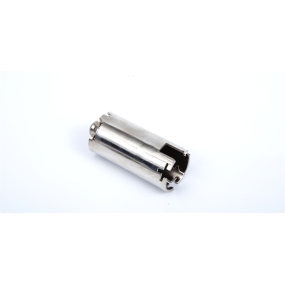
CNC Machining Stainless Steel Medical Parts is widely used for producing surgical tools, implants, medical device components, and laboratory equipment parts. Medical manufacturers need parts that are accurate, safe for human use, resistant to corrosion, and consistent in every production batch. Even a small dimensional error can affect the performance of a medical device, so choosing the right machining process and manufacturing partner is critical.
CNC machining is an ideal solution because it can produce complex stainless steel medical parts with very tight tolerances, excellent repeatability, and stable quality. With advanced CNC equipment, professional machining knowledge, and strict quality systems, companies such as EMAR support medical manufacturers in developing reliable stainless steel components for demanding applications.
Why CNC Machining Is Ideal for Stainless Steel Medical Parts
Medical parts often require extremely precise dimensions. Components such as surgical instruments, connectors, housings, and implant tools must fit correctly with other parts and perform safely during medical procedures. CNC machining can achieve high accuracy and repeat the same design thousands of times with minimal variation.
Another important advantage is the ability to create complex shapes. Stainless steel medical parts may include small holes, fine grooves, thin walls, curved surfaces, and detailed structures that are difficult to produce with traditional manufacturing methods.
- High precision: CNC machines can maintain tight tolerances required for medical applications.
- Excellent repeatability: The same digital program can produce consistent parts for large production runs.
- Complex geometry capability: Multi-axis machining can create detailed medical components.
- Material flexibility: CNC machining works well with medical-grade stainless steels.
- Stable quality: Automated machining reduces human errors during production.
Design Considerations for CNC-Machined Stainless Steel Medical Parts
The design stage is one of the most important steps in medical part manufacturing. Engineers must consider the part's function, contact with the human body, cleaning requirements, sterilization process, and expected service life before machining begins.
Design considerations for CNC-machined stainless steel medical parts include choosing suitable materials, controlling dimensions, reducing sharp edges, improving cleanability, and ensuring the final part can safely operate in a medical environment.
Understanding the Medical Application
Before machining, manufacturers need to understand how the part will be used. A surgical instrument may require high hardness and repeated sterilization resistance, while an implant component may require excellent corrosion resistance and biocompatibility.
Important design questions include:
- Will the part contact human tissue, blood, or body fluids?
- How much mechanical force will the part experience?
- What sterilization method will be used?
- Does the surface need special smoothness to prevent contamination?
Biocompatible Stainless Steel Selection for Medical Parts
Biocompatible stainless steel selection for medical parts directly affects safety, durability, and performance. Different stainless steel grades provide different advantages depending on the application.
- 316L stainless steel: This is one of the most common medical stainless steels. It offers excellent corrosion resistance, good biocompatibility, and strong performance in body environments.
- 304 stainless steel: This material provides good corrosion resistance and cost advantages. It is often used for medical equipment parts that do not require direct implantation.
- 17-4 PH stainless steel: This precipitation-hardening stainless steel provides high strength and hardness, making it suitable for load-bearing medical components.
Material selection depends on corrosion resistance, mechanical strength, sterilization requirements, production volume, and budget. The correct stainless steel grade helps manufacturers balance safety and cost-effectiveness.
Material Selection Factors for Stainless Steel Medical Components
Medical environments are demanding. Stainless steel parts may face moisture, chemicals, repeated cleaning cycles, and sterilization temperatures. Choosing the right material helps prevent corrosion and extends product life.
- Corrosion resistance: Stainless steel must resist damage from body fluids, cleaning chemicals, and sterilization environments.
- Strength requirements: Load-bearing parts require materials with sufficient tensile strength and fatigue resistance.
- Machinability: The material should allow efficient CNC processing while maintaining accuracy.
- Cost control: For large-scale production, the material should provide a good balance between performance and manufacturing cost.
CNC Machining Processes for Stainless Steel Medical Parts
The machining process must be carefully controlled because stainless steel is strong, tough, and sometimes difficult to machine. Professional CNC manufacturers select suitable tools and cutting conditions to maintain accuracy and surface quality.
Turning Operations in Stainless Steel Medical Part Production
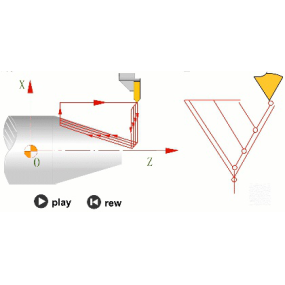
Turning operations in stainless steel medical part production are commonly used for cylindrical components such as shafts, pins, connectors, and instrument parts. During turning, the workpiece rotates while a cutting tool removes material.
Proper cutting parameters are important. Manufacturers typically adjust:
- Cutting speed: Selected according to stainless steel grade, tool material, and required surface finish.
- Feed rate: Controlled to balance machining efficiency and dimensional accuracy.
- Depth of cut: Managed to reduce tool stress and avoid excessive heat.
Milling and Micro-Machining
Milling is used for producing flat surfaces, slots, pockets, and complex medical geometries. For small medical parts, micro-machining technology can create extremely fine features while maintaining tight tolerances.
Common tools include carbide end mills, precision drills, and specialized cutting tools designed for stainless steel. Tool selection helps improve tool life, reduce vibration, and achieve smoother surfaces.
Handling Work-Hardening in Stainless Steel Medical Part CNC Machining
Handling work-hardening in stainless steel medical part CNC machining is a major challenge. Stainless steel can become harder when the surface is repeatedly stressed during cutting. If machining conditions are incorrect, work-hardening may reduce tool life and affect part accuracy.
Manufacturers manage this problem by:
- Using sharp, high-quality cutting tools.
- Maintaining stable cutting conditions.
- Avoiding unnecessary tool rubbing on the material surface.
- Applying proper cutting speeds and feed rates.
- Using suitable cooling methods to control heat.
Maintaining tight tolerances and achieving a smooth surface finish are especially important for medical parts because rough surfaces can collect contaminants and reduce device performance.
Post-Machining Processes for Medical Stainless Steel Parts
After CNC machining, additional treatments improve the performance and safety of stainless steel medical parts.
- Electropolishing: Removes microscopic surface imperfections, improves smoothness, and enhances corrosion resistance.
- Passivation: Creates a protective oxide layer that improves stainless steel corrosion resistance and supports medical applications.
- Cleaning and surface preparation: Removes machining residues and prepares parts for medical use.
These processes help ensure that the final component meets strict medical requirements for cleanliness, durability, and biocompatibility.
Quality Control in Stainless Steel Medical Part CNC Manufacturing
Quality control in stainless steel medical part CNC manufacturing is essential because medical components must meet strict safety standards. A reliable manufacturer uses inspection systems throughout the entire production process.
Inspection and Testing Methods
- In-process inspections: Measurements are performed during machining to detect problems early.
- Final inspections: Finished parts are checked for dimensions, surface finish, and overall quality.
- Sampling inspections: Production batches are tested to confirm consistent performance.
- Non-destructive testing: Methods such as ultrasonic testing and magnetic particle testing help detect internal or surface defects without damaging the part.
Traceability and Medical Standards
Medical manufacturers require complete production records. A traceability system tracks material certificates, machining processes, inspection results, and delivery information. This allows quick investigation if any quality issue occurs.
Professional CNC suppliers follow medical industry requirements such as ISO 13485 quality management systems and support compliance with regulations including FDA requirements for medical devices.
Choosing the Right CNC Machining Partner
Selecting an experienced CNC machining supplier can reduce development risks and improve product reliability. A qualified partner should understand medical material requirements, precision machining methods, inspection procedures, and regulatory expectations.
EMAR provides CNC machining services for stainless steel medical parts, supporting customers with precision machining, material expertise, quality inspection, and production control. With experience handling complex medical components, EMAR helps manufacturers move from design concepts to reliable finished parts.
Conclusion
CNC Machining Stainless Steel Medical Parts requires careful control from design and material selection to machining, surface treatment, and final inspection. Stainless steel grades such as 316L, 304, and 17-4 PH provide different benefits for medical applications, but choosing the correct material and machining process is essential.
By combining advanced CNC technology, proper cutting strategies, strict quality control, and medical manufacturing knowledge, manufacturers can produce stainless steel medical parts that are accurate, safe, durable, and ready for demanding healthcare applications.