Spanish
 Arabic
 French
 Portuguese
 Belarusian
 Japanese
 Russian
 Malay
Malay Icelandic
 Bulgarian
 Azerbaijani
 Estonian
 Irish
Irish Polish
 Persian
 Boolean
 Danish
 German
 Filipino
 Finnish
 Korean
 Dutch
Dutch Galician
 Catalan
 Czech
Czech Croatian
 Latin
Latin Latvian
 Romanian
 Maltese
 Macedonian
 Norwegian
 Swedish
 Serbian
 Slovak
 Slovenian
 Swahili
 Thai
Thai Turkish
 Welsh
Welsh Urdu
Urdu Ukrainian
 Greek
Greek Hungarian
 Italian
 Yiddish
 Indonesian
 Vietnamese
 Haitian Creole
 Spanish Basque

HTML
Precision CNC Batch Processing: How to Maintain Accuracy and Quality in Large-Volume Manufacturing
Precision CNC Batch Processing is an important manufacturing method used when companies need many identical metal or plastic parts with high accuracy. Industries such as automotive, aerospace, medical equipment, electronics, and industrial machinery often require thousands of components that must fit perfectly and perform reliably.
For batch production, producing one accurate part is not enough. The real challenge is keeping every part within the required tolerance during the entire production run. A small error repeated across hundreds or thousands of parts can create serious quality problems, increased costs, and delivery delays. This is why precision plays a key role in CNC batch manufacturing.
Why Precision Is Important in CNC Batch Processing
The importance of precision in CNC batch processing comes from the need for stable quality, repeatable results, and compliance with strict industry requirements. CNC machines can follow programmed instructions repeatedly, but manufacturers still need advanced processes to ensure that every batch remains consistent.
- Consistent product quality: Precision machining ensures that each part has the same dimensions, surface finish, and performance characteristics. This reduces assembly problems and improves product reliability.
- Meeting industry standards: Many industries require tight tolerances and detailed inspection records. Accurate CNC batch processing helps manufacturers meet these requirements.
- Lower production waste: Better control of machining accuracy reduces defective parts, material waste, and unnecessary rework.
- Improved production efficiency: Stable machining processes allow factories to complete large orders faster while maintaining quality.
A professional CNC manufacturer needs more than advanced machines. It requires experienced engineers, proper process planning, reliable materials, and strict quality control systems. Companies like EMAR use their machining experience and production management capabilities to support customers with stable and efficient precision CNC batch production.
The Complete Process of Precision CNC Batch Processing
1. Order Assessment and Design Adaptation for Batch Production
The first step is understanding the customer's requirements. During order assessment for precision CNC batch production, engineers review the part drawings, 3D models, material requirements, tolerances, surface finishes, and expected production quantities.
A design suitable for a single prototype may not always be the best choice for mass production. Engineers often adjust the design to improve machining efficiency, reduce production costs, and make the process more stable.
Important points during this stage include:
- Checking whether the design can be produced efficiently in large quantities.
- Identifying difficult machining areas before production starts.
- Selecting suitable machining methods and fixtures.
- Confirming tolerance requirements and inspection standards.
Early design analysis helps prevent problems during production and creates a smoother manufacturing process.
2. Material Sourcing in Bulk
Reliable material supply is essential for batch production. Material sourcing in precision CNC batch processing requires careful selection because material properties directly affect machining performance and final part quality.
Common materials used in CNC batch processing include:
- Aluminum: Lightweight, corrosion-resistant, and easy to machine. It is widely used for automotive, electronics, and aerospace components.
- Stainless steel: Offers excellent strength and corrosion resistance but requires proper tooling and cutting strategies.
- Carbon steel: Provides good strength and cost efficiency for industrial applications.
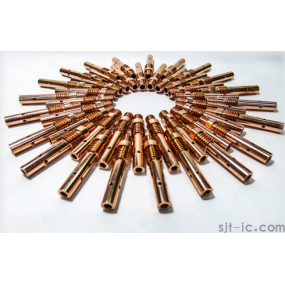
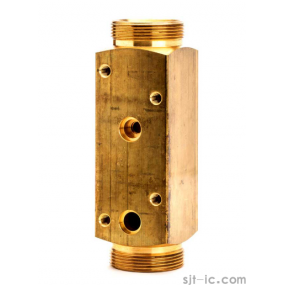
- Brass and copper: Suitable for parts requiring electrical conductivity or good wear resistance.
- Engineering plastics: Used when lightweight, insulation, or chemical resistance is needed.
For large orders, manufacturers must control material quality, supplier reliability, and inventory planning. Proper material preparation helps avoid production interruptions and ensures stable machining results.
3. CNC Programming for Mass Production
After design approval and material preparation, engineers create CNC programs for batch manufacturing. The programming stage determines how efficiently and accurately the machine will produce each part.
Modern CNC programming includes:
- Optimizing cutting paths to reduce machining time.
- Selecting suitable cutting speeds and feed rates.
- Planning tool changes and machining sequences.
- Creating repeatable programs for continuous production.
A well-prepared CNC program reduces human errors and helps maintain consistent dimensions throughout the entire production batch.
4. Actual CNC Machining Operations
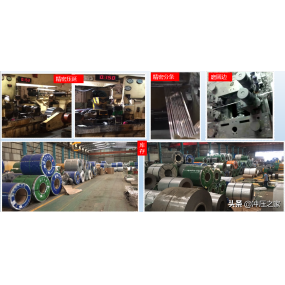
During production, CNC machines perform operations such as milling, turning, drilling, grinding, and other precision processes. Fixtures and automated systems are often used to keep parts positioned correctly during machining.
For high-volume orders, production teams monitor machine conditions, cutting performance, and part accuracy throughout the process. This prevents small issues from affecting a large number of finished components.
Main Challenges in Precision CNC Batch Machining
Maintaining Accuracy Across Thousands of Parts
One of the biggest challenges in Precision CNC Batch Processing is keeping the same accuracy from the first part to the last part. Temperature changes, machine vibration, material differences, and equipment conditions can affect machining results.
Manufacturers solve these issues through:
- Regular machine calibration.
- Stable temperature control in production areas.
- Accurate workholding fixtures.
- Continuous process monitoring.
Tool Wear Management
Tool wear management in precision CNC batch machining is critical because cutting tools gradually lose performance during long production runs. A worn tool can cause incorrect dimensions, poor surface quality, or damaged parts.
Effective tool management includes:
- Tracking tool usage time and cutting conditions.
- Replacing tools before they affect product quality.
- Using suitable tool materials for different metals.
- Monitoring cutting force and surface results.
Experienced manufacturers develop tool replacement plans based on production volume and material characteristics to maintain stable quality.
Production Scheduling and Delivery Management
Large batch orders require careful scheduling. Delays in materials, machine availability, programming, or inspection can affect delivery time.
A professional production system coordinates:
- Raw material preparation.
- Machine allocation.
- Operator schedules.
- Quality inspection timing.
- Packaging and shipment plans.
Good production planning allows manufacturers to complete large orders on time without sacrificing accuracy.
Quality Control in Precision CNC Batch Production
Quality control in precision CNC batch production requires more than checking one finished part. Since batch manufacturing involves many identical components, inspection methods must confirm that the entire production run remains stable.
Common quality control methods include:
- First article inspection: The first completed part is carefully measured to confirm that the process meets design requirements.
- Sampling inspection: Selected parts from different production stages are inspected to verify continued accuracy.
- Dimensional measurement: Precision measuring equipment checks critical sizes and tolerances.
- Surface quality inspection: Finished surfaces are examined to ensure they meet appearance and performance requirements.
- Process monitoring: Production data is collected to identify possible quality changes early.
For industries with strict requirements, detailed inspection reports and traceability records help customers understand product quality and production reliability.
How to Choose a Reliable Precision CNC Batch Processing Partner
Choosing the right CNC supplier is important because batch production requires strong technical ability and consistent manufacturing control. Customers should consider:
- Experience with similar CNC batch production projects.
- Advanced machining equipment and inspection tools.
- Ability to handle different materials and complex designs.
- Strong quality management procedures.
- Reliable production capacity for large orders.
EMAR focuses on precision machining solutions and provides CNC batch processing services for customers requiring accurate, repeatable, and efficient manufacturing. With professional engineering support, production planning, and quality inspection processes, EMAR helps customers reduce production risks and achieve stable batch production results.
Conclusion
Precision CNC Batch Processing is not only about making parts quickly in large quantities. It is about maintaining accuracy, consistency, and reliability throughout the entire manufacturing process. From order assessment and material preparation to CNC programming, machining, tool management, and inspection, every step affects final product quality.
For companies that need dependable components in high volumes, working with an experienced CNC manufacturer can improve efficiency, reduce waste, and ensure that every batch meets the required standards.