Spanish
 Arabic
 French
 Portuguese
 Belarusian
 Japanese
 Russian
 Malay
Malay Icelandic
 Bulgarian
 Azerbaijani
 Estonian
 Irish
Irish Polish
 Persian
 Boolean
 Danish
 German
 Filipino
 Finnish
 Korean
 Dutch
Dutch Galician
 Catalan
 Czech
Czech Croatian
 Latin
Latin Latvian
 Romanian
 Maltese
 Macedonian
 Norwegian
 Swedish
 Serbian
 Slovak
 Slovenian
 Swahili
 Thai
Thai Turkish
 Welsh
Welsh Urdu
Urdu Ukrainian
 Greek
Greek Hungarian
 Italian
 Yiddish
 Indonesian
 Vietnamese
 Haitian Creole
 Spanish Basque

HTML
CNC Machining Process for Pistons: Steps, Materials, Precision, and Quality Control
Pistons are critical engine components that must handle high pressure, extreme temperatures, and continuous movement. A small machining error can reduce engine performance, increase wear, or cause failure. This is why manufacturers rely on the CNC Machining Process for Pistons to achieve high accuracy, stable performance, and reliable production quality.
CNC machining uses computer-controlled machines to cut and shape piston materials according to precise digital designs. Compared with traditional machining methods, CNC technology provides better repeatability, tighter tolerances, and improved surface finishes. Understanding the machining process, material choices, precision requirements, and quality control methods helps buyers choose the right manufacturing partner.
What Is the CNC Machining Process for Pistons?
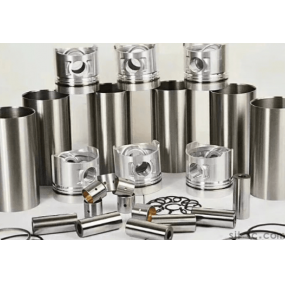
The CNC machining process for pistons is a manufacturing method where CNC lathes, milling machines, and other precision equipment remove material from a metal workpiece to create a piston with the required shape and dimensions.
A piston usually contains important features such as piston rings, pin holes, grooves, skirts, and crown surfaces. Each area requires careful machining because it affects sealing performance, lubrication, heat transfer, and engine efficiency.
The process is widely used for automotive engines, marine engines, industrial equipment, racing engines, and other applications that require durable and accurate piston components.
Key Steps in CNC Piston Machining
Understanding the key steps in CNC piston machining helps customers evaluate production capability and expected results. A professional machining process normally includes the following stages:
- Engineering Review and CAD Programming
The process starts with reviewing technical drawings, 3D models, material requirements, and tolerance specifications. Engineers create CNC programs that control cutting paths, speeds, and tool movements.
- Material Preparation
The selected metal material is prepared in the required size. The workpiece must have stable quality to prevent deformation during machining.
- Rough Machining
CNC machines remove excess material to create the basic piston shape. This stage focuses on efficiency while leaving enough material for final finishing operations.
- Precision Machining
During finishing operations, CNC machines create accurate piston features such as ring grooves, pin holes, and skirt profiles. Tool control and machine stability are important at this stage.
- Surface Finishing and Treatment
Additional processes may be used to improve surface performance, including polishing, coating, or heat treatment. These steps help reduce friction and increase service life.
- Inspection and Final Approval
The finished piston is measured and tested to confirm that it meets drawing requirements before delivery.
Materials Best for Piston CNC Machining
Choosing the right material is one of the most important decisions in piston manufacturing. The materials best for piston CNC machining must provide a balance of strength, heat resistance, wear resistance, and lightweight performance.
- Aluminum Alloys:
Aluminum is commonly used for high-performance pistons because it is lightweight and has good heat transfer ability. It helps reduce engine weight and improve response speed.
- Forged Aluminum:
Forged aluminum provides higher strength than many standard aluminum materials. It is suitable for engines that experience heavy loads and high temperatures.
- Cast Aluminum:
Cast aluminum offers good production efficiency and is often used for general engine applications where cost control is important.
- Steel Alloys:
Steel pistons can provide excellent strength and durability for heavy-duty engines, although they are heavier than aluminum options.
The best material depends on the engine type, operating conditions, production volume, and performance requirements. Experienced CNC suppliers can help customers select materials that meet both technical and budget needs.
Precision Levels in CNC Piston Machining
Pistons require strict dimensional control because they move at high speeds inside cylinders. The precision levels in CNC piston machining directly influence engine sealing, fuel efficiency, and operating reliability.
Important precision requirements usually include:
- Diameter Accuracy: The piston diameter must match the cylinder size to maintain proper clearance.
- Roundness and Cylindricity: The piston shape must remain consistent to reduce friction and uneven wear.
- Ring Groove Accuracy: Ring grooves must have correct dimensions to support sealing performance.
- Pin Hole Alignment: Accurate piston pin holes ensure smooth connection with the connecting rod.
- Surface Roughness: Proper surface finish helps control lubrication and reduce damage during operation.
Modern CNC equipment allows manufacturers to achieve very tight tolerances when required. However, achieving consistent accuracy also depends on machine condition, cutting tools, operator experience, and inspection methods.
Quality Assurance in CNC Piston Machining
Strong quality control is essential because pistons work in demanding environments. Quality assurance in CNC piston machining involves multiple inspection steps throughout production, not only checking the final product.
Common quality control methods include:
- Material Inspection:
Raw materials are checked to confirm they meet required chemical and mechanical specifications.
- Process Monitoring:
Machining parameters are controlled to maintain stable production and prevent defects.
- Dimensional Measurement:
Precision measuring tools such as coordinate measuring machines (CMM), micrometers, and gauges are used to verify piston dimensions.
- Surface and Visual Inspection:
Finished pistons are checked for surface problems, machining marks, cracks, or other issues.
- Performance Testing:
For special applications, additional testing may be performed to confirm durability and reliability.
A reliable CNC machining supplier should provide clear inspection records and maintain consistent quality from prototype production to large-volume manufacturing.
Common Challenges in CNC Machining Pistons
Piston machining requires careful control because several challenges can affect the final result:
- Heat Deformation: High machining temperatures can change material dimensions if cooling and cutting conditions are not properly controlled.
- Tool Wear: Worn tools may create inaccurate dimensions and poor surface quality.
- Complex Geometry: Piston profiles require accurate programming and advanced machining skills.
- Material Selection Errors: Using unsuitable materials can reduce engine performance and service life.
Working with an experienced CNC machining company helps reduce these risks through professional engineering support, advanced equipment, and strict production management.
Why Choose EMAR for CNC Machining Pistons?
EMAR's proficiency in CNC machining of pistons comes from its focus on precision manufacturing, engineering support, and quality control. With professional CNC machining capabilities, EMAR helps customers produce piston components that meet demanding requirements for accuracy, durability, and performance.
EMAR supports different piston machining needs, including prototype development, custom piston production, and batch manufacturing. The company combines CNC machining technology, experienced technicians, and inspection processes to help customers achieve stable product quality.
For businesses looking for a reliable piston machining partner, choosing a supplier with strong process knowledge can reduce production risks, improve efficiency, and ensure that every piston meets the required specifications.
Conclusion
The CNC Machining Process for Pistons involves several important stages, from design preparation and material selection to precision machining and quality inspection. Selecting suitable materials, maintaining accurate tolerances, and applying strict quality control are all necessary for producing reliable piston components.
Whether for automotive, marine, industrial, or specialized engines, professional CNC machining services can provide the accuracy and consistency needed for high-performance pistons. By working with experienced manufacturers such as EMAR, customers can achieve better machining results and long-term product reliability.