Spanish
 Arabic
 French
 Portuguese
 Belarusian
 Japanese
 Russian
 Malay
Malay Icelandic
 Bulgarian
 Azerbaijani
 Estonian
 Irish
Irish Polish
 Persian
 Boolean
 Danish
 German
 Filipino
 Finnish
 Korean
 Dutch
Dutch Galician
 Catalan
 Czech
Czech Croatian
 Latin
Latin Latvian
 Romanian
 Maltese
 Macedonian
 Norwegian
 Swedish
 Serbian
 Slovak
 Slovenian
 Swahili
 Thai
Thai Turkish
 Welsh
Welsh Urdu
Urdu Ukrainian
 Greek
Greek Hungarian
 Italian
 Yiddish
 Indonesian
 Vietnamese
 Haitian Creole
 Spanish Basque

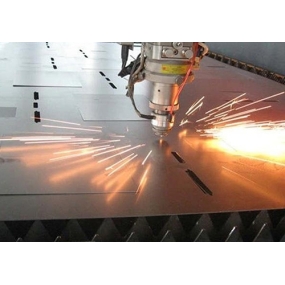
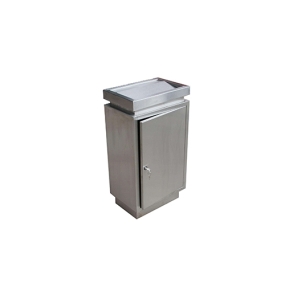
Using a high-energy density laser beam to heat the workpiece rapidly increases the temperature, reaching the boiling point of the material in a very short period of time, and the material begins to vaporize, forming vapor. The ejection speed of these vapors is very high, and at the same time as the vapors are ejected, incisions are formed on the material. With the continuous development of the storage tank industry, more and more industries and enterprises are using laser cutting (3 sheets) for storage tanks. More and more enterprises are entering the storage tank industry. However, due to the reduction of the cost of subsequent process processing, it is still feasible to use this equipment in large-scale production.
brief introduction
Laser cutting equipment can cut stainless steel below 4mm, and adding oxygen to the laser beam can cut carbon steel with a thickness of 20mm. However, after oxygen cutting, a thin oxide film will form on the cutting surface. The cutting thickness can be increased to 20mm, but the size error of the cutting parts is relatively large.
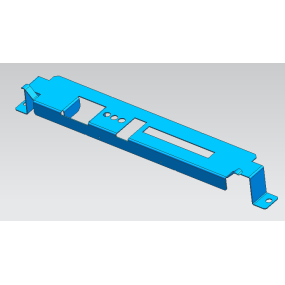
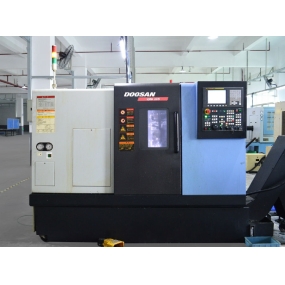
The price of laser cutting equipment is quite expensive, about 1.5 million yuan or more. However, due to the reduced cost of subsequent processing, it is still feasible to use this equipment in large-scale production. Due to the lack of cutting tool processing costs, laser cutting equipment is also suitable for producing small batches of various sizes of parts that could not be processed before. Laser cutting equipment usually uses computerized numerical control technology (CNC) devices, which can be used to receive cutting data from computer-aided design (CAD) workstations via telephone lines.
principle
Laser cutting is the use of a focused high-power density laser beam to irradiate a workpiece, causing the irradiated material to quickly melt, vaporize, burn, or reach the ignition point. At the same time, high-speed airflow coaxial with the beam is used to blow away the molten material, thereby achieving the cutting of the workpiece. Laser cutting is one of the thermal cutting methods.