The Import Volume of 140,000 Units, Our Country's Industrial Robot R & D and Manufacturing Capabilities and Room for Improvement
The industrial robot industry has become an important symbol of modern manufacturing strength. An import volume of 140,000 units of industrial robots is not only a market data point but also a reflection of the country's demand for automation technology and the current gap between domestic production capabilities and advanced international levels.
The import volume of 140,000 units, our country's industrial robot R & D and manufacturing capabilities and room for improvement shows that the domestic industrial robot market has strong growth potential. At the same time, it also raises important questions: How strong are domestic industrial robot manufacturers today? Which technologies still need improvement? How can the industry achieve higher levels of independence and competitiveness?
Understanding these issues can help companies, engineers, and decision-makers better evaluate the future direction of industrial robot development.
The Significance of an Import Volume of 140,000 Industrial Robots
An import volume of 140,000 industrial robots indicates a large demand for automation equipment in manufacturing industries. Sectors such as automobile production, electronics assembly, metal processing, and logistics are increasingly using robots to improve efficiency and reduce labor pressure.
This large import number also reflects the current situation of the domestic industrial robot market. On one hand, it shows that manufacturers need advanced automation solutions. On the other hand, it suggests that some domestic industrial robot products still cannot fully meet high-end market requirements.
For example, some factories may choose imported robots because they have advantages in precision, stability, software systems, and long-term operation performance. This creates both pressure and motivation for domestic manufacturers to improve their technology.
Impact of Import Volume on Industrial Robot R & D
Market Competition Encourages Domestic Innovation
The impact of import volume on industrial robot R & D is significant because imported robots increase market competition. When domestic manufacturers face strong competitors from overseas companies, they must improve product performance and develop unique advantages.
For example, domestic robot companies may invest more resources into improving robot movement accuracy, control systems, and intelligent functions. Instead of only producing basic industrial robots, companies are encouraged to develop robots that can handle more complex tasks.
This competition can accelerate technological progress. A company that improves robot speed, accuracy, and reliability can gain more customers and increase its market position.
Technology Transfer Creates Learning Opportunities
Imported industrial robots also provide opportunities for domestic engineers to study advanced technologies. Many imported products include mature technologies in areas such as motion control, sensors, mechanical design, and artificial intelligence applications.
By analyzing advanced robot systems, domestic research teams can better understand international development trends. For example, studying high-precision robot arms may help local manufacturers improve their own mechanical structures and control algorithms.
However, learning from imported products is only one step. Long-term competitiveness requires continuous innovation and the ability to create independent technologies.
Current R & D Capabilities in Industrial Robot Manufacturing
Progress in Key Technologies
The current R & D capabilities in industrial robot manufacturing have improved significantly in recent years. Domestic companies have made progress in robot control systems, sensor technology, intelligent recognition, and automation software.
One example is multi-sensor integration. Modern industrial robots can combine cameras, force sensors, and position sensors to better understand their working environment. This allows robots to perform precision tasks such as electronic component assembly and quality inspection.
These developments show that domestic industrial robot R & D teams have built strong technical foundations in many areas.
Innovation in Robot Design and Functionality
Domestic manufacturers are also improving robot design and functions to meet changing industrial needs. Collaborative robots are a good example. These robots are designed to safely work together with human operators instead of operating separately behind safety barriers.
In small-batch manufacturing, research laboratories, and flexible production lines, collaborative robots can help workers complete repetitive tasks while keeping human flexibility.
Innovation in robot design allows domestic companies to serve more industries and compete in specialized markets.
Room for Improvement in Industrial Robot Production
Reducing Dependence on Imported Core Components
Although domestic industrial robot technology has developed quickly, some core components still require improvement. High-precision reducers, advanced servo motors, and high-performance control chips are examples of areas where imported technologies have traditionally had advantages.
This dependence can affect production costs and supply stability. For example, if imported components face delivery delays, robot manufacturers may experience longer production cycles.
Improving domestic production of key components is an important part of the room for improvement in industrial robot production. A complete supply chain can reduce costs, increase efficiency, and strengthen industry independence.
Improving Quality and Reliability
Quality and reliability are also major challenges. Industrial robots often need to operate continuously for thousands of hours in factories, so stability is extremely important.
Compared with some international brands, domestic robots may still have room for improvement in areas such as long-term durability, precision maintenance, and failure prevention.
For example, improving the mean time between failures (MTBF) can increase customer confidence. A robot that works reliably for longer periods can reduce factory downtime and maintenance costs.
Solutions for Enhancing Industrial Robot R & D
Increasing Investment in Research and Development
Solutions for enhancing industrial robot R & D should begin with stronger investment. Advanced robot technology requires long-term research in mechanics, software, artificial intelligence, and materials.
Government support, company investment, and cooperation between research institutions and manufacturers can help increase innovation speed. For example, research funding programs and incentives for technology development can encourage companies to explore new solutions.
Developing More Professional Talent
Industrial robots require experts from multiple fields, including mechanical engineering, electronics, software development, and artificial intelligence.
Building a strong talent system is essential. Universities can create specialized robotics programs, while companies can provide practical training opportunities for young engineers.
Attracting experienced international experts and encouraging cooperation between research teams can also improve innovation ability.
Manufacturing Capabilities Assessment in Industrial Robots
Production Capacity and Manufacturing Efficiency
A manufacturing capabilities assessment in industrial robots should consider production scale, efficiency, and quality control.
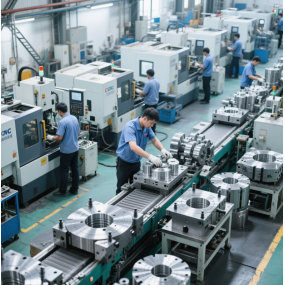
Domestic manufacturers have increased production capacity significantly, but improving manufacturing processes remains important. Automated production lines, digital factory management, and better quality inspection systems can help increase output while maintaining product quality.
For example, using smart manufacturing systems can reduce production errors and shorten robot assembly cycles.
Improving Supply Chain Management
A strong supply chain is necessary for stable industrial robot production. Manufacturers need reliable suppliers for motors, sensors, precision parts, and electronic components.
Improving local supply chains can reduce risks and increase flexibility. Better cooperation between robot manufacturers and component suppliers can also improve product development speed.
EMAR's Potential Contribution to Industrial Robot Development
As the industrial robot industry continues to develop, companies with experience in precision manufacturing and advanced production technologies can play an important role in improving industry capabilities.
EMAR's potential contribution may include supporting high-precision manufacturing processes, improving component quality, and sharing experience in advanced production management. For example, expertise in precision mechanical parts can help improve the accuracy and reliability of industrial robot components.
Through cooperation with industrial robot manufacturers and research organizations, EMAR can potentially contribute to technology improvement, production optimization, and innovation development.
Joint research projects, technical exchanges, and manufacturing cooperation can create opportunities for improving domestic industrial robot capabilities and building a stronger automation industry.
Conclusion
The import volume of 140,000 industrial robots reflects both the strong demand for automation and the challenges faced by domestic manufacturers. The industry has achieved progress in robot technology, intelligent functions, and manufacturing ability, but there are still areas requiring improvement.
Reducing dependence on imported core components, improving reliability, increasing R & D investment, and developing skilled talent are important steps for future growth.
With continuous innovation and cooperation among manufacturers, research institutions, and technology companies such as EMAR, the domestic industrial robot industry has the opportunity to achieve higher levels of competitiveness and create stronger manufacturing capabilities.