Analysis of Milling Machining Process: Working Principles, Operations, Tools, and Quality Control
Milling machining is one of the most important manufacturing processes used today. It helps manufacturers create accurate parts with different shapes, holes, slots, and complex surfaces. However, many people who are new to machining may feel confused about how milling works, which operations are suitable for different parts, how to choose the right tools, and how manufacturers ensure quality.
This Analysis of Milling Machining Process explains the basic concepts, working principles of milling, common milling operations, tool selection methods, quality inspection steps, and real-world applications of milling machining. Understanding these key points helps engineers, buyers, and manufacturers make better decisions when producing precision parts.
1. Introduction to Milling Machining Process
Milling machining is a manufacturing process that removes material from a workpiece by using a rotating cutting tool with multiple teeth. During the process, the cutting tool rotates at high speed while the workpiece moves against the cutter. The cutter teeth remove small chips of material until the desired shape and size are achieved.
Unlike some traditional machining methods, milling can create many different features, including flat surfaces, grooves, pockets, holes, and complex 3D shapes. Because of its flexibility and accuracy, milling is widely used in industries such as automotive, aerospace, medical equipment, electronics, and industrial machinery.
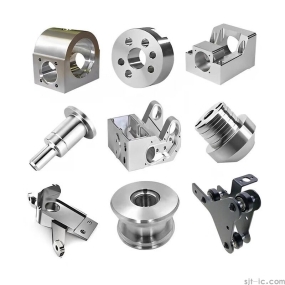
For example, when producing a metal bracket, milling can create precise mounting holes, smooth contact surfaces, and complex edges in a single production process.
2. Working Principles of Milling
Tool and Workpiece Interaction
The foundation of milling is the interaction between the rotating cutter and the workpiece. The milling cutter contains multiple cutting teeth. As the cutter rotates, each tooth removes a small amount of material from the workpiece.
For example, in a simple slab milling operation, a flat-faced milling cutter rotates perpendicular to the workpiece surface. The cutter removes material layer by layer, creating a flat and even surface.
Understanding this interaction is important because it directly affects machining accuracy, cutting force, tool wear, and surface quality. Different cutter movements and tool angles allow manufacturers to produce different shapes and finishes.
Influence of Cutting Parameters
Cutting parameters are important factors that determine milling performance. The main parameters include cutting speed, feed rate, and depth of cut.
- Cutting speed: This controls how fast the cutting tool rotates. Higher speeds can improve production efficiency but may increase heat and tool wear if not properly controlled.
- Feed rate: This controls how quickly the workpiece moves toward the cutter. A feed rate that is too high may create rough surfaces or damage the tool.
- Depth of cut: This determines how much material is removed in one pass. A larger depth can improve efficiency but requires stronger tools and machines.
For example, when milling aluminum parts, increasing the feed rate too much may cause vibration and reduce surface quality. A balanced combination of speed, feed, and cutting depth can improve productivity while maintaining accuracy.
3. Types of Milling Operations
Different milling operations are selected according to the required part shape and machining purpose. Understanding the types of milling operations helps manufacturers choose the most suitable machining method.
Face Milling
Face milling uses a cutter positioned perpendicular to the workpiece surface. The cutting action mainly happens on the face of the cutter, making it ideal for creating flat and smooth surfaces.
For example, when machining the top surface of a metal plate to prepare it for assembly, face milling can remove uneven material and create a precise flat surface.
Face milling is commonly used because many mechanical parts require accurate flat surfaces for proper fitting and assembly.
End Milling
End milling uses an end mill cutter that can cut in multiple directions. This operation is highly flexible and can create slots, pockets, holes, and complex 3D shapes.
For example, when manufacturing a mold cavity, an end mill can remove material from different areas to create detailed curves and complex features.
Different end mills are available for specific tasks. A ball-nose end mill is suitable for curved surfaces, while a square-end mill is commonly used for flat-bottom slots and pockets.
Peripheral Milling
Peripheral milling uses the teeth around the outside edge of the cutter. The cutter rotates parallel to the workpiece surface and is often used for producing grooves, keyways, and cylindrical features.
For example, when creating a keyway on a shaft for power transmission, peripheral milling can produce the required slot with accurate dimensions.
This operation is especially useful when manufacturers need straight cuts or specific edge features.
4. Tool Selection for Milling
Choosing the correct cutting tool is one of the most important steps in milling machining. The wrong tool can lead to poor surface finish, short tool life, and increased production costs. Proper tool selection for milling depends on the machining operation, material type, and required accuracy.
Cutter Type Based on Operation
Different milling operations require different cutter designs.
- Face milling cutters: Usually used for machining large flat surfaces. They often contain multiple inserts to improve cutting efficiency.
- End mills: Used for slots, pockets, and detailed shapes. Different flute designs are selected according to the material and machining requirements.
- Ball-nose cutters: Used for curved surfaces and complex 3D machining.
For example, using a ball-nose end mill for a mold surface can produce smooth curves that are difficult to achieve with a standard flat cutter.
Tool Material Considerations
The material of the cutting tool also affects machining performance. Common tool materials include high-speed steel (HSS), carbide, and ceramic.
- HSS tools: Offer good toughness and lower cost, making them suitable for softer materials and general machining.
- Carbide tools: Provide high hardness and excellent wear resistance, making them suitable for high-speed machining and difficult materials.
- Ceramic tools: Can handle high-temperature cutting conditions and are often used for special applications.
For example, when milling stainless steel, carbide tools are often preferred because they can withstand higher cutting forces and temperatures compared with HSS tools.
5. Quality Control in Milling
High-quality milling requires more than accurate machining operations. Manufacturers must carefully inspect parts during and after production. Effective quality control in milling ensures that finished parts meet design requirements and perform reliably.
Dimension Inspection
Dimensional accuracy is critical because even a small size error can affect assembly and product performance.
Manufacturers use measuring equipment such as calipers, micrometers, and coordinate measuring machines (CMMs) to check part dimensions.
For example, after milling a slot, inspectors measure its width and depth to confirm that it matches the engineering drawing and tolerance requirements.
Surface Finish Inspection
Surface quality is another important factor in milling. A poor surface finish can affect appearance, movement, sealing performance, and part durability.
Manufacturers may use roughness testers and profilometers to measure surface conditions. For example, a precision component used in consumer equipment may require a smooth finish to improve appearance and user experience.
6. Applications of Milling Machining
Automotive Industry
Milling machining plays an important role in automotive manufacturing. Many vehicle components require precise surfaces and complex shapes that can be produced through milling.
For example, engine blocks are milled to create accurate mounting surfaces for cylinder heads and other components. Precise milling helps improve engine sealing, reliability, and performance.
Aerospace Industry
The aerospace industry depends heavily on milling because aircraft components require high strength and extremely accurate dimensions.
For example, aircraft wing structures can be milled from large aluminum alloy blocks to create lightweight but strong components. The precision of milling helps ensure safe operation under demanding conditions.
Medical and Industrial Equipment
Milling is also widely used for medical devices, automation equipment, and industrial machinery. These industries often require customized parts with strict accuracy requirements.
Applications such as surgical tools, machine components, and precision fixtures depend on reliable milling processes to achieve consistent performance.
7. EMAR's Expertise in Milling Machining
High-quality milling requires experienced technicians, advanced equipment, and strict process control. EMAR has professional experience in milling machining and focuses on producing precision milled parts that meet customer requirements.
Skilled Milling Operations
EMAR's skilled team understands the complete milling process, including machining principles, cutter selection, and cutting parameter adjustment. This knowledge allows the team to handle different materials and complex part designs effectively.
For example, when producing high-precision parts for the medical industry, EMAR carefully controls machining conditions to ensure that each component meets strict accuracy requirements.
Quality-Assured Milling Production
EMAR applies strict quality control procedures throughout milling production. Each stage includes careful inspection of dimensions, surface finish, and overall part quality.
For industrial equipment components, these inspection methods help reduce defects and ensure that customers receive reliable milled parts with consistent performance.
By combining machining expertise, suitable tooling strategies, and professional quality management, EMAR provides dependable milling solutions for customers requiring high-quality precision parts.
Conclusion
The Analysis of Milling Machining Process shows that successful milling depends on understanding the working principles, selecting the correct operations and tools, and maintaining strict quality control. From simple flat surfaces to complex aerospace components, milling provides flexible and accurate manufacturing solutions.
By choosing an experienced machining partner such as EMAR, companies can benefit from professional milling knowledge, reliable production processes, and high-quality milled parts that meet demanding industry standards.