
CNC Machining for Home Appliance Components: A Complete Guide to Precision, Design, and Production
Home appliances such as refrigerators, washing machines, ovens, air conditioners, and coffee machines require parts that are accurate, durable, safe, and easy to assemble. A small error in a component can affect appliance performance, increase noise, or shorten product life. CNC Machining for Home Appliance Components provides a reliable manufacturing solution by producing high-quality parts with excellent precision, repeatability, and design flexibility.
For appliance manufacturers, common challenges include maintaining consistent part quality during mass production, creating complex shapes for modern product designs, reducing manufacturing costs, and selecting materials that can handle daily use. CNC machining helps solve these problems by combining advanced computer control with efficient production methods.
Why CNC Machining Is a Good Choice for Home Appliance Components
CNC machining uses computer-controlled machines to remove material from metal or plastic blocks and create precise components. This process is widely used for home appliance parts because it can meet strict requirements for size, shape, strength, and appearance.
- High precision for proper functionality: Many appliance components must fit perfectly with other parts. CNC machines can achieve tight tolerances, helping gears, brackets, housings, connectors, and mechanical assemblies work smoothly.
- Complex shapes for modern designs: Home appliances often need compact structures, curved surfaces, and lightweight designs. CNC machining can create detailed geometries that are difficult to produce with traditional methods.
- Reliable repeatability: During large-scale production, every component needs to have the same dimensions. CNC machining ensures stable quality from the first part to the last part.
- Cost-effectiveness for mass production: Although CNC machining requires initial programming, automation reduces labor costs and material waste, making it economical for medium and large production volumes.
Companies looking for dependable manufacturing support often choose experienced CNC suppliers such as EMAR. With professional machining equipment and engineering experience, EMAR provides customized CNC machining solutions for different home appliance component requirements, from prototype development to volume production.
Design Considerations for Home Appliance Component CNC Machining
The design stage is one of the most important steps in CNC manufacturing. Good design can improve product performance, reduce production difficulties, and lower costs. Engineers need to consider the appliance's function, user experience, and assembly requirements before machining begins.
Understanding Appliance Function and Working Conditions
Every component has a specific role. For example, a refrigerator hinge must support repeated opening and closing, while an oven component may need to withstand high temperatures. Designers should consider:
- The mechanical load applied to the component.
- The operating temperature and environmental conditions.
- The expected service life of the appliance.
- The connection method with other parts.
Improving User-Friendliness and Assembly Efficiency
Home appliance parts should not only work well but also support easy assembly and maintenance. Proper design can reduce installation time and prevent errors.
Important design factors include:
- Accurate mounting holes and connection points.
- Suitable part dimensions for easy installation.
- Rounded edges to improve safety and user comfort.
- Simple structures that reduce unnecessary manufacturing steps.
These are key design considerations for home appliance component CNC machining because they directly affect product reliability and manufacturing efficiency.
Material Selection for Home Appliance Parts
Choosing the correct material is essential because different appliance components face different working conditions. The right material improves durability, safety, and production efficiency.
Material selection for home appliance parts should be based on factors such as temperature resistance, strength, corrosion resistance, appearance, and production cost.
- Heat-resistant materials: Parts near heating elements, such as oven brackets or heating system supports, may require materials that can maintain strength at high temperatures.
- Durable materials: Frequently used parts, including handles, hinges, and mechanical connectors, need materials with good wear resistance and impact strength.
- Cost-efficient materials: For large production quantities, manufacturers often select materials that provide a balance between performance and price.
- Corrosion-resistant materials: Components exposed to moisture, such as washing machine parts, may require stainless steel or protective surface treatments.
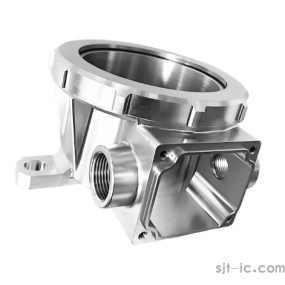
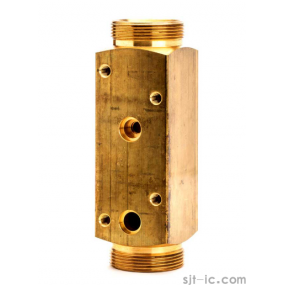
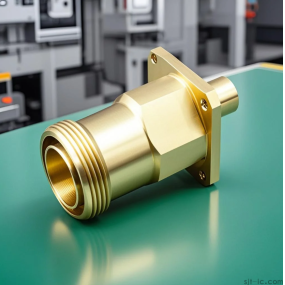
Common CNC machining materials for home appliance components include aluminum, stainless steel, brass, engineering plastics, and other specialized alloys. Engineers select the best option according to the appliance design and operating environment.
CNC Machining Processes for Home Appliance Components
The machining process depends on the shape, material, and function of the component. Different operations are combined to achieve the required dimensions and surface quality.
Turning Operations
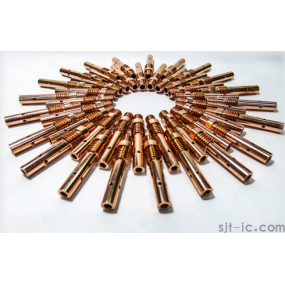
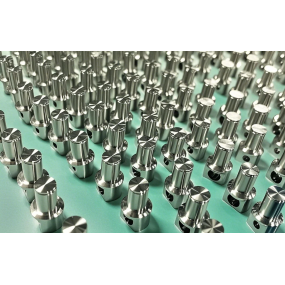
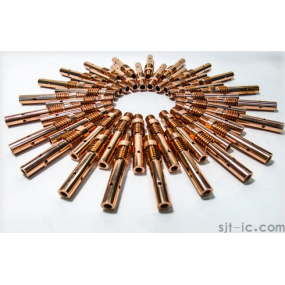
CNC turning is commonly used for round components such as shafts, knobs, connectors, and rotating parts. During turning, the workpiece rotates while cutting tools remove material to create accurate cylindrical shapes.
Proper cutting parameters are important for quality results. Engineers adjust:
- Cutting speed: Controls how quickly the tool moves against the material.
- Feed rate: Determines the movement of the cutting tool and affects surface quality.
- Depth of cut: Controls how much material is removed in each pass.
Milling Operations in Home Appliance Component Production
Milling operations in home appliance component production are used for creating slots, holes, pockets, flat surfaces, and complex three-dimensional shapes. CNC milling machines can produce detailed structures required for appliance housings, brackets, and internal supports.
Common milling tools include:
- End mills for cutting complex shapes and pockets.
- Drills for accurate holes and mounting points.
- Face mills for producing smooth flat surfaces.
Machining parameters must be carefully controlled. Higher cutting speeds may improve efficiency, but incorrect settings can cause tool wear, vibration, or poor surface quality. Experienced manufacturers optimize speed, feed rate, and cutting depth according to the material and component design.
Injection Molding for Plastic Appliance Components
For high-volume plastic parts, injection molding can be an effective production method. It is often used for appliance covers, buttons, panels, and decorative components. CNC machining is frequently used to manufacture the precision molds required for injection molding.
Solving Common CNC Machining Challenges for Appliance Parts
Achieving Smooth Surface Finish
Many appliance components require attractive and easy-to-clean surfaces. Rough surfaces can collect dirt and affect appearance. Surface finish requirements in home appliance CNC machining are achieved through proper tool selection, optimized cutting parameters, and finishing operations.
Additional processes may include polishing, grinding, coating, or surface treatment to improve appearance and protection.
Maintaining Dimensional Accuracy
Incorrect dimensions can cause assembly problems, vibration, or poor appliance performance. CNC manufacturers use accurate programming, machine calibration, and inspection equipment to maintain consistent measurements.
Reducing Noise During Appliance Operation
Noise reduction is an important user concern. Poorly fitted parts can create vibration and unwanted sounds. Precision CNC machining helps reduce gaps between components and improves overall assembly quality.
- Accurate machining reduces movement between connected parts.
- Balanced components improve mechanical stability.
- Smooth surfaces reduce friction and wear.
Post-Machining Processes for Better Appearance and Protection
After CNC machining, many home appliance components require additional treatments to improve appearance, durability, and resistance to environmental factors.
- Painting: Provides color options and improves surface protection.
- Powder coating: Creates a strong protective layer against scratches and corrosion.
- Anodizing: Improves aluminum surface hardness and appearance.
- Polishing: Creates a smooth and attractive finish.
These finishing processes help appliance manufacturers create products that are both functional and visually appealing.
Quality Control in Home Appliance CNC Manufacturing
Safety and performance are critical for home appliances. Every component must pass strict inspection before being used in final products. Quality control in home appliance CNC manufacturing ensures that parts meet required standards for size, strength, and reliability.
Professional CNC manufacturers typically use several quality control methods:
- Incoming material inspection: Checks raw material quality before production.
- In-process inspection: Monitors dimensions during machining to prevent defects.
- Final inspection: Confirms that finished parts meet customer specifications.
- Measurement equipment: Uses tools such as coordinate measuring machines (CMM), calipers, and micrometers for accuracy verification.
- Traceability systems: Records production information for quality management and future reference.
Manufacturers with strong quality systems help appliance companies reduce failures, improve product reliability, and meet industry safety expectations.
Choosing the Right CNC Machining Partner for Home Appliance Components
Selecting an experienced CNC supplier is important for achieving consistent quality and controlling production costs. A reliable partner should have advanced equipment, skilled engineers, strict inspection processes, and experience working with different materials and appliance designs.
EMAR provides CNC machining services for home appliance components with support from design review to final production. By focusing on precision machining, efficient manufacturing processes, and quality management, EMAR helps customers develop reliable appliance parts that meet performance and appearance requirements.
With the right CNC machining partner, appliance manufacturers can create products that are quieter, safer, more durable, and more competitive in the market.