CNC Machining Machine Parts: A Complete Guide to Precision, Materials, and Quality
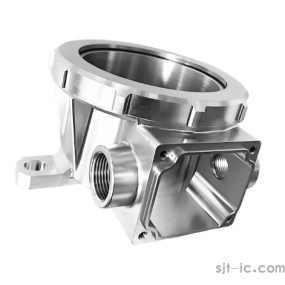
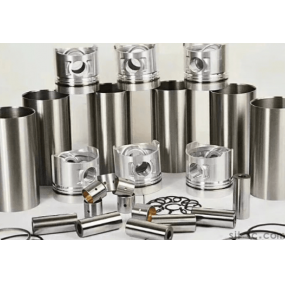
CNC Machining Machine Parts play an important role in modern manufacturing because machines depend on accurate, strong, and reliable components to operate smoothly. From industrial equipment and automation systems to heavy machinery, every machine requires parts that can handle repeated movement, pressure, heat, and wear.
Choosing the right CNC machining supplier can be challenging. Many customers worry about inaccurate dimensions, poor surface quality, material failures, long production times, and parts that do not fit correctly during assembly. A professional CNC machining partner helps solve these problems by combining advanced equipment, engineering knowledge, strict process control, and reliable inspection methods.
Why CNC Machining Is a Top Choice for Machine Parts
CNC machining is widely used for producing machine parts because it offers high precision, excellent repeatability, and the ability to create complex shapes. Computer-controlled machines can follow detailed design data and produce the same part thousands of times with consistent quality.
- High precision: CNC machines can achieve very tight tolerances, which is essential for parts that must work together without excessive gaps or friction.
- Strong repeatability: The same production program can create identical parts for replacement, repair, and large-scale manufacturing.
- Complex geometries: CNC machining can produce parts with curved surfaces, deep holes, slots, threads, and other complex features that are difficult to make with traditional methods.
- Flexible production: CNC machining is suitable for prototypes, small batches, and large production runs.
Because machine systems often contain many connected components, even a small dimensional error can affect performance. CNC machining helps manufacturers produce parts that fit accurately and support smooth machine operation.
Design Considerations for CNC-Machined Machine Parts
The design stage is the foundation of successful CNC machining. Good designs consider not only the shape of the part but also how it will work inside the complete machine system.
Important design considerations for CNC-machined machine parts include:
- Machine function: Engineers need to understand the part's purpose, movement requirements, and operating environment.
- Load-bearing requirements: Parts exposed to heavy forces must have suitable thickness, strength, and structural support.
- Component compatibility: Dimensions, connection points, holes, and tolerances must match other machine components.
- Manufacturing feasibility: Designers should consider tool access, machining time, and cost during the design process.
Working with an experienced CNC manufacturer early in the design stage can prevent production problems. Companies such as EMAR provide engineering support and CNC machining experience to help customers optimize part designs for performance and manufacturability.
Material Selection for Machine Part CNC Machining
The material used for a machine part directly affects its strength, durability, and service life. Proper material selection for machine part CNC machining depends on the working conditions of the component.
- High-strength steels: Suitable for load-bearing parts that require excellent strength and resistance to impact, such as shafts, gears, and structural components.
- Stainless steels: Commonly used when corrosion resistance and durability are important.
- Aluminum alloys: Useful for lightweight parts that require good machinability and moderate strength.
- Heat-resistant alloys: Designed for components exposed to high temperatures, such as parts used in engines or industrial heating systems.
- Engineering plastics: Used for applications requiring low weight, electrical insulation, or chemical resistance.
Material choice should consider temperature, pressure, friction, chemical exposure, and expected operating life. A professional CNC machining company can recommend suitable materials based on actual application requirements.
CNC Machining Operations Used for Machine Parts
CNC machining involves several operations. The correct machining method depends on the part design, material, and required accuracy.
Turning Operations in Machine Part Production
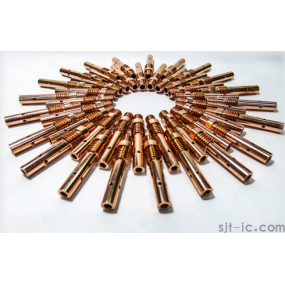
Turning operations in machine part production are mainly used for creating cylindrical components. During turning, the workpiece rotates while a cutting tool removes material to create features such as shafts, pins, bushings, and threaded sections.
Important turning parameters include:
- Cutting speed: Controls how fast the cutting tool moves against the rotating material.
- Feed rate: Determines how quickly the tool advances and affects surface quality and production efficiency.
- Depth of cut: Controls the amount of material removed during each machining pass.
Milling and Drilling Operations
Milling is used for creating flat surfaces, slots, pockets, and complex profiles. Multi-axis CNC milling machines can produce detailed parts with fewer setups, improving accuracy.
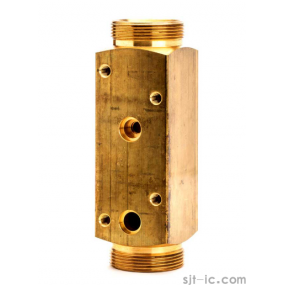
Drilling operations create precise holes for bolts, shafts, pins, and assembly connections. Proper tool selection and cutting parameters help prevent issues such as oversized holes, tool wear, or poor surface quality.
Managing Common CNC Machining Challenges
Producing machine parts requires careful control of many factors. Several challenges can affect final quality if they are not properly managed.
Handling Thermal Distortion in Machine Part CNC Machining
Handling thermal distortion in machine part CNC machining is important because cutting processes generate heat. Excessive temperature changes can cause material expansion, deformation, and dimensional errors.
Manufacturers control thermal distortion by:
- Using suitable cutting speeds and feed rates.
- Applying proper coolant systems.
- Selecting suitable cutting tools.
- Planning machining sequences to reduce stress.
- Allowing parts to stabilize before final inspection when necessary.
Maintaining Dimensional Accuracy and Surface Quality
Machine parts must often fit together with very small clearances. Incorrect dimensions can cause vibration, increased wear, or complete machine failure.
To maintain accuracy, manufacturers focus on:
- Proper machine calibration.
- Tool wear monitoring.
- Stable machining conditions.
- Accurate measurement equipment.
- Optimized cutting parameters.
Surface roughness is also important. A smoother surface can reduce friction, improve sealing performance, and extend component life. Tool selection, cutting conditions, and finishing operations all influence surface quality.
Post-Machining Processes for Better Performance
After CNC machining, additional processes may be required to improve mechanical properties and protect the part.
- Heat treatment: Improves hardness, strength, toughness, and wear resistance. It is commonly used for steel parts that experience heavy loads.
- Surface finishing: Processes such as polishing, coating, anodizing, or plating can improve corrosion resistance and appearance.
- Deburring: Removes sharp edges and improves safety and assembly performance.
The correct post-machining process depends on the part's application and operating environment.
Quality Control in Machine Part CNC Manufacturing
Reliable machine parts require strict inspection throughout production. Quality control in machine part CNC manufacturing ensures that every component meets design specifications and industry requirements.
Common quality control methods include:
- In-process inspections: Measurements are taken during machining to detect problems early and prevent defective parts.
- Final product inspections: Completed parts are checked for dimensions, tolerances, surface finish, and appearance.
- Material verification: Material certificates and testing confirm that the correct material is used.
- Functional testing: Parts may be tested under simulated working conditions to ensure proper performance.
Advanced CNC manufacturers use precision measuring equipment and documented quality systems to provide consistent results. EMAR applies professional CNC machining processes and quality control methods to support customers requiring reliable machine components for different industries.
Choosing the Right CNC Machining Partner
Selecting a CNC machining supplier is not only about production capability. A reliable partner should understand engineering requirements, recommend suitable materials, control manufacturing risks, and provide stable quality.
When evaluating a CNC machining company, consider:
- Experience with similar machine parts.
- Modern CNC equipment and machining capabilities.
- Engineering support during design.
- Quality inspection procedures.
- Ability to handle different materials and production volumes.
With the right manufacturing partner, CNC Machining Machine Parts can achieve the precision, strength, and reliability required for advanced mechanical systems. Careful design, proper material selection, controlled machining processes, and strict quality management together create machine parts that deliver long-term performance.