
Do you know the characteristics of numerical control precision parts processing?
In modern manufacturing, precision is the key factor that determines whether a part can meet strict industry requirements. From aerospace components and automotive systems to electronic devices and medical equipment, manufacturers need parts with accurate dimensions, stable quality, and reliable performance.
Do you know the characteristics of numerical control precision parts processing? Understanding these characteristics helps manufacturers choose the right processing method, improve product quality, reduce production risks, and increase market competitiveness. Numerical control (CNC) precision parts processing is widely valued because it offers advantages such as high-precision in CNC precision parts, excellent repeatability, complex shape machining ability, high efficiency, and strong versatility.
1. High-precision in CNC Precision Parts
One of the most important characteristics of numerical control precision parts processing is its ability to achieve extremely high accuracy. CNC machines use computer-controlled systems to guide cutting tools with precise movements. This reduces manual operation errors and ensures that every machining step follows the programmed requirements.
Tight Tolerances
High-precision in CNC precision parts means that CNC machines can produce components with very small dimensional differences. In industries such as aerospace, some parts require tolerances within ±0.01 mm. For example, turbine blades must have highly accurate dimensions because even a small deviation can affect engine performance and safety.
CNC machines achieve this accuracy through advanced positioning systems, precise servo motors, and intelligent control programs. The machine can carefully control tool movement, cutting speed, and machining depth to keep the final part within the required tolerance range.
This level of precision is especially important when parts must fit together perfectly. In aerospace, automotive transmissions, and industrial equipment, a small dimensional error may lead to poor assembly, vibration, or reduced service life.
Accurate Geometric Features
Besides controlling dimensions, CNC precision processing can also create accurate geometric shapes. For example, when manufacturing a precision gear, the tooth profile, pitch, and depth must all meet strict requirements.
A CNC machine can follow a programmed tool path to create each gear tooth with consistent accuracy. This allows the gear to work smoothly with other mechanical parts, improving power transmission efficiency and reducing noise and wear.
2. Repeatability of CNC Precision Processing
Another major advantage of numerical control precision parts processing is repeatability. Once a CNC program has been tested and confirmed, the machine can produce the same part many times with almost identical results.
Consistent Part Production
The repeatability of CNC precision processing is especially valuable in mass production. For example, an electronics manufacturer may need thousands of small precision components with exactly the same dimensions.
Instead of depending on manual skills for every part, the CNC machine follows the same digital instructions repeatedly. This ensures that each component has the same shape, size, and quality, making large-scale production more stable.
Consistent production also makes assembly easier because manufacturers can use interchangeable parts without additional adjustments.
Reliable Quality Assurance
Repeatability improves quality control because manufacturers can predict the performance of each production batch. For example, when producing medical equipment components, every part must meet strict safety requirements. CNC repeatability helps ensure that every component maintains the same quality standard.
This reduces product defects, lowers inspection costs, and helps manufacturers build customer trust.
3. Complex Shape Machining in CNC Precision Parts
Traditional machining methods may struggle with complicated designs, but CNC precision processing can handle many difficult shapes. This is one reason why CNC technology is widely used in advanced industries.
Multi-axis Machining Capabilities
Complex shape machining in CNC precision parts is possible because modern CNC machines can use multi-axis movement. A five-axis CNC machine, for example, can move the cutting tool in multiple directions at the same time.
This capability allows manufacturers to produce parts with complex curves and three-dimensional structures. In aerospace manufacturing, five-axis CNC machines are commonly used to create turbine blades with special aerodynamic shapes.
Multi-axis machining reduces the need for multiple setups, improves surface quality, and allows engineers to design more advanced products.
Intricate Contour Machining
CNC precision processing can also create detailed contours and complex surfaces. For example, in mold manufacturing, CNC machines can produce precise curved surfaces that determine the final shape of plastic products.
The machine follows the digital design file accurately, allowing manufacturers to create products with unique appearances and functions. This is important for industries such as consumer electronics, automotive design, and industrial equipment.
4. Efficiency in CNC Precision Parts Processing
Besides precision and flexibility, CNC processing also provides high production efficiency. This helps manufacturers reduce costs and respond faster to market demands.
Automated Operations
Efficiency in CNC precision parts processing comes from the high level of automation. After engineers create and test the CNC program, the machine can perform operations such as milling, drilling, and turning automatically.
For example, a CNC Machining center can complete several processing steps in one setup without requiring constant manual operation. This reduces production time and lowers the chance of human mistakes.
Automation also allows manufacturers to maintain stable production even when producing large quantities of precision parts.
Fast Machining Speeds
Modern CNC machines use advanced cutting tools and powerful drive systems to achieve faster machining speeds while maintaining accuracy.
For example, when processing aluminum parts, high-speed CNC milling can quickly remove unnecessary material and shorten production time. Faster machining helps manufacturers complete orders more efficiently and improve their competitiveness.
5. Versatility of CNC Precision Parts Processing
Another important characteristic of CNC precision processing is its wide application range. CNC machines can process many different materials and complete various machining tasks.
Material Compatibility
The versatility of CNC precision parts processing allows manufacturers to work with different materials, including stainless steel, aluminum, titanium, plastics, and composite materials.
For example, aerospace companies may use CNC machines to process lightweight titanium components, while electronics manufacturers may use CNC machining for plastic housings and metal frames.
This material flexibility allows CNC processing to meet the needs of different industries.
Variety of Machining Operations
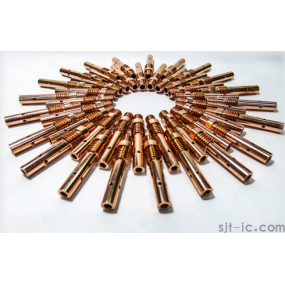
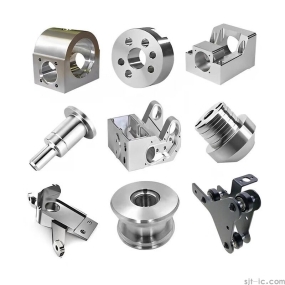
CNC machines can perform many operations, including turning, milling, drilling, boring, grinding, and threading.
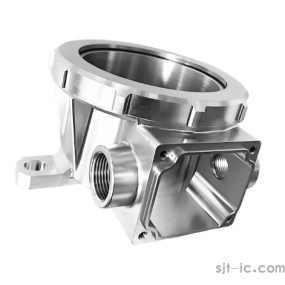
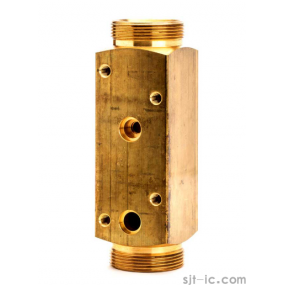
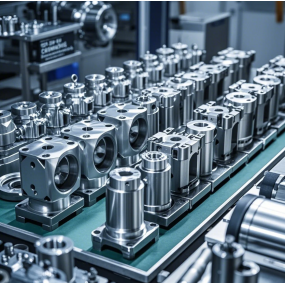
For example, one CNC machining center can produce a cylindrical component, create flat surfaces, drill holes, and cut threads in a single setup. This reduces the need for multiple machines and improves overall production efficiency.
6. EMAR's Expertise in Numerical Control Precision Parts Processing
Choosing an experienced CNC processing partner is important for manufacturers who require high-quality precision components. EMAR focuses on numerical control precision parts processing and provides professional manufacturing solutions for different industries.
Advanced CNC Technology
EMAR uses advanced CNC equipment to support precision machining requirements. With modern CNC machines and multi-axis processing capabilities, EMAR can handle complex part designs while maintaining strict dimensional accuracy.
This technology helps customers receive precision parts with reliable quality, accurate geometric features, and stable performance.
Experienced Machinists and Engineers
High-quality CNC processing depends not only on machines but also on professional experience. EMAR has skilled machinists and engineers who understand CNC programming, process optimization, material characteristics, and quality control.
The team can develop suitable machining solutions according to different part designs and production requirements. By combining technical knowledge with advanced equipment, EMAR helps customers achieve efficient and reliable numerical control precision parts processing.
Conclusion
Do you know the characteristics of numerical control precision parts processing? The main advantages include high precision, strong repeatability, complex shape machining ability, high efficiency, and excellent versatility.
These characteristics make CNC precision parts processing an essential technology for industries that require reliable and high-performance components. By understanding these advantages and working with an experienced manufacturer such as EMAR, companies can improve product quality, reduce production challenges, and gain stronger competitiveness in the global market.