Inventory and summary of automotive parts processing technology
Automotive parts manufacturing depends on many different processing technologies. These technologies directly affect the quality, safety, performance, and cost of vehicles. A small mistake in part production can cause problems such as poor vehicle performance, faster wear, or even safety risks. Therefore, understanding different automotive parts processing methods helps manufacturers choose the right technology for each component.
This article provides an Inventory and summary of automotive parts processing technology, including CNC Machining, casting, forging, assembly techniques, and surface treatment. It explains their applications, advantages, and challenges with practical examples. By understanding these processes, automotive manufacturers can improve production efficiency and create more reliable vehicle components.
Why Automotive Parts Processing Technologies Are Important
Automotive parts have different requirements depending on their function. Engine components need high strength and accuracy, body parts need good appearance and durability, and safety-related parts must withstand heavy loads. No single processing method can meet all these needs.
For example, a transmission gear requires very precise dimensions to transfer power smoothly, while a vehicle wheel needs strong structure and good surface quality. Manufacturers must select suitable processing technologies based on material, shape, production volume, and performance requirements.
Modern automotive production usually combines several technologies. A part may be cast first, machined for accuracy, treated on the surface for protection, and finally assembled into the vehicle system.
CNC Machining in Automotive Parts
Applications of CNC Machining
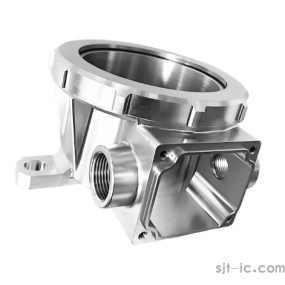
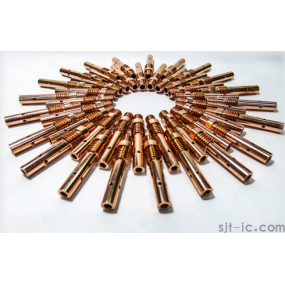
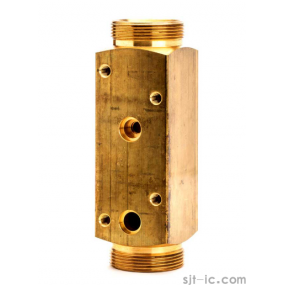
CNC machining in automotive parts is one of the most widely used precision manufacturing technologies. CNC means Computer Numerical Control. A computer program controls cutting tools to remove material and create accurate shapes.
CNC machining is commonly used for complex automotive components that require tight tolerances. For example, engine cylinder heads need precisely positioned holes and smooth surfaces to ensure proper combustion and cooling. CNC machines can create these features accurately.
Another example is transmission gears. Gear teeth must have precise shapes and positions to achieve smooth power transfer. CNC machining helps produce gears with consistent quality and reliable performance.
Advantages of CNC Machining
- High precision: CNC machines can achieve very small tolerances, sometimes around ±0.01 mm, which is important for automotive systems that require accurate fitting.
- High production efficiency: Once programmed, CNC equipment can repeatedly produce identical parts with fewer human errors.
- Flexible production: Manufacturers can adjust programs to produce different part designs without completely changing the equipment.
For large automotive parts factories, CNC machining improves consistency and reduces production problems caused by manual operations.
Challenges of CNC Machining
Although CNC machining has many benefits, it also has some challenges. The cost of purchasing and maintaining CNC equipment can be high, especially for small manufacturers.
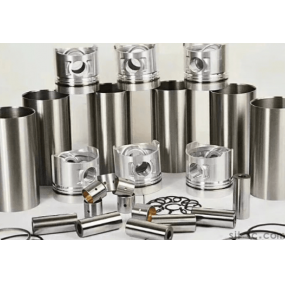
In addition, skilled technicians are needed to create correct machining programs. A wrong parameter setting can damage tools or produce defective parts. For example, incorrect CNC programming during piston machining may result in poor engine fitting and reduced performance.
Casting for Automotive Parts
Applications of Casting
Casting for automotive parts is a common method for producing large and complex components. During casting, melted metal is poured into a mold and shaped after cooling.
Engine blocks are a typical example. Sand casting can create complex internal structures, while die casting is often used for high-volume production where better accuracy and faster production are required.
Casting is also widely used for automotive wheels, housings, and other large metal components because it can create shapes that are difficult to achieve through other methods.
Advantages of Casting
- Suitable for complex shapes: Casting can produce parts with complicated designs and internal structures.
- Cost-effective for mass production: Once molds are prepared, large quantities of parts can be produced efficiently.
- Material flexibility: Different metals can be used according to strength, weight, and durability requirements.
For example, aluminum casting is often selected for automotive parts because it provides good strength while reducing vehicle weight.
Challenges of Casting
Casting also has limitations. The surface quality of cast parts may not be as smooth as machined parts, so additional finishing may be needed.
Another concern is internal defects such as air pockets or porosity. If these defects appear inside an engine block, they may reduce strength or cause leakage problems. Strict inspection and process control are necessary to avoid these risks.
Forging in Automotive Parts Processing
Applications of Forging
Forging in automotive parts processing is mainly used for components that require high strength and excellent durability. Forging shapes metal by applying strong pressure, which improves the internal grain structure of the material.
Important automotive parts such as crankshafts, connecting rods, and drive components are often produced through forging. For example, a forged crankshaft can handle repeated high loads inside an engine better than many other manufacturing methods.
Advantages of Forging
- Excellent strength: Forged parts have improved mechanical properties because the metal structure becomes stronger during the forging process.
- Better fatigue resistance: Forged components can withstand repeated stress for a longer service life.
- Improved reliability: Forged parts are suitable for safety-critical automotive applications.
A forged connecting rod, for example, can provide reliable engine operation under high-speed and high-pressure conditions.
Challenges of Forging
Forging requires powerful equipment and high energy consumption. The process may also be less suitable for parts with very complicated shapes.
For example, a component with many internal cavities may be easier to produce through casting than forging. Manufacturers must balance strength requirements, production cost, and design complexity when selecting forging.
Assembly Techniques in Automotive Parts
Applications of Assembly Techniques
Assembly techniques in automotive parts are essential for connecting individual components into complete vehicle systems. Common methods include welding, bolt connections, and adhesive bonding.
In automobile body manufacturing, welding is widely used to join metal panels because it creates strong permanent connections. Bolt assembly is commonly used for parts such as seats, doors, and engine accessories because these parts may need future maintenance or replacement.
Adhesive bonding is increasingly used for lightweight materials and interior components where a smooth appearance is important.
Advantages of Assembly Techniques
- Strong connections: Welding provides reliable joints for structural parts.
- Easy maintenance: Bolt connections allow parts to be removed and replaced more easily.
- Better appearance: Adhesive bonding can create cleaner surfaces without visible connection points.
Challenges of Assembly Techniques
Assembly quality directly affects vehicle reliability. Poor welding can cause deformation or incorrect alignment. Loose bolts may create vibration problems over time. Adhesive connections may become weaker due to temperature changes or humidity.
Therefore, manufacturers need careful process control and regular inspections to maintain long-term vehicle quality.
Surface Treatment in Automotive Parts Processing
Applications of Surface Treatment
Surface treatment in automotive parts processing improves the appearance, durability, and protection of automotive components. Common methods include electroplating, coating, polishing, and heat treatment.
For example, chrome plating can improve the corrosion resistance and appearance of exterior parts such as grilles and decorative components. Powder coating is often used on wheels because it provides a durable and attractive finish.
Surface treatment is also important for internal engine parts. Proper treatment of piston rings can reduce friction and improve wear resistance.
Advantages of Surface Treatment
- Improved corrosion resistance: Treated surfaces can better resist moisture and chemicals.
- Longer service life: Wear-resistant coatings help parts operate longer under difficult conditions.
- Better appearance: Surface finishing improves the visual quality of vehicles.
Challenges of Surface Treatment
Surface treatment requires accurate control of temperature, chemicals, and processing time. Incorrect treatment may cause problems such as poor coating adhesion or uneven surfaces.
Some processes, such as electroplating, also require environmental management because chemical waste must be handled properly. Manufacturers need advanced technology and strict regulations to ensure safe and sustainable production.
EMAR's Expertise in Automotive Parts Processing Technologies
Complete Technical Capability
EMAR has experience in multiple automotive parts processing technologies, including CNC machining, casting, forging, assembly, and surface treatment. By understanding the characteristics of each process, EMAR can select suitable manufacturing solutions for different automotive applications.
For example, when producing a high-strength automotive component, EMAR can combine suitable material selection, optimized processing methods, and quality inspection procedures to achieve reliable performance.
Quality-Focused Manufacturing Approach
Quality control is a key part of automotive parts production. EMAR applies strict inspection procedures throughout the manufacturing process, from raw material checking to final product testing.
Advanced inspection methods help identify issues such as dimensional errors, surface defects, or internal problems in cast and forged parts. This quality-focused approach helps automotive manufacturers reduce production risks and improve product reliability.
Conclusion: Choosing the Right Automotive Processing Technology
The Inventory and summary of automotive parts processing technology shows that each manufacturing method has its own advantages and challenges. CNC machining provides precision, casting supports complex shapes and mass production, forging delivers strength, assembly techniques create reliable vehicle structures, and surface treatment improves durability and appearance.
Successful automotive manufacturing depends on selecting the right technology for each part. With professional knowledge and comprehensive processing capabilities, companies like EMAR can help automotive manufacturers develop high-quality parts that meet modern vehicle performance and safety requirements.