
Numerical Control Processing Manufacturers Calculate Product Prices in Addition to Material Costs and Other Factors That Should Be Considered
When customers request a quotation from numerical control (NC) processing manufacturers, many people first focus on material costs. It is easy to think that the final price is simply the price of raw materials plus a small processing fee. However, this is not how professional CNC manufacturers calculate prices.
Numerical control processing manufacturers calculate product prices in addition to material costs and other factors that should be considered, including labor, equipment investment, factory operation costs, part complexity, production quantity, and quality requirements. Understanding these factors helps customers better evaluate quotations and choose a reliable manufacturing partner.
A transparent pricing method is important because it allows customers to understand where their investment goes. Professional manufacturers consider every production factor carefully to provide accurate and reasonable prices.
Why Material Cost Is Only One Part of CNC Processing Pricing
Materials such as aluminum, stainless steel, titanium, and engineering plastics are important parts of CNC processing costs. However, the same material can result in very different product prices depending on how it is processed.
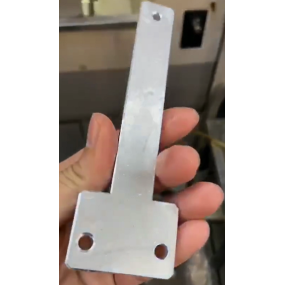
For example, producing a simple aluminum bracket may require only basic CNC Machining operations. However, producing a complex aerospace component from the same aluminum material may require advanced programming, precision tools, multiple inspections, and longer machine operation time.
The final CNC processing price usually includes:
- Material purchasing cost
- Labor cost in CNC processing pricing
- Equipment cost in numerical control product pricing
- Factory and administrative overhead costs
- Programming and setup costs
- Quality inspection costs
- Part complexity and special processing requirements
- Order quantity and production efficiency
Each factor directly affects the resources needed to complete the product.
Labor Cost in CNC Processing Pricing
Skilled Labor Requirements
CNC machines can automatically perform many operations, but skilled technicians are still necessary. Operators and engineers are responsible for CNC programming, machine setup, tool selection, process adjustment, and quality monitoring.
For example, manufacturing a complex aerospace component requires workers who understand precision machining requirements and can control very small dimensional errors. A highly experienced CNC technician ensures that the final part meets strict tolerance standards.
Labor cost in CNC processing pricing becomes higher when a project requires more professional knowledge. A simple part may need only basic setup, while a complex precision component may require experienced engineers and longer working hours.
Labor-Intensive CNC Operations
Some CNC projects require more manual involvement. Large molds, precision prototypes, and customized components often need additional operator attention.
For example, during the machining of a large mold, workers may need to:
- Change tools several times during production
- Check dimensions during machining
- Adjust cutting parameters
- Perform surface quality inspections
These additional working hours increase the labor portion of the final product price.
Equipment Cost in Numerical Control Product Pricing
High-End CNC Equipment Investment
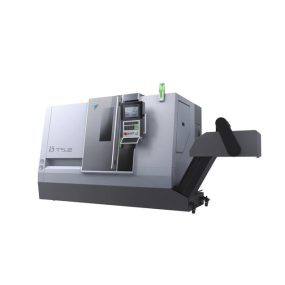
CNC processing manufacturers must invest heavily in advanced equipment. Modern CNC machines, especially multi-axis machining centers, require significant capital investment.
For example, a five-axis CNC machining center can cost hundreds of thousands of dollars because it provides higher accuracy, more machining flexibility, and the ability to produce complex shapes.
Equipment cost in numerical control product pricing is calculated by spreading the machine investment across the products manufactured during the equipment's service life.
If a machine produces thousands of parts over several years, the equipment cost per part becomes smaller. However, for small-volume customized production, equipment costs may represent a larger percentage of the price.
Equipment Maintenance and Depreciation
CNC machines require regular maintenance to maintain accuracy and production stability. Maintenance includes replacing worn parts, calibrating machines, and checking mechanical performance.
In addition, CNC equipment loses value over time. This depreciation cost must also be considered when manufacturers calculate product prices.
For example, a CNC lathe used for many years may require more maintenance and eventually need replacement. Including these costs helps manufacturers continue providing stable production services.
Overhead Cost Impact on CNC Product Price
Factory Overhead Costs
Running a CNC processing factory requires more than machines and materials. Manufacturers also need to pay for factory space, electricity, water, insurance, and other operating expenses.
For example, a factory located in a high-cost industrial area may have higher rental expenses. Large CNC machines also consume significant amounts of electricity during operation.
Overhead cost impact on CNC product price is often overlooked by customers, but these expenses are necessary for stable manufacturing operations.
Administrative and Quality Management Costs
Professional CNC manufacturers also have administrative costs, including engineering management, customer service, purchasing, and quality control teams.
Quality inspectors, for example, check whether finished parts meet customer drawings and specifications. Their work reduces the risk of defective products reaching customers.
Although these costs do not directly create the physical part, they support reliable production and are included in professional CNC pricing.
Complexity Factor in CNC Processing Pricing
Part Design Complexity
The complexity of a part has a major influence on CNC processing costs. Parts with complicated shapes require more programming time, special tools, and longer machining cycles.
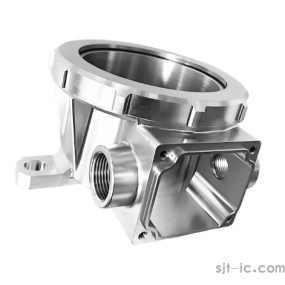
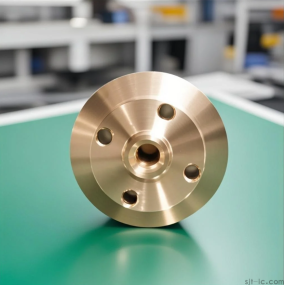
For example, a simple cylindrical component may be completed quickly on a CNC lathe. However, a turbine blade with complex curved surfaces requires advanced programming and precise multi-axis machining.
Complexity factor in CNC processing pricing means that two parts made from the same material may have very different prices because their manufacturing processes are different.
Special Processing Requirements
Special requirements also increase production difficulty. Examples include:
- Very tight dimensional tolerances
- Special surface finishes
- Heat-resistant materials
- Additional polishing or inspection processes
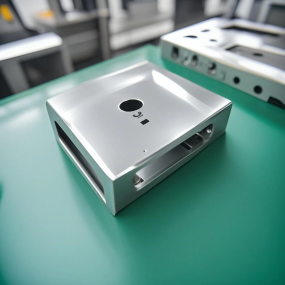
For instance, a component requiring a mirror-like surface finish may need extra finishing operations after CNC machining. These additional steps increase both processing time and cost.
Quantity-Based Pricing in Numerical Control Manufacturing
Economies of Scale
The order quantity has a strong effect on CNC pricing. When manufacturers produce more parts in one order, fixed costs such as programming, machine setup, and testing can be distributed across more units.
For example:
- A CNC setup cost is $1,000.
- For 100 parts, the setup cost is $10 per part.
- For 1,000 parts, the setup cost is only $1 per part.
This is why larger production quantities usually have lower unit prices.
Quantity-Related Discounts
Many CNC manufacturers provide better pricing for larger orders because higher production volume improves efficiency.
For example, an order exceeding several hundred pieces may receive a lower unit price because the manufacturer can optimize machine scheduling and reduce repeated setup work.
Quantity-based pricing in numerical control manufacturing helps customers control costs while allowing manufacturers to improve production efficiency.
How EMAR Provides Transparent and Competitive CNC Pricing
Professional CNC processing requires a pricing method that considers every production factor. EMAR focuses on transparent quotation practices by evaluating material costs, labor requirements, equipment usage, processing difficulty, and production quantity together.
When preparing quotations, EMAR explains the main cost factors clearly so customers can understand the reason behind the price. This approach helps customers make better decisions instead of comparing quotations based only on the lowest number.
EMAR also works to provide competitive prices by improving manufacturing efficiency. Through optimized production processes, advanced equipment management, and better workflow control, EMAR can reduce unnecessary costs while maintaining product quality.
For customers, this means receiving CNC-processed products with reliable quality, clear pricing information, and a manufacturing solution that considers the complete production process.
Conclusion: CNC Pricing Requires a Complete Cost Understanding
The price of a CNC-processed product is not determined by material cost alone. Numerical control processing manufacturers calculate product prices in addition to material costs and other factors that should be considered, including labor, equipment, overhead expenses, complexity, and production quantity.
Understanding these factors helps customers evaluate quotations more accurately and build stronger cooperation with CNC manufacturers. A transparent manufacturer that explains these costs can provide better value and more reliable long-term support.