What are the advantages and disadvantages of five - axis CNC Machining?
Understanding What are the advantages and disadvantages of five - axis CNC machining? is important for manufacturers, engineers, and businesses that need high-quality machined parts. Five-axis CNC machining has become an advanced manufacturing solution because it can produce precise and complex components with fewer setups. However, it also comes with challenges such as higher costs, programming difficulty, and the need for skilled operators.
Before choosing this technology, companies should understand how the benefits and limitations affect machining processes, production costs, and final product quality. By evaluating both sides, manufacturers can decide whether five-axis CNC machining is the right choice for their projects.
What Is Five - Axis CNC Machining?
Five-axis CNC machining is a manufacturing process that allows a cutting tool or workpiece to move along five different axes at the same time. Traditional three-axis CNC machines mainly move in the X, Y, and Z directions, while five-axis machines add two rotational movements.
These extra movements allow the cutting tool to approach a part from different angles without repeatedly changing the setup. This makes five-axis CNC machining especially useful for industries that require complex shapes, high accuracy, and excellent surface finishes, such as aerospace, medical equipment, automotive, and precision engineering.
Advantages of Five - Axis CNC Machining
1. Precision Advantages of Five - Axis CNC
One of the biggest precision advantages of five - axis CNC is its ability to produce extremely accurate parts with tight tolerances. Because the cutting tool can reach the workpiece from multiple directions, there is less need to reposition the part during machining. This reduces alignment errors and improves overall accuracy.
For example, aerospace manufacturers often use five-axis CNC machines to produce turbine blades. These components require very precise shapes because even small dimensional errors can reduce engine efficiency. Five-axis machining allows the tool to follow complex blade surfaces accurately and achieve tight tolerances, sometimes within ±0.05mm depending on the material, machine capability, and process control.
This high level of precision is especially valuable in industries where part performance depends on exact dimensions. Medical implants, aerospace components, and high-performance automotive parts all benefit from improved machining accuracy.
2. Complex - Shape - Making Advantages of Five - Axis CNC
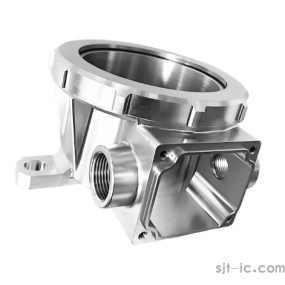
The complex - shape - making advantages of five - axis CNC allow manufacturers to create geometries that are difficult or impossible to produce with traditional machining methods.
The additional rotational axes help the cutting tool reach deep areas, curved surfaces, and unusual angles. For example, in the jewelry industry, five-axis CNC machining can create detailed patterns, smooth curves, and artistic designs with high repeatability. Instead of relying on manual carving, manufacturers can produce unique designs with consistent quality.
This capability is also important for aerospace parts, molds, and high-tech components that require complicated structures. Manufacturers can design lighter and more efficient parts because five-axis machining provides greater freedom in creating advanced shapes.
3. Improved Efficiency and Reduced Setup Time
Another major advantage of five-axis CNC machining is improved production efficiency. Traditional machining often requires multiple setups, where operators must move the part between different machines or adjust fixtures several times.
With a five-axis CNC machine, many machining operations can be completed in a single setup. For example, when manufacturing a complex mold, the same machine can perform milling, drilling, and surface finishing without removing and repositioning the workpiece.
Reducing setup time brings several benefits:
- Faster production cycles
- Lower risk of positioning errors
- Reduced labor requirements
- Higher production capacity
For manufacturers producing small batches or customized parts, this efficiency can greatly improve competitiveness.
4. Better Surface Finish Quality
Five-axis CNC machining can also improve surface quality. Since the cutting tool can maintain a better angle against the workpiece surface, it can reduce tool marks and create smoother finishes.
This is especially useful for parts with curved surfaces, such as aerospace housings, medical devices, and precision molds. A better surface finish can reduce the need for additional polishing or finishing processes, saving both time and cost.
Disadvantages of Five - Axis CNC Machining
1. Cost - Related Disadvantages of Five - Axis CNC
One of the main cost - related disadvantages of five - axis CNC is the higher investment required compared with traditional CNC machines.
Five-axis CNC machines are more expensive because they include advanced control systems, additional mechanical components, and more complex structures. The purchase price can be much higher than a standard three-axis CNC machine.
Maintenance costs are also higher. These machines require specialized technicians, regular calibration, and advanced replacement parts. For small and medium-sized companies with limited budgets, the initial investment may be difficult to justify.
However, the higher cost can be balanced by increased productivity, reduced setup time, and improved part quality when the machine is used for suitable projects.
2. More Complex Programming and Operation
Five-axis CNC programming is more complicated than traditional CNC programming. Operators must consider tool direction, machine movement, collision prevention, and optimized cutting paths.
For example, programming an aerospace component with deep curves and multiple angles requires advanced CAD/CAM knowledge. The programmer must ensure that the cutting tool reaches every required surface while avoiding collisions with the workpiece or machine components.
This complexity creates several challenges:
- Longer programming time for complicated parts
- Need for experienced CNC programmers
- Higher training requirements for operators
- Greater risk of programming mistakes without proper experience
Companies that do not have skilled personnel may experience longer production times or increased manufacturing costs.
3. Higher Skill Requirements
Operating a five-axis CNC machine requires more knowledge than operating a basic CNC system. Operators need to understand machine movement, tooling selection, cutting conditions, and quality control methods.
Without proper training, businesses may not fully use the machine's capabilities. Incorrect operation can lead to tool damage, poor surface quality, or wasted materials.
How to Choose Whether Five - Axis CNC Machining Is Right for Your Project
The decision depends on factors such as part complexity, production volume, required accuracy, and budget.
- Choose five-axis CNC machining when parts have complex shapes, strict tolerances, or difficult-to-reach surfaces.
- Consider traditional CNC machining when parts are simple and cost reduction is the main goal.
- Evaluate long-term benefits because higher initial costs may be recovered through improved efficiency and quality.
A careful analysis helps manufacturers avoid unnecessary investment while selecting the best machining method for their needs.
EMAR's Expertise in Using Five - Axis CNC Machining Effectively
EMAR understands how to maximize the advantages of five - axis CNC machining while reducing its possible disadvantages. With experienced engineers, advanced machining knowledge, and strict quality control processes, EMAR can provide reliable five-axis CNC machining solutions for demanding applications.
Leveraging the Advantages of Five - Axis CNC
EMAR uses five-axis CNC technology to achieve high precision and complex geometries for industries such as medical, aerospace, and automotive manufacturing. Skilled engineers carefully optimize machining programs and tool paths to achieve accurate dimensions and excellent surface quality.
For example, when producing precision medical components, EMAR can take advantage of five-axis machining capabilities to create complex structures while maintaining strict quality requirements.
Reducing the Impact of Five - Axis CNC Disadvantages
Although five-axis CNC machining involves higher equipment and operating costs, EMAR applies professional management methods to improve efficiency and control expenses. Regular machine maintenance, optimized production planning, and skilled programming help reduce unnecessary downtime and manufacturing waste.
Through continuous training and technical improvement, EMAR ensures that five-axis CNC machines operate efficiently while maintaining consistent quality. This allows customers to receive high-quality machined parts with reliable delivery and competitive value.
Conclusion
Five-axis CNC machining offers many powerful benefits, including high precision, complex shape production, faster processing, and improved surface quality. These advantages make it an excellent choice for industries that require advanced manufacturing solutions.
At the same time, businesses should understand the disadvantages of five-axis CNC machining, including higher costs, complex programming, and greater skill requirements. Choosing the right machining partner is important to achieve the best results.
With professional experience and advanced manufacturing capabilities, companies like EMAR can help customers take full advantage of five-axis CNC technology while controlling its challenges and delivering reliable, high-quality machining services.