HTML
Aircraft Parts CNC Machining: Precision Manufacturing for the Aerospace Industry
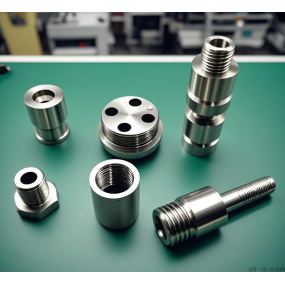
In modern aerospace engineering, Aircraft Parts CNC Machining plays a key role in producing safe, reliable, and high-performance components. Aircraft require extremely precise parts because even a small error can affect safety, fuel efficiency, and flight performance. CNC (Computer Numerical Control) machining helps manufacturers achieve the level of accuracy that the aerospace industry demands.
For engineers, buyers, and manufacturers, choosing the right machining partner is not easy. You need high precision, stable quality, suitable materials, and strict inspection processes. This article explains the most important points in simple English so you can better understand how aircraft parts are made and what to look for in a reliable supplier.
Why Aircraft Parts Require Extreme Precision
One of the most important factors in aerospace production is precision requirements for aircraft parts CNC machining. Aircraft components must meet very tight tolerances, often measured in microns. Even a tiny deviation can lead to vibration, poor assembly, or safety risks.
CNC machines are used because they can repeat the same high-precision cutting process many times without losing accuracy. This is especially important for parts like engine components, brackets, landing gear parts, and structural connectors.
- High tolerance control (micron-level accuracy)
- Stable repeatability for mass production
- Reduced human error compared to manual machining
Materials Used in Aircraft Parts CNC Machining
The aerospace industry uses a wide range of special materials. The materials used in aircraft parts CNC machining must be strong, lightweight, and resistant to heat and corrosion.
Common materials include aluminum alloys, titanium alloys, stainless steel, and high-performance composites. Each material has its own advantages and challenges during machining.
- Aluminum alloys: Lightweight and easy to machine, widely used in structural parts
- Titanium alloys: Very strong and heat-resistant, used in engine and high-stress components
- Stainless steel: Durable and corrosion-resistant, used in critical mechanical parts
Choosing the correct material is essential for performance, safety, and cost control in aerospace production.
Advantages of CNC Machining for Aircraft Parts
There are many advantages of CNC machining for aircraft parts compared to traditional manufacturing methods. CNC technology improves both efficiency and consistency in production.
- High accuracy: Ensures parts meet strict aerospace standards
- Complex geometry: Allows production of highly complex shapes
- Consistency: Every part is almost identical
- Faster production: Reduces lead time for prototypes and mass production
- Less waste: Optimized cutting reduces material loss
Because of these advantages, CNC machining is now the standard process for most aircraft component manufacturing.
Quality Control in Aircraft Parts CNC Machining
Strict inspection is required in aerospace production. Quality control in aircraft parts CNC machining ensures every component meets international aviation standards.
Manufacturers use advanced measuring tools such as CMM (Coordinate Measuring Machines), laser scanners, and digital inspection systems. Every step, from raw material to final product, is carefully checked.
- Incoming material inspection
- In-process quality checks during machining
- Final dimensional inspection
- Surface finish and performance testing
Without strict quality control, even small defects can cause serious risks in aerospace applications. That is why certified processes like ISO 9001 and AS9100 are often required.
Cost-Effectiveness in Aircraft Parts CNC Machining
Although aerospace manufacturing is known for high standards, cost-effectiveness in aircraft parts CNC machining is still an important concern. Companies must balance quality and budget carefully.
CNC machining helps reduce costs in several ways. It minimizes material waste, improves production speed, and reduces the need for manual labor. In addition, modern CNC programming allows better optimization of tool paths, which saves both time and resources.
- Lower material waste through precise cutting paths
- Reduced labor costs due to automation
- Faster turnaround for prototypes and production runs
How EMAR Supports Aircraft Parts CNC Machining Needs
In aerospace manufacturing, choosing a reliable partner is very important. EMAR provides professional CNC machining services designed specifically for high-demand industries like aviation.
With advanced equipment, experienced engineers, and strict quality systems, EMAR focuses on delivering parts that meet both precision and safety requirements. Whether it is prototype development or mass production, EMAR supports customers with stable quality and efficient delivery.
Customers benefit from:
- High-precision machining capabilities for complex aircraft parts
- Wide material processing experience including aluminum and titanium alloys
- Strict inspection systems to ensure aerospace-grade quality
- Flexible production support from small batches to large-scale orders
By combining technology and quality control, EMAR helps aerospace clients reduce risk and improve production efficiency.
Conclusion
Aircraft Parts CNC Machining is a critical process in modern aerospace manufacturing. It ensures that every component meets strict standards for safety, precision, and performance. From material selection to quality control, each step must be carefully managed.
Understanding key factors like precision requirements, material choices, advantages of CNC technology, inspection systems, and cost control helps companies make better decisions when selecting a manufacturing partner.
With professional support from experienced suppliers like EMAR, aerospace manufacturers can achieve reliable quality, improved efficiency, and long-term production stability.
 English
 » »
» »
 Spanish
 Arabic
 French
 Portuguese
 Belarusian
 Japanese
 Russian
 Malay
Malay Icelandic
 Bulgarian
 Azerbaijani
 Estonian
 Irish
Irish Polish
 Persian
 Boolean
 Danish
 German
 Filipino
 Finnish
 Korean
 Dutch
Dutch Galician
 Catalan
 Czech
Czech Croatian
 Latin
Latin Latvian
 Romanian
 Maltese
 Macedonian
 Norwegian
 Swedish
 Serbian
 Slovak
 Slovenian
 Swahili
 Thai
Thai Turkish
 Welsh
Welsh Urdu
Urdu Ukrainian
 Greek
Greek Hungarian
 Italian
 Yiddish
 Indonesian
 Vietnamese
 Haitian Creole
 Spanish Basque