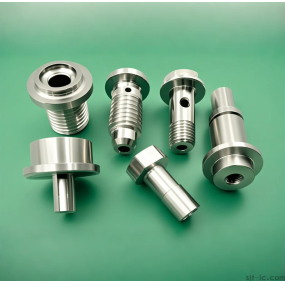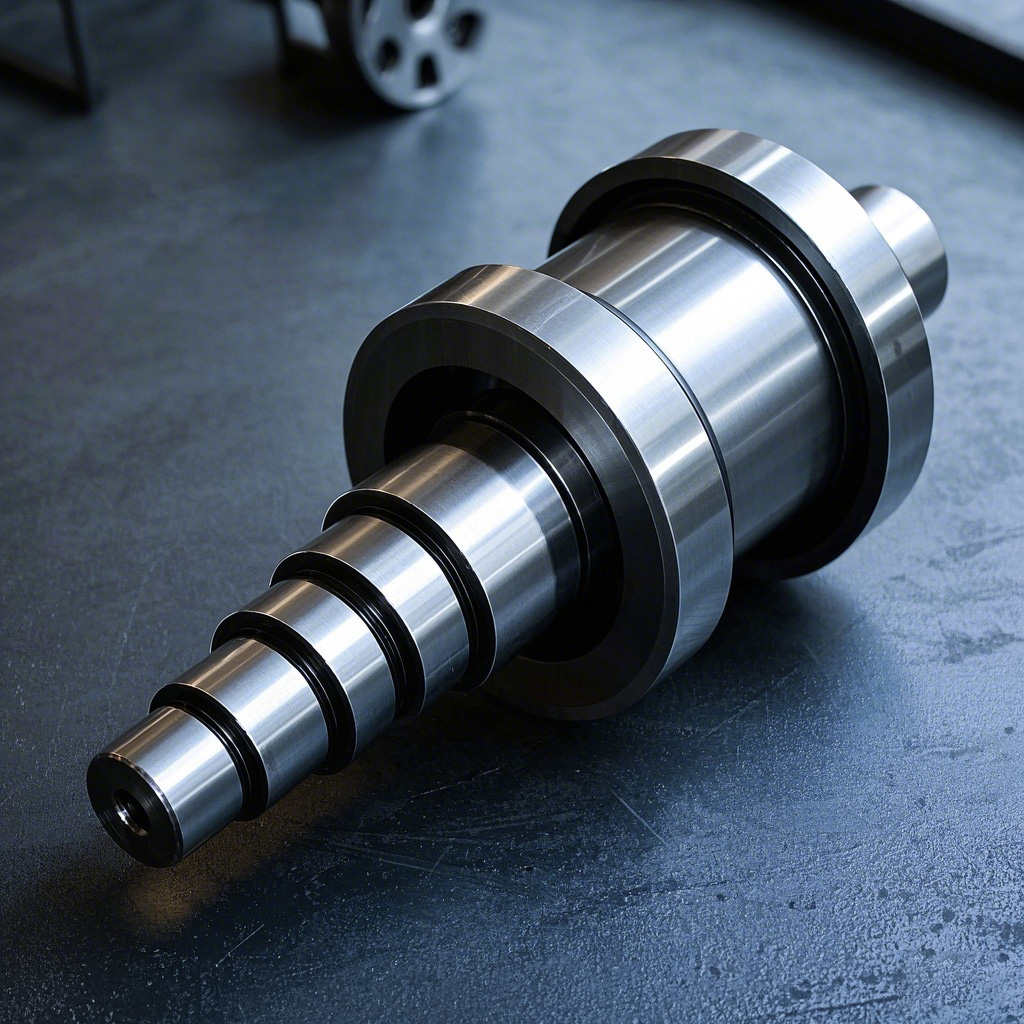
Wheel shafts are important mechanical parts used in vehicles, industrial equipment, and many types of rotating machinery. They connect wheels with drive systems, transfer power, support loads, and ensure stable rotation during operation. Because wheel shafts often work under high pressure, vibration, and repeated impact loads, their machining accuracy directly affects safety, service life, and overall equipment performance.
The CNC Machining Wheel Shaft Machining Method? Wheel Shaft Machining Detailed Process involves multiple steps, including material selection, CNC turning, drilling, milling, grinding, heat treatment, and strict quality inspection. Compared with traditional machining methods, CNC machining provides higher accuracy, better repeatability, faster production efficiency, and greater flexibility for different wheel shaft designs.
For manufacturers that need reliable wheel shaft production, professional CNC machining suppliers such as EMAR use advanced CNC equipment, optimized machining processes, and strict inspection systems to help customers produce wheel shafts with stable quality and competitive costs.
Traditional machining methods depend heavily on operator experience and manual adjustment. This can lead to differences between parts, especially when producing wheel shafts with complex structures, tight tolerances, or multiple stepped diameters.
CNC machining uses computer-controlled programs to guide cutting tools. This provides several important advantages:
These advantages make CNC machining a practical choice for automotive shafts, agricultural machinery shafts, industrial transmission shafts, and other high-load applications.
Choosing the correct material is the first important step in wheel shaft manufacturing. The material must provide enough strength, toughness, wear resistance, and fatigue resistance to handle continuous mechanical stress.
Common materials used for wheel shafts include alloy steels such as 40Cr and 42CrMo. These materials are widely used because they offer:
The best material choice depends on the working environment. For example, automotive wheel shafts may require high strength and fatigue resistance, while industrial equipment shafts may focus more on wear resistance and cost control.
A detailed engineering drawing is necessary before CNC machining begins. The blueprint should include all important dimensions and requirements, such as:
CAD software is usually used to create accurate 2D drawings or 3D models. These designs are then converted into CNC programs that control machining operations. A clear design reduces machining errors and helps manufacturers select the correct tools and processes.
The manufacturing process usually starts with a round steel bar or forged blank. The material is cut to a suitable length according to the wheel shaft drawing.
Before machining, the blank is checked for material quality, size accuracy, and surface defects. Proper preparation helps reduce machining waste and prevents problems during later operations.
Turning in CNC wheel-shaft machining is one of the most important processes because it creates the basic shaft shape and controls the main dimensions.
During rough turning, the CNC lathe removes large amounts of unnecessary material from the shaft blank. The goal is to quickly achieve an approximate shape close to the final design.
The machinist selects suitable cutting parameters, including:
For example, carbide cutting tools are commonly used because they can handle high cutting speeds and remove material efficiently.
After rough turning, finish turning creates the final external dimensions. This step focuses on:
Accurate finish turning is especially important because even small alignment errors can cause vibration, noise, or premature wear during operation.
Milling and grinding in wheel-shaft CNC processes are used when additional features are required, such as keyways, splines, or precision surfaces.
Center holes are often drilled at both ends of the shaft. These holes provide positioning references for later machining and help maintain accurate alignment during turning and grinding.
If the wheel shaft needs a keyway for power transmission, CNC milling is used to create the required slot.
The CNC machine controls the cutter movement to ensure:
A precise keyway ensures reliable connection between the shaft and other mechanical components.
Some wheel shafts use splines instead of keys to transfer higher torque. CNC spline milling uses specialized cutters to produce accurate tooth profiles.
The CNC system controls both rotation and linear movement, allowing complex spline structures to be produced with consistent accuracy.
Grinding is used when higher precision and better surface finish are required.
Cylindrical grinding improves roundness, straightness, and surface quality. It can correct small errors left from turning operations and achieve very tight dimensional accuracy.
The grinding wheel selection depends on:
For wheel shafts with precision threads, thread grinding creates accurate thread dimensions and improves surface durability. This process is commonly used in applications where threads experience high loads.
Heat treatment improves the mechanical properties of wheel shafts. Common processes include quenching and tempering.
A properly controlled heat treatment process allows the wheel shaft to achieve the required balance between hardness and durability.
Depending on the application, additional surface treatments may be applied:
The correct surface treatment extends service life, especially for wheel shafts operating in harsh environments.
Quality control in CNC wheel-shaft processing is essential because wheel shafts directly affect equipment safety and performance.
During machining, technicians regularly inspect important dimensions using precision tools such as:
Inspection points include shaft diameter, length, keyway size, concentricity, and surface condition. Detecting problems early reduces material waste and prevents expensive rework.
After machining and treatment, the finished wheel shaft undergoes final inspection. This may include:
Following quality standards such as ISO requirements or automotive industry standards helps ensure reliable wheel shaft performance.
Cost-effectiveness of CNC wheel-shaft production depends on many factors, including machining efficiency, material usage, tooling selection, and production volume.
Correct cutting parameters can reduce production costs by:
Using suitable cutting tools and optimized CNC programs helps manufacturers achieve better productivity without reducing quality.
Large-volume wheel shaft production can reduce the average cost per part because setup costs are distributed across more products.
For small-batch production, manufacturers can control costs by:
Single-stage wheel shafts usually have a simple structure with one main diameter. They are easier to machine and require fewer turning operations.
Multi-stage wheel shafts contain several diameter changes along the shaft length. They require more complex CNC turning, grinding, and inspection processes because each section must maintain accurate alignment.
Vehicle front and rear wheel shafts have different machining requirements.
CNC machining allows manufacturers to adjust processes according to different shaft designs and application requirements.
The complete wheel shaft machining process includes material selection, CNC turning, drilling, milling, grinding, heat treatment, surface treatment, and quality inspection. Each step affects the final performance, durability, and cost of the wheel shaft.
By choosing suitable materials, optimizing CNC machining methods, and applying strict inspection procedures, manufacturers can produce reliable wheel shafts for vehicles and industrial equipment. Experienced CNC machining companies like EMAR combine advanced equipment, professional engineering knowledge, and quality management systems to provide accurate and cost-effective wheel shaft machining solutions for different customer needs.