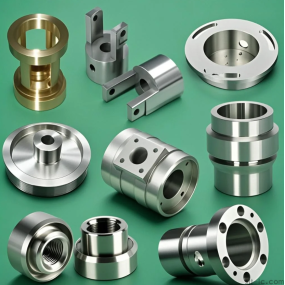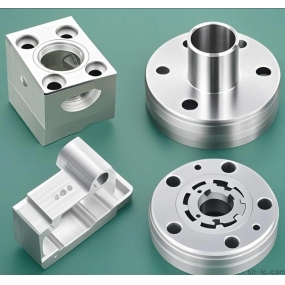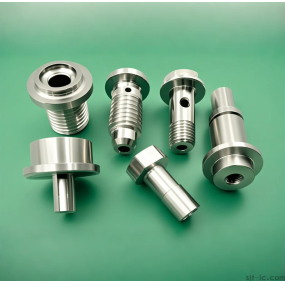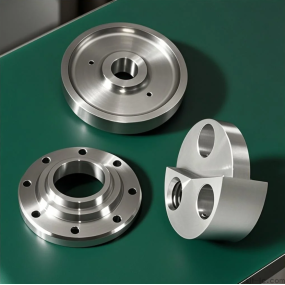

Medical equipment depends on thousands of carefully designed components to work safely and effectively. Among these components, precision parts for medical equipment play a critical role because even a very small error in size, shape, or material quality can affect the performance of a device and the safety of patients.
From surgical instruments and implants to diagnostic machines and life-support systems, medical devices require parts that meet extremely strict standards. A precisely manufactured component helps doctors perform procedures more accurately, improves equipment reliability, and supports better patient outcomes.
Understanding how these parts are designed, produced, and tested helps medical equipment manufacturers choose reliable suppliers and ensure their products meet healthcare requirements.
The importance of precision in medical parts comes from the direct connection between component accuracy and patient safety. Unlike many industrial products, medical devices often work with the human body, where small mistakes can create serious problems.
For example, an implant such as a hip replacement requires extremely accurate dimensions. If the implant components do not match the patient's anatomy correctly, it may cause discomfort, limited movement, or additional medical procedures. Precision manufacturing helps create parts that fit properly and perform as expected.
Another example is a medical syringe. The piston and barrel must have accurate dimensions to control the exact amount of medicine delivered. If the parts are not precise enough, the patient may receive too much or too little medication, which can affect treatment results.
Precision parts also improve the performance of complex medical equipment. In an MRI system, precision-made magnets and coils are necessary to produce clear and accurate images. Small errors in these components may reduce image quality and make diagnosis more difficult.
In respiratory equipment such as ventilators, precision valves and sensors control airflow and pressure. Reliable parts help doctors provide proper breathing support for patients who need assistance.
For this reason, high-quality precision manufacturing is not only about producing accurate parts. It is about creating safer and more effective medical solutions.
The selection of materials is one of the most important steps in producing medical components. The materials for medical precision parts must provide strength, durability, safety, and compatibility with medical environments.
Metals are widely used in medical applications because they offer excellent strength and long service life. Common choices include titanium and stainless steel.
Medical-grade plastics are also important because they offer flexibility, chemical resistance, and lightweight performance.
The right material choice ensures that medical precision parts can safely perform their intended functions throughout their service life.
The manufacturing of medical precision parts requires advanced technology and strict process control. Medical components often need extremely small tolerances, complex shapes, and consistent quality.
CNC machining is one of the most widely used methods for producing precision medical components. Computer-controlled machines follow programmed instructions to cut and shape materials with very high accuracy.
For example, a custom surgical drill bit may require a complex design and exact dimensions. CNC machining can produce each drill bit with consistent quality, ensuring that every tool performs reliably during medical procedures.
The advantages of CNC machining include:
3D printing is becoming increasingly valuable in medical manufacturing because it allows engineers to create complex and customized designs.
For example, patient-specific implants can be produced by using medical scan data to create a part that matches a person's anatomy. The layer-by-layer production method provides design flexibility that may be difficult to achieve with traditional methods.
3D printing is especially useful for customized medical solutions, prototypes, and advanced implant designs.
The quality control in medical precision parts is essential because medical devices must meet strict safety and performance requirements. Manufacturers use multiple inspection methods to verify that every component meets specifications.
Dimensional inspection ensures that each part has the correct size, shape, and tolerance. Advanced measuring equipment, such as coordinate measuring machines (CMMs), is often used to check critical dimensions.
For example, a cardiac stent must have accurate diameter and length measurements to fit properly inside a patient's blood vessel. Even a small variation could affect insertion and performance.
Medical parts must also pass material and safety tests. Manufacturers check properties such as:
Many medical components must be sterile before use. Sterility testing and sterilization processes, including autoclaving or gamma irradiation, help ensure that products are free from harmful contaminants.
Strict quality control gives hospitals, medical device companies, and patients confidence that equipment will perform safely.
The impact of precision parts on medical procedures can be seen in almost every area of modern healthcare. Accurate components help doctors achieve better results and provide safer treatments.
Precision components are essential for surgical instruments, implants, and robotic surgery systems. For example, surgical robots depend on highly accurate joints and movement mechanisms to allow surgeons to perform delicate operations with greater control.
Better precision can reduce surgical risks, improve recovery times, and support minimally invasive procedures.
Diagnostic equipment also relies on precision parts. CT scanners, MRI systems, and laboratory analyzers require accurate sensors, detectors, and mechanical components to produce reliable results.
A high-precision detector in medical imaging equipment can identify small abnormalities earlier, helping doctors diagnose diseases and begin treatment sooner.
Producing precision parts for medical equipment requires experience, advanced technology, and a strong understanding of medical industry standards. EMAR focuses on providing high-quality precision manufacturing solutions for medical applications, helping customers achieve reliable and consistent product performance.
With knowledge of material selection, precision machining processes, and inspection methods, EMAR can support the production of complex medical components with strict requirements. Whether for medical instruments, imaging equipment, or other healthcare devices, careful manufacturing processes help ensure each part meets demanding quality expectations.
EMAR applies professional quality management practices throughout the manufacturing process. From raw material inspection and precision machining to final dimensional checks, every stage is carefully controlled.
This quality-focused approach helps customers receive dependable medical precision parts that support safer equipment operation and improved medical procedures. By combining manufacturing expertise with strict quality standards, EMAR aims to be a trusted partner for companies seeking reliable medical component solutions.
Precision parts for medical equipment are essential for modern healthcare because they directly influence safety, accuracy, and treatment effectiveness. From choosing suitable materials and using advanced manufacturing methods to performing strict quality inspections, every step affects the final performance of medical devices.
As medical technology continues to develop, the demand for accurate and reliable components will continue to grow. Manufacturers with strong technical capabilities and quality-focused processes, such as EMAR, help support the future of safer and more advanced healthcare equipment.