Spanish
 Arabic
 French
 Portuguese
 Belarusian
 Japanese
 Russian
 Malay
Malay Icelandic
 Bulgarian
 Azerbaijani
 Estonian
 Irish
Irish Polish
 Persian
 Boolean
 Danish
 German
 Filipino
 Finnish
 Korean
 Dutch
Dutch Galician
 Catalan
 Czech
Czech Croatian
 Latin
Latin Latvian
 Romanian
 Maltese
 Macedonian
 Norwegian
 Swedish
 Serbian
 Slovak
 Slovenian
 Swahili
 Thai
Thai Turkish
 Welsh
Welsh Urdu
Urdu Ukrainian
 Greek
Greek Hungarian
 Italian
 Yiddish
 Indonesian
 Vietnamese
 Haitian Creole
 Spanish Basque

HTML
CNC Machining Ultrasonic Components: Precision Manufacturing for Better Ultrasonic Performance
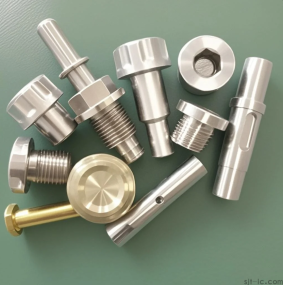
Ultrasonic devices depend on components that can transfer vibration energy accurately and efficiently. Even a small error in size, surface finish, or material quality can reduce performance, change the resonance frequency, or create unwanted energy loss. For this reason, CNC Machining Ultrasonic Components has become an important manufacturing solution for industries that require high-performance ultrasonic systems.
CNC machining provides excellent dimensional control, complex shape manufacturing ability, and stable production quality. These advantages help manufacturers produce ultrasonic horns, transducers, vibration parts, and other precision components that meet strict acoustic requirements.
Why CNC Machining Is Suitable for Ultrasonic Components
Ultrasonic components work through high-frequency vibration. Their shape, weight distribution, and surface condition directly influence how efficiently energy moves through the system. Traditional machining methods may struggle to achieve the accuracy needed for these applications, especially when components have complex geometries or tight tolerance requirements.
CNC machining solves many of these challenges by using computer-controlled tools to produce accurate and repeatable parts. The main benefits include:
- High precision for stable ultrasonic performance: CNC machines can achieve tight dimensional tolerances, helping components maintain the correct resonance frequency and vibration behavior.
- Complex geometry production: CNC milling and multi-axis machining can create special shapes that improve energy transmission and vibration efficiency.
- Consistent production quality: Once the machining program is verified, CNC equipment can produce multiple parts with the same dimensions and performance characteristics.
Companies with demanding ultrasonic applications often need reliable machining partners who understand both mechanical requirements and acoustic performance. EMAR provides CNC machining services for precision components and supports customers with manufacturing experience, process optimization, and quality management.
Design Considerations for CNC-Machined Ultrasonic Components
The design stage determines whether an ultrasonic component can achieve the required performance. Design considerations for CNC-machined ultrasonic components include not only mechanical dimensions but also acoustic behavior and system integration.
Operating Frequency and Resonance Requirements
Every ultrasonic device operates at a specific frequency. The component design must match this frequency to create effective resonance. Factors such as length, diameter, thickness, and internal structure can affect vibration characteristics.
During design, engineers need to calculate the relationship between component dimensions and operating frequency. Small dimensional changes caused by machining errors may shift the resonance point and reduce efficiency.
Acoustic Impedance and Energy Transfer
Acoustic impedance affects how ultrasonic energy moves between different parts of the system. A component with unsuitable impedance may reflect energy instead of transmitting it effectively.
Engineers consider material properties, geometry, and connection surfaces to achieve better energy transfer. Proper design reduces vibration loss and improves the overall performance of ultrasonic equipment.
Component Function Within the Ultrasonic System
The role of each part must be clearly defined before machining begins. A vibration horn, mounting component, or connection part may require different designs and machining methods.
Understanding the working environment, vibration load, temperature conditions, and connection method helps create a design that performs reliably after production.
Material Selection for Ultrasonic Component CNC Machining
Material selection for ultrasonic component CNC machining is critical because the material directly affects vibration transmission, durability, and operating stability.
Common material requirements include:
- High acoustic conductivity: Materials should transfer ultrasonic energy efficiently with minimal loss.
- Low internal damping: Low damping helps maintain strong vibration amplitude and reduces energy absorption inside the material.
- Good mechanical strength: Components must withstand repeated vibration and mechanical stress during operation.
Common materials used for ultrasonic components include aluminum alloys, titanium alloys, stainless steel, and specialized engineering materials. The best choice depends on the operating frequency, required strength, corrosion resistance, and application environment.
CNC Machining Processes for Ultrasonic Components
Manufacturing ultrasonic components requires careful machining control. Different CNC operations are selected based on the component structure and accuracy requirements.
Turning Operations
CNC turning is commonly used for cylindrical ultrasonic parts such as shafts, rods, and horn-shaped components. Turning provides accurate control of diameter, concentricity, and surface finish.
Typical machining considerations include:
- Using sharp carbide or coated cutting tools to reduce cutting force.
- Selecting suitable spindle speed and feed rate to prevent excessive vibration.
- Controlling depth of cut to avoid material deformation.
For ultrasonic parts, stable cutting conditions are important because excessive machining force can create internal stress and affect vibration performance.
Milling Operations in Ultrasonic Component Production
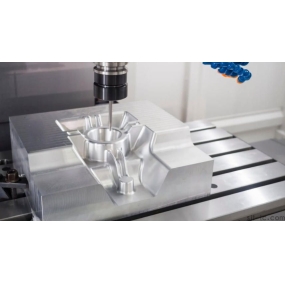
Milling operations in ultrasonic component production are used to create complex surfaces, slots, mounting features, and special vibration structures.
CNC milling allows manufacturers to produce complicated geometries that improve ultrasonic energy transmission. Multi-axis milling is especially useful when components require curved surfaces or precise three-dimensional shapes.
Important milling parameters include:
- Cutting speed: Must be selected according to material hardness and tool type to maintain stable cutting.
- Feed rate: A controlled feed rate helps achieve better surface quality and prevents excessive tool pressure.
- Depth of cut: Proper depth reduces vibration and improves dimensional accuracy.
Grinding for High Surface Accuracy
Grinding is often used after rough machining when very tight tolerances or smooth surfaces are required. It helps improve flatness, roundness, and surface finish.
A smoother surface reduces friction and improves contact between ultrasonic components, supporting better acoustic performance.
Solving Common CNC Machining Challenges for Ultrasonic Components
Minimizing Acoustic Losses
Minimizing acoustic losses in ultrasonic component CNC machining requires careful control of surface roughness and geometry accuracy.
Rough surfaces can scatter vibration energy and reduce transmission efficiency. Manufacturers use optimized cutting parameters, fine machining operations, and polishing processes to create smoother surfaces.
Maintaining Dimensional Accuracy
Ultrasonic components often require very precise dimensions because resonance frequency depends on geometry. CNC machining processes must include accurate tool calibration, temperature control, and regular measurement checks.
Maintaining correct dimensions helps ensure the component vibrates at the designed frequency and works properly within the ultrasonic system.
Reducing Material-Induced Stress
Machining forces can create internal stress inside the material. These stresses may change the vibration characteristics or cause long-term reliability problems.
Manufacturers can reduce this risk by using proper cutting conditions, balanced machining strategies, and post-machining stress relief treatments.
Post-Machining Processes for Improved Performance
After CNC machining, additional treatments may be required to improve ultrasonic component performance.
- Surface polishing: Creates smoother contact surfaces, improves acoustic coupling, and reduces energy loss.
- Heat treatment: Helps relieve internal stress caused by machining and improves dimensional stability.
- Cleaning and inspection: Removes machining residues and ensures the component meets application requirements.
Quality Control in Ultrasonic Component CNC Manufacturing
Quality control in ultrasonic component CNC manufacturing is essential because ultrasonic systems require reliable and repeatable performance.
A complete quality control process may include:
- Dimensional inspection using precision measuring equipment.
- Surface roughness testing to verify smooth acoustic surfaces.
- Material inspection to confirm mechanical and acoustic properties.
- Resonance frequency testing to ensure the component performs as designed.
- Final performance checks after assembly with the ultrasonic system.
Advanced CNC machining suppliers combine manufacturing experience with strict inspection procedures to reduce production risks. EMAR focuses on precision CNC machining solutions and supports customers in developing ultrasonic components that require accuracy, consistency, and dependable performance.
Conclusion
CNC machining is an effective method for producing ultrasonic components because it provides the precision, flexibility, and consistency required for high-frequency vibration applications. From design planning and material selection to machining, surface treatment, and quality inspection, every step influences ultrasonic performance.
By choosing the right machining process and controlling critical factors such as resonance accuracy, surface quality, and material stress, manufacturers can create ultrasonic components with better energy transmission and longer service life. Professional CNC machining suppliers like EMAR help customers turn complex ultrasonic component designs into reliable, production-ready parts.