Spanish
 Arabic
 French
 Portuguese
 Belarusian
 Japanese
 Russian
 Malay
Malay Icelandic
 Bulgarian
 Azerbaijani
 Estonian
 Irish
Irish Polish
 Persian
 Boolean
 Danish
 German
 Filipino
 Finnish
 Korean
 Dutch
Dutch Galician
 Catalan
 Czech
Czech Croatian
 Latin
Latin Latvian
 Romanian
 Maltese
 Macedonian
 Norwegian
 Swedish
 Serbian
 Slovak
 Slovenian
 Swahili
 Thai
Thai Turkish
 Welsh
Welsh Urdu
Urdu Ukrainian
 Greek
Greek Hungarian
 Italian
 Yiddish
 Indonesian
 Vietnamese
 Haitian Creole
 Spanish Basque

HTML
CNC Machining Mechanical Parts Customization: A Complete Guide for Reliable Custom Parts
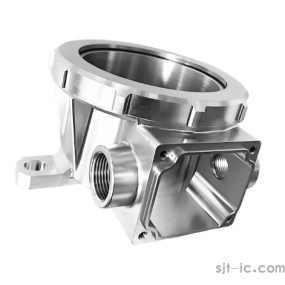
When standard mechanical parts cannot meet specific equipment requirements, businesses need a reliable way to create customized solutions. CNC Machining Mechanical Parts Customization provides a flexible and accurate manufacturing method for producing mechanical components with unique shapes, sizes, and performance requirements.
From prototypes to small-batch production, CNC machining helps manufacturers create parts that match exact design needs. It solves common problems such as poor fit, limited design options, inconsistent quality, and long development cycles. With advanced CNC equipment and professional experience, companies like EMAR help customers turn complex mechanical part ideas into finished products with stable quality and reliable performance.
Why CNC Machining Is Ideal for Custom Mechanical Parts
Custom mechanical parts often require higher accuracy and more design freedom than standard products. CNC machining is a preferred solution because it uses computer-controlled machines to remove material with high precision. This allows manufacturers to produce complex components while maintaining strict dimensional requirements.
One major advantage is precision. CNC machines can achieve very tight tolerances, which is important for mechanical parts that must work together smoothly. Accurate dimensions reduce assembly problems, improve equipment performance, and extend product life.
Another benefit is the ability to manufacture complex geometries. CNC machining can create detailed features such as curved surfaces, deep holes, grooves, threads, and irregular shapes that are difficult to produce with traditional methods.
CNC machining also offers production flexibility. Manufacturers can quickly adjust programs to produce different designs without creating expensive molds or special tooling. This makes CNC machining suitable for prototypes, customized parts, and low-volume production.
- High precision: Ensures parts meet exact engineering requirements.
- Complex shape capability: Supports advanced mechanical designs.
- Flexible production: Allows fast changes between different part designs.
- Repeatable quality: Produces consistent parts during multiple production runs.
The Customization Process Starts with Clear Design Communication
A successful custom machining project begins with accurate design information. Poor communication between customers and manufacturers can cause delays, incorrect parts, and additional costs. Good design communication in CNC mechanical parts customization helps avoid these problems by making sure every requirement is understood before production starts.
Customers should provide complete technical information, including:
- Part drawings or 3D CAD models.
- Overall dimensions and critical measurements.
- Required tolerances for important features.
- Surface finish requirements.
- Assembly conditions and functional requirements.
- Expected working environment, including temperature, pressure, or load conditions.
For example, a shaft used in a high-speed machine may require tighter tolerance and smoother surface finish than a simple support bracket. Understanding the actual function of the part allows engineers to recommend the best machining method and material.
Experienced CNC machining suppliers review designs before production to identify possible manufacturing difficulties. EMAR provides engineering support during the design stage, helping customers improve part designs for better machining efficiency, lower costs, and stable performance.
Choosing the Right Material for Custom Mechanical Parts
Material selection directly affects the strength, durability, weight, and cost of mechanical parts. The best material depends on how and where the part will be used. Proper material selection for custom mechanical parts CNC machining helps ensure the final component can handle real operating conditions.
Common CNC machining materials include:
- Aluminum: Lightweight, corrosion-resistant, and easy to machine. Suitable for aerospace, electronics, and general mechanical applications.
- Stainless steel: Provides excellent strength and corrosion resistance for demanding environments.
- Carbon steel: Offers high strength and cost efficiency for industrial components.
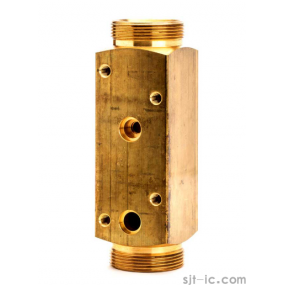
- Brass: Provides good machinability and electrical conductivity for fittings and precision components.
- Engineering plastics: Useful when low weight, chemical resistance, or insulation is required.
Engineers also consider factors such as hardness, wear resistance, heat resistance, and production cost. Selecting a material that is too expensive or difficult to machine may increase unnecessary manufacturing expenses.
CNC Machining Operations Used for Custom Mechanical Parts
Different mechanical part designs require different machining operations. Manufacturers select suitable processes based on the shape, material, accuracy requirements, and production quantity.
Turning Operations
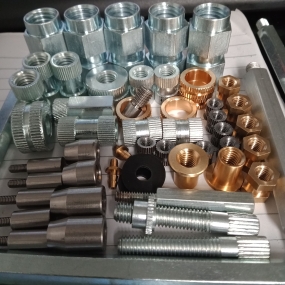
Turning operations in custom mechanical part production are commonly used for round components such as shafts, pins, bushings, and cylindrical fittings. During turning, the workpiece rotates while a cutting tool removes material to create accurate external and internal features.
Proper cutting speed, feed rate, and cutting depth are important for achieving good surface quality and extending tool life.
Milling Operations
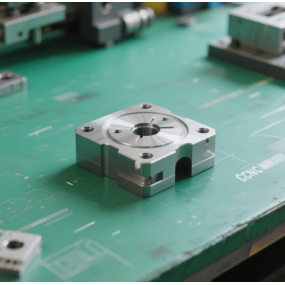
Milling is widely used for producing flat surfaces, slots, pockets, and complex 3D shapes. Multi-axis CNC milling machines can create detailed geometries while maintaining high accuracy.
Drilling and Hole Machining
Many mechanical parts require precise holes for assembly or fluid movement. CNC drilling ensures correct hole diameter, depth, and position. Special tools may be selected for deep holes or high-strength materials.
Grinding Operations
Grinding is used when extremely accurate dimensions and smooth surface finishes are required. It is often applied to precision components that need excellent contact surfaces.
During machining, manufacturers choose suitable cutting tools and parameters according to the material. Incorrect tool selection or cutting settings may cause poor surface quality, excessive tool wear, or dimensional errors.
Common Challenges in CNC Mechanical Parts Customization
Maintaining Consistent Quality
Custom parts may be produced in small quantities, but each part still needs to meet the same standards. Strict process control, accurate machine calibration, and regular inspection are necessary to maintain consistency.
Meeting Tight Delivery Schedules
Customers often need customized parts quickly to reduce equipment downtime or speed up product development. Efficient production planning, experienced operators, and optimized machining processes help shorten delivery times.
Handling Design Changes
Handling design changes in CNC mechanical parts customization can be challenging, especially after production has started. Late changes may affect machining programs, material preparation, and delivery schedules.
Good communication between engineers and customers helps manage changes effectively. Reviewing the impact of modifications before implementation reduces unnecessary waste and delays.
Post-Machining Processes for Better Performance
After CNC machining, additional treatments may be required to improve mechanical properties or protect the part surface.
- Heat treatment: Improves hardness, strength, and wear resistance. It is commonly used for parts exposed to heavy loads or friction.
- Surface coating: Provides corrosion protection, reduces wear, and improves appearance.
- Anodizing: Often used for aluminum parts to increase surface durability and corrosion resistance.
- Polishing: Creates a smoother surface for better appearance or reduced friction.
The correct post-machining process depends on the part's working environment and performance requirements.
Quality Control in Custom Mechanical Parts CNC Manufacturing
Quality inspection is essential for ensuring customized mechanical parts meet customer expectations. Effective quality control in custom mechanical parts CNC manufacturing includes checks throughout the entire production process.
- Incoming material inspection: Confirms the material matches required specifications.
- In-process inspection: Checks dimensions during machining to identify problems early.
- Tool and machine monitoring: Ensures stable machining conditions.
- Final product verification: Uses measuring equipment to confirm finished part dimensions, surface quality, and functionality.
Advanced inspection tools such as coordinate measuring machines (CMM), precision gauges, and surface testing equipment help verify accuracy. Reliable quality control reduces the risk of part failure during actual use.
Choosing a Reliable Partner for CNC Mechanical Parts Customization
CNC Machining Mechanical Parts Customization requires more than advanced machines. It requires engineering knowledge, careful planning, accurate communication, and strict quality management.
A professional CNC machining supplier can help customers from initial design review to final inspection. EMAR has experience in customized CNC machining services, supporting different industries with precision mechanical parts, prototype development, and small-batch manufacturing solutions.
By combining advanced CNC technology, skilled engineers, suitable materials, and strong quality control systems, manufacturers can deliver custom mechanical parts that meet performance requirements while controlling production costs.