Spanish
 Arabic
 French
 Portuguese
 Belarusian
 Japanese
 Russian
 Malay
Malay Icelandic
 Bulgarian
 Azerbaijani
 Estonian
 Irish
Irish Polish
 Persian
 Boolean
 Danish
 German
 Filipino
 Finnish
 Korean
 Dutch
Dutch Galician
 Catalan
 Czech
Czech Croatian
 Latin
Latin Latvian
 Romanian
 Maltese
 Macedonian
 Norwegian
 Swedish
 Serbian
 Slovak
 Slovenian
 Swahili
 Thai
Thai Turkish
 Welsh
Welsh Urdu
Urdu Ukrainian
 Greek
Greek Hungarian
 Italian
 Yiddish
 Indonesian
 Vietnamese
 Haitian Creole
 Spanish Basque

HTML
Brass Fitting CNC Machining Production: A Complete Guide for High-Quality Fittings
Brass Fitting CNC Machining Production is an important manufacturing process for creating reliable fittings used in plumbing, hydraulic systems, gas equipment, electrical applications, and industrial machinery. Many customers face challenges when producing brass fittings, such as maintaining accurate dimensions, preventing leakage, controlling machining costs, and achieving a smooth surface finish. CNC machining provides an effective solution by improving accuracy, repeatability, and production efficiency.
This article explains how brass fittings are designed, machined, inspected, and finished. It also covers important factors such as material selection, machining methods, tooling, cutting conditions, and quality control practices to help manufacturers and buyers understand the complete production process.
Why Brass Is a Preferred Material for Fittings
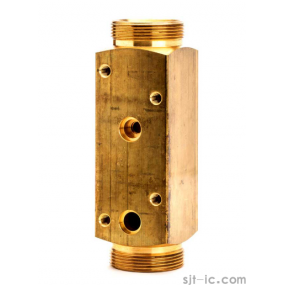
Brass is widely used for fittings because it combines good mechanical properties with excellent corrosion resistance. It is a copper and zinc alloy that provides a balanced combination of strength, machinability, and durability.
- Excellent machinability: Brass is easier to cut than many other metals, allowing CNC machines to produce complex shapes and precise threads efficiently.
- Good corrosion resistance: Brass performs well in water, air, and many industrial environments, making it suitable for long-term use.
- Good sealing performance: Brass can be machined with accurate thread profiles and smooth sealing surfaces to reduce leakage risks.
- Thermal and electrical conductivity: These properties make brass useful in special fittings for electrical and heating applications.
- Attractive appearance: The natural golden color of brass provides a premium surface finish for visible components.
Compared with materials such as steel or aluminum, brass often provides a better balance between machining efficiency and service performance. This makes it a common choice for connectors, adapters, valves, pipe fittings, and custom components.
Design Considerations for Brass Fitting CNC Machining
Successful production starts with proper design. The design considerations for brass fitting CNC machining directly affect machining difficulty, cost, and final performance.
Before machining begins, engineers need to understand the fitting's working environment and connection requirements. Important design factors include:
- Intended application: A fitting used for water systems may require different specifications from one used for hydraulic oil, gas, or electrical equipment.
- Connection type: Designers must select suitable connection methods, such as internal threads, external threads, compression fittings, flare connections, or push-to-connect structures.
- Required tolerances: Tight tolerances are necessary for sealing areas and threaded connections. Incorrect dimensions may cause installation problems or leakage.
- Wall thickness: The fitting must be strong enough to handle pressure while avoiding unnecessary material usage.
- Machining accessibility: The design should allow cutting tools to reach all required areas efficiently.
A professional CNC machining partner can review drawings before production and suggest design improvements. Companies with experience in brass fitting manufacturing, such as EMAR, help customers optimize designs for better machining results and stable production.
Brass Alloy Selection in Fitting Production
The choice of material has a major impact on fitting performance. Brass alloy selection in fitting production depends on factors such as strength requirements, corrosion resistance, machining performance, and application conditions.
Common Brass Alloys Used for CNC Machining
- C36000 Free-Cutting Brass: This alloy is popular for CNC machining because it has excellent cutting performance. It is suitable for threaded fittings, adapters, and precision components.
- C46400 Naval Brass: This material provides better corrosion resistance, especially in marine environments.
- C26000 Cartridge Brass: It offers good formability and corrosion resistance for applications requiring additional shaping processes.
- C27000 Yellow Brass: This alloy provides good strength and is commonly used for general-purpose fittings.
For high-volume CNC production, free-machining brass is often selected because it reduces tool wear and improves production speed. For harsh environments, corrosion-resistant alloys may provide better long-term reliability.
The Brass Fitting CNC Machining Production Process
The production journey includes several carefully controlled steps. Each stage affects the final accuracy, strength, and appearance of the fitting.
1. Engineering Review and CNC Programming
After receiving a technical drawing or 3D model, engineers review dimensions, tolerances, thread specifications, and material requirements. CNC programmers then create machining instructions using CAM software.
The program controls machine movements, cutting speeds, tool paths, and machining sequences. Proper programming reduces unnecessary cutting time and improves consistency during mass production.
2. Material Preparation
Brass bars, rods, or blocks are prepared according to the fitting design. The raw material is checked for correct alloy type and surface condition before machining begins.
3. CNC Turning Operations
CNC turning is one of the most common operations in brass fitting manufacturing. The workpiece rotates while cutting tools remove material to create cylindrical features.
Turning operations can produce:
- Outer diameters
- Steps and shoulders
- Grooves
- Chamfers
- Round fitting bodies
Carbide cutting tools are commonly used because they provide stable cutting performance and long tool life.
4. Drilling and Internal Machining
Drilling creates internal passages required for fluid or gas flow. The correct drill size and alignment are important because poor internal geometry can reduce flow performance.
For complex fittings, additional operations such as boring, reaming, or milling may be required to achieve precise internal dimensions.
5. Threading in Brass Fitting CNC Machining
Threading in brass fitting CNC machining is a critical step because threads directly affect installation and sealing performance.
Manufacturers may use:
- CNC thread turning: Suitable for external and internal threads with high accuracy.
- Tapping: Common for creating internal threads efficiently.
- Thread milling: Useful for special thread profiles or harder-to-machine designs.
Proper tool selection and cutting conditions help prevent damaged threads. Lubrication and stable tool movement are important even though brass is relatively easy to machine.
Recommended Machining Parameters for Brass Fittings
Brass allows relatively high machining speeds, but parameters must still be adjusted according to alloy type, tool material, and machine condition.
- Cutting speed: Many brass alloys can be machined at high speeds, often around 100–300 m/min depending on tooling and operation.
- Feed rate: Moderate feed rates help balance productivity and surface quality.
- Depth of cut: Rough machining may use deeper cuts, while finishing operations require smaller depths for better accuracy.
- Tool material: Carbide tools are commonly preferred for production environments because they maintain sharp edges and improve consistency.
Actual settings should be tested based on the specific CNC machine, brass alloy, and fitting design. Incorrect parameters may create poor surface quality, tool wear, or dimensional errors.
Challenges in Brass Fitting CNC Machining and Solutions
Preventing Deformation During Machining
Although brass is easy to cut, its relatively soft nature can create challenges. Thin walls or delicate structures may deform if excessive clamping pressure or cutting force is applied.
Solutions include:
- Using suitable workholding methods
- Reducing unnecessary cutting force
- Using sharp cutting tools
- Supporting thin sections during machining
Handling Burrs in Brass Fitting Production
Handling burrs in brass fitting production is necessary to ensure safe installation and reliable sealing. Burrs can affect thread quality, fluid flow, and assembly performance.
Common burr removal methods include:
- Optimizing cutting parameters to reduce burr formation
- Using sharp tools with proper cutting angles
- Manual deburring for small production runs
- Mechanical polishing or finishing processes for large batches
Heat Treatment and Post-Machining Finishing
Most brass fittings do not require complex heat treatment because brass already provides good machinability and performance. However, certain applications may require stress relief or special processing to improve dimensional stability.
After machining, manufacturers may perform additional finishing processes, including:
- Polishing: Improves surface appearance and creates a smoother finish.
- Cleaning: Removes chips, oil, and machining residue.
- Plating or coating: May be used when additional protection or appearance requirements exist.
- Deburring: Removes sharp edges and improves safety.
Quality Control in Brass Fitting CNC Manufacturing
Quality control in brass fitting CNC manufacturing is essential because fittings often handle pressurized fluids or gases. Even small dimensional errors can cause leakage or system failure.
Professional manufacturers use multiple inspection methods, including:
- Dimensional inspection: Calipers, micrometers, and coordinate measuring machines (CMM) verify critical dimensions.
- Thread inspection: Thread gauges check whether connections meet required standards.
- Surface inspection: Surface finish is checked to ensure proper sealing and appearance.
- Leak testing: Fluid-carrying fittings are tested under pressure to confirm sealing performance.
- Material verification: Alloy composition is checked to ensure the correct brass grade is used.
Experienced CNC machining suppliers apply strict inspection systems throughout production rather than checking only finished products. This helps identify problems early and reduces waste.
Choosing a Reliable Brass Fitting CNC Machining Partner
Selecting the right manufacturer can significantly influence product quality, delivery time, and production cost. A reliable supplier should provide:
- Advanced CNC turning and milling equipment
- Experience with different brass alloys
- Professional engineering support
- Stable production capacity
- Complete inspection processes
- Ability to handle both prototypes and large-volume orders
EMAR provides CNC machining solutions for precision brass components, including custom brass fittings. With experience in machining processes, material selection, and quality management, EMAR supports customers from initial design review through final production.
For companies requiring dependable Brass Fitting CNC Machining Production, choosing an experienced CNC partner helps achieve accurate dimensions, reliable connections, and consistent product quality.