Spanish
 Arabic
 French
 Portuguese
 Belarusian
 Japanese
 Russian
 Malay
Malay Icelandic
 Bulgarian
 Azerbaijani
 Estonian
 Irish
Irish Polish
 Persian
 Boolean
 Danish
 German
 Filipino
 Finnish
 Korean
 Dutch
Dutch Galician
 Catalan
 Czech
Czech Croatian
 Latin
Latin Latvian
 Romanian
 Maltese
 Macedonian
 Norwegian
 Swedish
 Serbian
 Slovak
 Slovenian
 Swahili
 Thai
Thai Turkish
 Welsh
Welsh Urdu
Urdu Ukrainian
 Greek
Greek Hungarian
 Italian
 Yiddish
 Indonesian
 Vietnamese
 Haitian Creole
 Spanish Basque

HTML
CNC Mold Machining Process Flow
Understanding the CNC Mold Machining Process Flow is important for anyone who wants to produce high-precision molds for plastic, automotive, medical, or industrial parts. Many beginners and even experienced buyers often struggle with unclear production steps, poor communication with factories, and unexpected quality issues. This article explains the full process in simple English so you can clearly understand what happens at each stage and how to avoid common problems.
Why the CNC Mold Machining Process Flow Matters
A clear process helps ensure every mold is accurate, durable, and cost-effective. When the process is not well controlled, problems such as dimension errors, surface defects, and short mold life can happen. That is why understanding the importance of each step in CNC mold machining is essential for both engineers and buyers.
A stable process also helps factories deliver consistent results, reduce waste, and shorten lead time.
Steps Involved in CNC Mold Machining Process
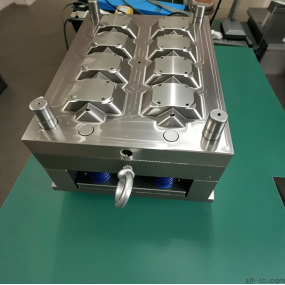
The steps involved in CNC mold machining process are carefully designed to turn raw metal into a high-precision mold. Below is a simplified breakdown:
1. Mold Design and Engineering Review
Everything starts with a 3D mold design. Engineers review product drawings, check structure feasibility, and confirm material selection. This step ensures the mold can be manufactured without errors later.
2. Material Selection and Preparation
High-quality steel or aluminum is selected based on mold requirements. Proper material preparation ensures stability during machining and improves mold lifespan.
3. Rough CNC Machining
This step removes most of the excess material quickly. It shapes the basic form of the mold but does not focus on fine accuracy yet.
4. Semi-Finishing Process
At this stage, the mold starts to get closer to final shape. Machining accuracy improves, and stress from rough cutting is reduced.
5. Precision Finishing
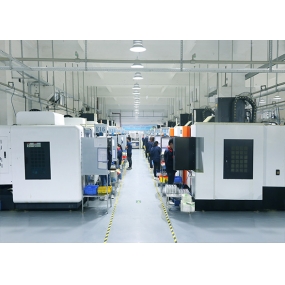
This is one of the most critical stages. High-speed CNC machines create smooth surfaces and exact dimensions. It directly affects mold performance and product quality.
6. EDM and Detail Processing
For deep ribs, sharp corners, or complex shapes, EDM (Electrical Discharge Machining) is used to achieve details that CNC tools cannot reach.
7. Polishing and Surface Treatment
The mold surface is polished to reduce friction and improve final product appearance. Some molds also require texture or coating.
8. Assembly and Testing
All mold parts are assembled and tested to ensure smooth operation. Trial runs are performed to check product accuracy and mold performance.
Quality Control Points in CNC Mold Machining Process Flow
The quality control points in CNC mold machining process flow are critical for avoiding costly failures. Common control areas include:
- Dimensional accuracy at every machining stage
- Surface roughness inspection after finishing
- Hardness testing of mold materials
- Assembly fit checking for moving parts
- Trial molding result validation
Careful inspection at each step ensures the final mold meets strict industrial standards.
Tooling Requirements in CNC Mold Machining Process
Choosing the right tools is essential for stability and precision. The tooling requirements in CNC mold machining process usually include:
- High-speed steel and carbide cutting tools for durability
- Small-diameter tools for fine details and deep cavities
- Coated tools to reduce wear and heat buildup
- EDM electrodes for complex geometries
Good tooling reduces tool wear, improves surface finish, and increases machining efficiency.
Common Challenges in CNC Mold Machining Process Flow and Solutions
Even with advanced machines, challenges still happen. Understanding the common challenges in CNC mold machining process flow and solutions helps avoid production risks.
- Challenge: Dimensional deviation during machining
Solution: Use stable fixtures and perform regular calibration - Challenge: Poor surface finish
Solution: Optimize cutting speed and use proper finishing tools - Challenge: Tool wear and breakage
Solution: Select coated tools and adjust cutting parameters - Challenge: Complex geometry limitations
Solution: Combine CNC machining with EDM processes
Why Choose EMAR for CNC Mold Machining
In real production, experience matters as much as machines. EMAR is a professional manufacturer specializing in high-precision mold machining solutions. With advanced CNC equipment, strict quality inspection systems, and experienced engineers, EMAR ensures every step of the CNC Mold Machining Process Flow is carefully controlled.
From design support to final testing, EMAR focuses on delivering stable quality, shorter lead times, and reliable mold performance for global customers. This makes it a trusted partner for industries requiring high-precision molds.
Conclusion
A well-controlled CNC mold machining process is the foundation of high-quality manufacturing. By understanding each step, from design to testing, you can better communicate with suppliers, reduce risks, and ensure better product outcomes. Whether you are an engineer or a buyer, mastering this process helps you make smarter decisions in mold production.