Spanish
 Arabic
 French
 Portuguese
 Belarusian
 Japanese
 Russian
 Malay
Malay Icelandic
 Bulgarian
 Azerbaijani
 Estonian
 Irish
Irish Polish
 Persian
 Boolean
 Danish
 German
 Filipino
 Finnish
 Korean
 Dutch
Dutch Galician
 Catalan
 Czech
Czech Croatian
 Latin
Latin Latvian
 Romanian
 Maltese
 Macedonian
 Norwegian
 Swedish
 Serbian
 Slovak
 Slovenian
 Swahili
 Thai
Thai Turkish
 Welsh
Welsh Urdu
Urdu Ukrainian
 Greek
Greek Hungarian
 Italian
 Yiddish
 Indonesian
 Vietnamese
 Haitian Creole
 Spanish Basque

HTML
CNC Beryllium Copper Machining Process: A Practical Guide for Better Results
The CNC Beryllium Copper Machining Process is widely used in industries that need high strength, excellent conductivity, and long-lasting precision parts. Beryllium copper is a special alloy, but it is also more challenging to machine compared to standard metals. Many users struggle with tool wear, surface finish issues, and safety concerns.
This article explains how the process works in simple English, what problems you may face, and how to solve them effectively in real production environments.
Why Beryllium Copper Is Difficult but Valuable
Beryllium copper is strong, corrosion-resistant, and highly conductive. It is often used in electrical connectors, aerospace parts, and precision molds. However, its hardness and abrasive nature make machining more complex.
Understanding these properties is the first step to improving efficiency in the CNC Beryllium Copper Machining Process.
- High strength leads to faster tool wear
- Fine chips can affect surface quality
- Dust may create health risks if not controlled
Steps in CNC Beryllium Copper Machining
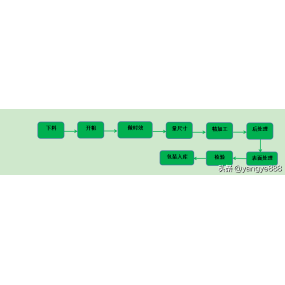
The steps in CNC beryllium copper machining must be carefully planned to achieve stable quality and reduce tool damage.
- Material preparation: Inspect raw material for cracks or impurities.
- Rough machining: Remove most excess material using controlled cutting speeds.
- Semi-finishing: Improve shape accuracy and reduce tool stress.
- Finishing: Achieve precise dimensions and smooth surface quality.
- Cleaning and inspection: Remove residue and check tolerances.
Tooling Requirements for CNC Beryllium Copper Machining
Choosing the right tools is one of the most important factors in success. The tooling requirements for CNC beryllium copper machining are stricter than normal copper or aluminum processing.
- Use carbide tools with high wear resistance
- Apply sharp cutting edges to reduce heat buildup
- Use coatings such as TiAlN for longer tool life
- Maintain stable cutting parameters to avoid vibration
Good tooling directly improves surface finish and reduces production cost.
Challenges in Machining Beryllium Copper with CNC and Solutions
There are several challenges in machining beryllium copper with CNC and solutions must be applied carefully to ensure safe and efficient production.
1. Tool Wear
Beryllium copper causes fast tool wear due to its hardness. Solution: use coated carbide tools and replace tools regularly.
2. Heat Buildup
Excess heat can damage both tool and workpiece. Solution: apply effective coolant and reduce cutting speed when necessary.
3. Dust and Safety Risks
Beryllium dust is hazardous if inhaled. Solution: use sealed machining systems and proper dust collection equipment.
4. Surface Finish Problems
Improper parameters can lead to rough surfaces. Solution: optimize feed rate and use fine finishing tools.
Heat Treatment in CNC Beryllium Copper Machining
Heat treatment in CNC beryllium copper machining plays an important role in achieving the required mechanical properties.
Typically, beryllium copper is heat treated after machining to improve hardness and strength. However, in some cases, pre-machined heat treatment is also used depending on part design.
- Solution heat treatment improves ductility for machining
- Aging treatment increases hardness and strength
- Controlled cooling prevents deformation
Quality Control in CNC Beryllium Copper Machining Process
Quality control in CNC beryllium copper machining process is essential for industries like aerospace, electronics, and precision tooling.
Every part must meet strict dimensional and performance requirements.
- Use CMM (Coordinate Measuring Machine) for precision checks
- Inspect surface roughness and tolerance levels
- Test hardness after heat treatment
- Ensure consistency in batch production
How Professional Support Improves Results
Because beryllium copper is difficult to machine safely and efficiently, working with an experienced supplier is often the best choice.
:contentReference[oaicite:0]{index=0} provides professional CNC Machining solutions for challenging materials like beryllium copper. With advanced equipment, strict process control, and experienced engineers, they help reduce tool wear, improve surface quality, and ensure stable batch production.
This kind of professional support is especially valuable for companies that need high precision and consistent performance in demanding applications.
Conclusion
The CNC Beryllium Copper Machining Process requires careful control of tools, heat, and machining parameters. When done correctly, it produces high-performance parts used in critical industries.
By understanding the key steps, tooling needs, challenges, heat treatment methods, and quality control practices, manufacturers can greatly improve efficiency and reduce production risks.
Working with an experienced partner like :contentReference[oaicite:1]{index=1} can further enhance reliability and ensure consistent machining results for complex beryllium copper components.