Spanish
 Arabic
 French
 Portuguese
 Belarusian
 Japanese
 Russian
 Malay
Malay Icelandic
 Bulgarian
 Azerbaijani
 Estonian
 Irish
Irish Polish
 Persian
 Boolean
 Danish
 German
 Filipino
 Finnish
 Korean
 Dutch
Dutch Galician
 Catalan
 Czech
Czech Croatian
 Latin
Latin Latvian
 Romanian
 Maltese
 Macedonian
 Norwegian
 Swedish
 Serbian
 Slovak
 Slovenian
 Swahili
 Thai
Thai Turkish
 Welsh
Welsh Urdu
Urdu Ukrainian
 Greek
Greek Hungarian
 Italian
 Yiddish
 Indonesian
 Vietnamese
 Haitian Creole
 Spanish Basque

HTML
CNC Parts Custom Manufacturing Process: A Complete Guide for Better Precision and Reliable Production
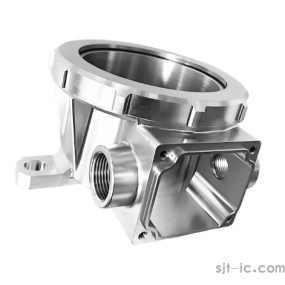
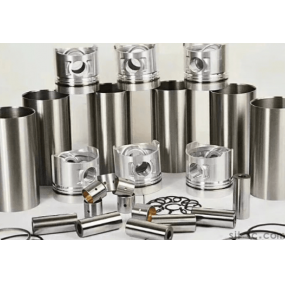
The CNC Parts Custom Manufacturing Process is widely used in modern industries that need high accuracy, stable quality, and repeatable production. From automotive and aerospace to electronics and medical equipment, many companies depend on CNC Machining to produce custom parts that match strict requirements.
However, many buyers face common problems such as unclear production steps, poor communication with suppliers, unstable quality, and difficulty choosing the right materials. This article explains the process in simple English and helps you understand how to avoid these issues.
Why the CNC Parts Custom Manufacturing Process Matters
When parts must fit perfectly into a machine or product, even a small error can cause failure. The CNC Parts Custom Manufacturing Process solves this problem by using computer-controlled machines to ensure high precision and consistency.
It also helps reduce waste, improve production speed, and support complex designs that are difficult to make by manual methods.
- High accuracy for complex shapes
- Stable quality in mass production
- Lower human error risk
- Faster production cycles
Steps Involved in CNC Parts Custom Manufacturing
Understanding the steps involved in CNC parts custom manufacturing helps customers communicate better with suppliers and avoid misunderstandings.
- Requirement Analysis: Engineers study drawings, tolerances, and product usage.
- Design Programming: CAD/CAM software is used to convert designs into machine instructions.
- Material Preparation: Suitable raw materials are selected and cut to size.
- CNC Machining: Machines perform cutting, drilling, milling, or turning operations.
- Surface Treatment: Polishing, anodizing, or coating may be applied.
- Final Inspection: Finished parts are checked before delivery.
Each step must be carefully controlled to ensure the final product meets the required standards.
Design Considerations in CNC Custom Part Manufacturing
Good design is the foundation of successful production. The design considerations in CNC custom part manufacturing directly affect cost, quality, and production time.
Engineers usually consider the following factors:
- Tolerance requirements (tight or standard accuracy)
- Part geometry and complexity
- Wall thickness and structural strength
- Tool accessibility for machining
- Surface finish requirements
A well-optimized design can reduce machining time and avoid unnecessary costs while maintaining performance.
Material Selection for CNC Custom-Made Parts
Choosing the right material is critical for performance and durability. The process of material selection for CNC custom - made parts depends on application needs such as strength, heat resistance, corrosion resistance, and cost.
Common materials include:
- Aluminum: Lightweight, easy to machine, widely used
- Stainless Steel: Strong and corrosion-resistant
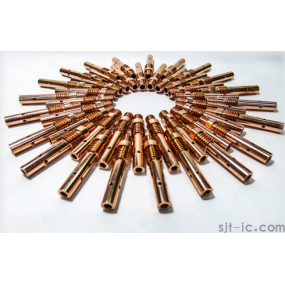
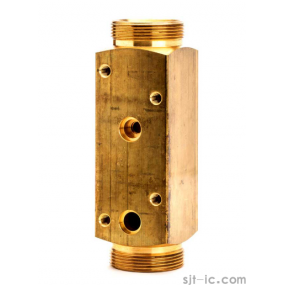
- Brass: Good conductivity and easy processing
- Titanium: High strength with low weight, used in aerospace
- Engineering Plastics: Used for insulation and lightweight parts
Selecting the wrong material may lead to performance failure or higher production costs, so professional advice is important.
Quality Control During CNC Parts Custom Manufacturing
Strong inspection systems ensure that every part meets design requirements. The quality control during CNC parts custom manufacturing process is essential for avoiding defects and ensuring reliability.
Key quality control methods include:
- Dimensional inspection using calipers and CMM machines
- Surface roughness testing
- Hardness testing for metal parts
- Batch sampling inspections
- Final visual checks before packaging
Reliable manufacturers follow strict inspection rules at every stage, not just at the end of production.
Advantages of Custom-Manufacturing CNC Parts
The advantages of custom - manufacturing CNC parts are clear for industries that need precision and flexibility.
- Fully customized designs for specific applications
- High precision and repeatability
- Suitable for prototypes and mass production
- Shorter lead times compared to traditional machining
- Better cost control for complex parts
These advantages make CNC custom manufacturing a preferred solution for modern engineering projects.
How EMAR Supports High-Quality CNC Custom Manufacturing
In real production environments, experience and process control make a big difference. EMAR is a professional manufacturing company with strong capabilities in the CNC Parts Custom Manufacturing Process.
With an experienced engineering team and advanced CNC equipment, EMAR focuses on precision machining, stable production quality, and fast delivery. The company also follows strict inspection standards to ensure every part meets customer drawings and technical requirements.
From prototype development to batch production, EMAR supports customers at every stage, helping reduce risk and improve efficiency. This makes it a reliable partner for industries requiring high-quality CNC custom parts.
Conclusion
The CNC Parts Custom Manufacturing Process is not just about machining—it is a complete system involving design, material selection, precision processing, and strict quality control. Understanding each step helps customers make better decisions and avoid common production problems.
By focusing on engineering accuracy and consistent quality, and with support from experienced manufacturers like EMAR, businesses can achieve better product performance and more efficient production results.