Spanish
 Arabic
 French
 Portuguese
 Belarusian
 Japanese
 Russian
 Malay
Malay Icelandic
 Bulgarian
 Azerbaijani
 Estonian
 Irish
Irish Polish
 Persian
 Boolean
 Danish
 German
 Filipino
 Finnish
 Korean
 Dutch
Dutch Galician
 Catalan
 Czech
Czech Croatian
 Latin
Latin Latvian
 Romanian
 Maltese
 Macedonian
 Norwegian
 Swedish
 Serbian
 Slovak
 Slovenian
 Swahili
 Thai
Thai Turkish
 Welsh
Welsh Urdu
Urdu Ukrainian
 Greek
Greek Hungarian
 Italian
 Yiddish
 Indonesian
 Vietnamese
 Haitian Creole
 Spanish Basque

HTML
CNC Aluminum Products Processing Factory: What You Need to Know Before Choosing One
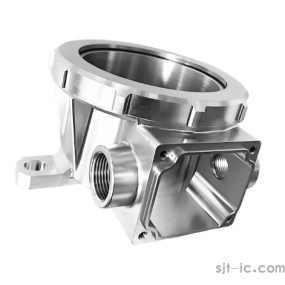
Finding a reliable CNC Aluminum Products Processing Factory is important for industries that need precision parts, stable quality, and cost control. Many buyers face problems like unstable product quality, unclear pricing, and delayed delivery. Understanding how these factories work can help you make better decisions and avoid costly mistakes.
Why CNC aluminum processing matters in modern manufacturing
Aluminum is widely used because it is lightweight, strong, and resistant to corrosion. A professional CNC process ensures every part is produced with high accuracy, even for complex designs. This is especially important for automotive, electronics, aerospace, and industrial equipment industries.
Factors to consider when choosing a CNC Aluminum Products Processing Factory
Not all factories offer the same level of service. When selecting a supplier, pay attention to the following:
- Production accuracy and machine capability
- Experience with different aluminum grades
- Delivery time and production capacity
- Communication and engineering support
- Transparent pricing system
These factors to consider when choosing a CNC aluminum products processing factory directly affect product quality and project success.
Services provided by CNC aluminum products processing factories
Most modern factories offer full manufacturing solutions, not just machining. Common services include:
- CNC milling and turning
- Surface finishing such as anodizing and polishing
- Prototype development
- Mass production manufacturing
- Assembly and packaging support
These services provided by CNC aluminum products processing factories help customers reduce outsourcing complexity.
Quality control in CNC aluminum production
Stable quality is the key to long-term cooperation. Good factories use strict inspection systems, including dimensional measurement, surface testing, and batch sampling. Strong quality control in CNC aluminum products processing factories ensures every part meets design requirements and reduces production risks.
Advantages of working with a professional factory
Choosing the right supplier brings many benefits:
- High precision and repeatability
- Lower production waste
- Faster lead times
- Better cost management
These advantages of local CNC aluminum products processing factories are especially important for companies needing quick communication and faster logistics.
Cost-effectiveness and supplier selection
Price is important, but the cheapest option is not always the best. A stable supplier balances quality, speed, and cost. The cost-effectiveness of different CNC aluminum products processing factories depends on their equipment, workforce skill, and quality systems.
Why EMAR is a reliable CNC partner
EMAR has built strong experience in precision machining and aluminum product manufacturing. With advanced CNC equipment and a skilled engineering team, EMAR provides stable quality, fast response, and customized solutions for different industries. As a trusted CNC Aluminum Products Processing Factory, EMAR focuses on long-term cooperation and consistent performance rather than one-time production.
CNC Titanium Steel Machining Process and Applications: Precision for High-Performance Industries
The CNC Titanium Steel Machining Process and Applications are widely used in industries that require extreme strength, corrosion resistance, and high precision. Titanium steel is difficult to machine, but CNC technology makes it possible to achieve stable and accurate results for complex parts.
Understanding the CNC titanium steel machining process
The machining process requires careful planning due to the hardness and heat resistance of titanium steel. Typical steps include:
- Material selection and inspection
- Rough machining to remove excess material
- Semi-finishing for shape correction
- Precision finishing for final accuracy
- Surface treatment and final inspection
These steps in the CNC titanium steel machining process ensure stability and reduce tool wear.
Precision requirements in titanium steel machining
Titanium steel parts are often used in critical environments, so accuracy is essential. Even small errors can affect performance. Strict precision requirements in CNC titanium steel machining include tight tolerances, stable temperature control, and vibration reduction during cutting.
Tooling challenges and solutions
Because titanium steel is tough and heat-resistant, tool selection is very important. High-performance carbide tools, coated cutters, and optimized cutting speeds are often used. Proper tooling for CNC Machining of titanium steel for different applications helps extend tool life and improve surface quality.
Unique applications of CNC titanium steel parts
Titanium steel components are used in many high-end industries, such as:
- Aerospace structural parts
- Medical implants and surgical tools
- Marine engineering components
- High-performance automotive systems
These unique applications of CNC-machined titanium steel require both strength and precision under extreme conditions.
Advantages of CNC machining in titanium steel applications
CNC technology provides stability, repeatability, and precision that manual processing cannot achieve. The advantages of CNC machining in titanium steel applications include reduced human error, better surface finish, and the ability to produce complex geometries.
EMAR’s expertise in titanium steel machining
EMAR applies advanced CNC systems and engineering experience to handle difficult materials like titanium steel. With strict process control and technical knowledge, EMAR ensures reliable results for demanding industries. Its engineering team focuses on optimizing machining strategies to improve efficiency while maintaining high precision standards.
For companies seeking stable quality and engineering support, EMAR provides a dependable solution for titanium steel machining projects with consistent performance and professional service.