Spanish
 Arabic
 French
 Portuguese
 Belarusian
 Japanese
 Russian
 Malay
Malay Icelandic
 Bulgarian
 Azerbaijani
 Estonian
 Irish
Irish Polish
 Persian
 Boolean
 Danish
 German
 Filipino
 Finnish
 Korean
 Dutch
Dutch Galician
 Catalan
 Czech
Czech Croatian
 Latin
Latin Latvian
 Romanian
 Maltese
 Macedonian
 Norwegian
 Swedish
 Serbian
 Slovak
 Slovenian
 Swahili
 Thai
Thai Turkish
 Welsh
Welsh Urdu
Urdu Ukrainian
 Greek
Greek Hungarian
 Italian
 Yiddish
 Indonesian
 Vietnamese
 Haitian Creole
 Spanish Basque

HTML
CNC Mold Processing: A Practical Guide for High-Precision Manufacturing
CNC Mold Processing plays a key role in modern manufacturing. It helps industries produce accurate, durable, and complex molds used in automotive parts, electronics, home appliances, and many other products. For many buyers and engineers, the biggest challenge is not just making molds, but making them with stable quality, fast delivery, and controlled cost.
This article explains CNC mold production in simple terms, focusing on real problems users face and how advanced machining methods solve them.
What Is CNC Mold Processing?
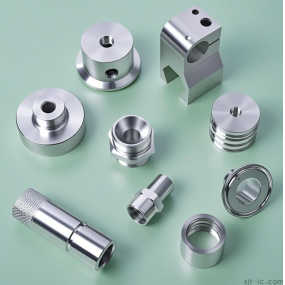
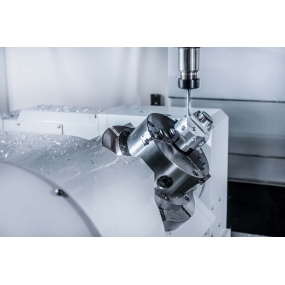
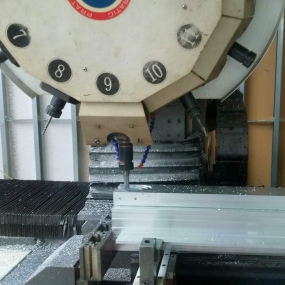
CNC Mold Processing is the use of computer-controlled machines to create molds with high precision. These machines follow digital designs to cut, shape, and finish metal materials into detailed mold structures.
Compared with manual methods, CNC Machining reduces human error and improves repeatability. This is especially important when producing large quantities of identical molds.
Common Challenges in Mold Manufacturing
Many manufacturers face similar problems during mold production:
- Inconsistent precision between batches
- Long production time for complex shapes
- High tooling wear and maintenance cost
- Difficult surface finishing requirements
These issues often lead to delays and increased costs. That is why advanced CNC technology is widely used to solve them.
Steps in CNC Mold Processing
Understanding the steps in CNC mold processing helps improve planning and communication between customers and manufacturers.
- Design Stage: Engineers create a 3D model of the mold using CAD software.
- Programming Stage: The design is converted into CNC machine instructions.
- Rough Machining: Large amounts of material are removed quickly.
- Semi-Finishing: The shape becomes more accurate with better surface control.
- Finishing: High-precision tools create smooth and detailed surfaces.
- Inspection: Final measurements ensure the mold matches design requirements.
Each step is important to ensure the final mold performs well in real production environments.
Advantages of CNC in Mold Processing
The advantages of CNC in mold processing are the main reason many industries prefer it over traditional methods.
- High precision: CNC machines can achieve very tight tolerances.
- Consistency: Every mold is made with the same quality standard.
- Efficiency: Automated machining reduces production time.
- Complex shapes: CNC can produce detailed geometries that are difficult manually.
These benefits help companies reduce waste and improve product reliability.
Precision Control in CNC Mold Processing
Precision control in CNC mold processing is critical for industries like automotive and electronics, where even small errors can cause product failure.
Advanced CNC systems use digital feedback, multi-axis control, and real-time monitoring to maintain accuracy. Temperature control and tool calibration also help ensure stable machining conditions.
High-level manufacturers continuously adjust cutting parameters to maintain consistent quality across long production runs.
Tooling for CNC Mold Processing
Good tooling for CNC mold processing directly affects surface quality and machining efficiency. Different materials and mold designs require different cutting tools.
- Carbide tools for high hardness materials
- Diamond-coated tools for fine finishing
- Ball-end mills for complex curves
- High-speed tools for efficient roughing
Proper tool selection reduces wear, improves accuracy, and extends machine life.
Quality Assurance in CNC Mold Processing
Quality assurance in CNC mold processing ensures that every mold meets strict industrial standards before delivery.
This includes dimensional inspection, surface roughness testing, and functional verification. Many manufacturers also use coordinate measuring machines (CMM) to check accuracy at a micron level.
A strong quality system helps reduce defects and ensures stable mass production performance for customers.
Why Choose a Professional CNC Mold Manufacturer?
Choosing the right partner is as important as the machining process itself. A professional manufacturer can reduce risks and improve project success rates.
EMAR, for example, has extensive experience in CNC Mold Processing for various industries. With advanced equipment, skilled engineers, and strict quality control systems, EMAR focuses on delivering stable precision and reliable mold performance.
Instead of only focusing on machining speed, EMAR emphasizes long-term mold stability, helping customers reduce maintenance costs and improve production efficiency.
Conclusion
CNC Mold Processing is a key technology for modern manufacturing. It solves common problems such as low precision, inconsistent quality, and slow production. By understanding its process, advantages, tooling, and quality systems, businesses can make better decisions when selecting suppliers.
With professional support from experienced manufacturers like EMAR, companies can achieve higher precision, better efficiency, and more stable production results.