Spanish
 Arabic
 French
 Portuguese
 Belarusian
 Japanese
 Russian
 Malay
Malay Icelandic
 Bulgarian
 Azerbaijani
 Estonian
 Irish
Irish Polish
 Persian
 Boolean
 Danish
 German
 Filipino
 Finnish
 Korean
 Dutch
Dutch Galician
 Catalan
 Czech
Czech Croatian
 Latin
Latin Latvian
 Romanian
 Maltese
 Macedonian
 Norwegian
 Swedish
 Serbian
 Slovak
 Slovenian
 Swahili
 Thai
Thai Turkish
 Welsh
Welsh Urdu
Urdu Ukrainian
 Greek
Greek Hungarian
 Italian
 Yiddish
 Indonesian
 Vietnamese
 Haitian Creole
 Spanish Basque

HTML
How Does CNC Machine Stainless Steel?
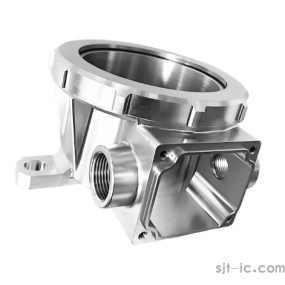
Stainless steel is one of the most widely used materials in modern industries because it is strong, corrosion-resistant, and durable. However, many engineers and buyers often ask the same question: How Does CNC Machine Stainless Steel? The answer is not simple, because stainless steel is harder to cut compared to aluminum or mild steel. It requires correct tools, stable machining conditions, and proper experience to achieve good results.
In this article, we explain the real process in simple English. You will learn the steps in CNC Machining of stainless steel, the right tooling for CNC stainless - steel machining, important parameters for CNC machining of stainless steel, and common challenges in CNC stainless - steel machining and solutions. We also discuss surface finish considerations in CNC machining of stainless steel to help you avoid common quality problems.
Why Stainless Steel Is Difficult to Machine
Stainless steel has high strength and toughness. During cutting, it generates more heat and causes faster tool wear. It can also become work-hardened, which means the surface becomes harder as you machine it. These properties make CNC machining more complex, but still very manageable with the right approach.
- High cutting resistance
- Heat generation during machining
- Tool wear and edge damage
- Risk of poor surface finish
Steps in CNC Machining of Stainless Steel
The steps in CNC machining of stainless steel are carefully planned to ensure precision and stability. A typical workflow includes:
- Material selection and preparation – Choosing the correct stainless steel grade such as 304 or 316.
- CAD design and programming – Creating accurate digital models and CNC toolpaths.
- Tool setup – Installing proper cutting tools designed for hard materials.
- Rough machining – Removing large material sections with controlled cutting depth.
- Semi-finishing and finishing – Improving accuracy and surface quality.
- Inspection – Checking dimensions and surface quality carefully.
Tooling for CNC Stainless - Steel Machining
Choosing the right tooling for CNC stainless - steel machining is very important for success. Poor tooling leads to tool breakage, rough surfaces, and high cost.
- Carbide tools – Best choice for durability and heat resistance
- Coated tools (TiAlN or similar) – Reduce friction and increase tool life
- Sharp cutting edges – Help reduce work hardening
- Rigid tool holders – Improve stability during cutting
Parameters for CNC Machining of Stainless Steel
Correct parameters for CNC machining of stainless steel directly affect quality and efficiency. The goal is to control heat and reduce tool wear.
- Cutting speed – Keep moderate to avoid overheating
- Feed rate – Use consistent feed to prevent work hardening
- Depth of cut – Avoid excessive cutting depth in one pass
- Coolant usage – High-pressure coolant helps reduce heat and improve chip removal
Challenges in CNC Stainless - Steel Machining and Solutions
There are several challenges in CNC stainless - steel machining and solutions that manufacturers must consider:
- Tool wear: Use coated carbide tools and replace them regularly
- Heat buildup: Apply sufficient coolant and reduce cutting speed
- Work hardening: Maintain steady feed rate and avoid tool rubbing
- Vibration: Improve machine rigidity and use stable fixturing
Solving these problems ensures stable production and high-quality stainless steel parts.
Surface Finish Considerations in CNC Machining of Stainless Steel
Good surface quality is often required in stainless steel parts used in medical, food, and automotive industries. The surface finish considerations in CNC machining of stainless steel include tool condition, cutting strategy, and machine stability.
- Use sharp finishing tools to reduce marks
- Apply fine feed rates during finishing passes
- Avoid tool vibration for smoother surfaces
- Ensure proper coolant flow to reduce friction
A smooth surface not only improves appearance but also increases corrosion resistance and product lifespan.
Professional Support from EMAR in Stainless Steel CNC Machining
Achieving stable and high-quality stainless steel machining requires experience and process control. EMAR is a professional CNC machining manufacturer with strong capability in stainless steel parts production. The company focuses on precision machining, advanced tooling selection, and strict quality inspection systems.
With years of experience in industrial applications, EMAR helps customers reduce production risks and improve part consistency. Whether it is small batch prototypes or large-scale production, EMAR provides reliable solutions for complex stainless steel machining projects.
Conclusion
So, How Does CNC Machine Stainless Steel? The answer lies in a combination of correct machining steps, proper tooling, optimized parameters, and effective problem-solving strategies. Stainless steel is challenging, but with the right process and expertise, it can be machined with high precision and excellent surface quality.
By understanding these principles and working with experienced manufacturers like EMAR, businesses can achieve stable production results and high-performance stainless steel components.