Spanish
 Arabic
 French
 Portuguese
 Belarusian
 Japanese
 Russian
 Malay
Malay Icelandic
 Bulgarian
 Azerbaijani
 Estonian
 Irish
Irish Polish
 Persian
 Boolean
 Danish
 German
 Filipino
 Finnish
 Korean
 Dutch
Dutch Galician
 Catalan
 Czech
Czech Croatian
 Latin
Latin Latvian
 Romanian
 Maltese
 Macedonian
 Norwegian
 Swedish
 Serbian
 Slovak
 Slovenian
 Swahili
 Thai
Thai Turkish
 Welsh
Welsh Urdu
Urdu Ukrainian
 Greek
Greek Hungarian
 Italian
 Yiddish
 Indonesian
 Vietnamese
 Haitian Creole
 Spanish Basque

HTML
CNC Copper Parts Machining: Practical Guide for Better Precision and Reliable Production
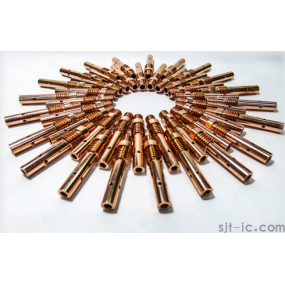
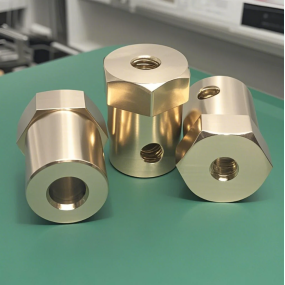
CNC Copper Parts Machining is widely used in electronics, automotive systems, electrical connectors, and precision engineering. Copper is a highly conductive and soft metal, which makes it valuable—but also more difficult to machine correctly if the process is not well controlled.
This article explains real problems users face in copper machining and how to solve them in simple terms. It also shares industry practices based on professional manufacturing experience, helping engineers, buyers, and designers make better decisions.
Why Copper Is Widely Used in CNC Machining
One of the main advantages of copper in CNC machining is its excellent electrical and thermal conductivity. This is why copper parts are common in connectors, heat sinks, and power systems.
However, copper is soft and sticky during cutting. Without proper tools and settings, it can cause tool wear, poor surface finish, and dimensional errors. This is where professional machining experience becomes important.
- High electrical conductivity for electronic parts
- Excellent heat transfer for thermal components
- Good corrosion resistance in many environments
- High recyclability and long service life
Key Steps in CNC Copper Parts Machining
The key steps in CNC copper parts machining are carefully planned to avoid deformation and improve surface quality.
- Material selection – Choose high-purity copper or copper alloys based on application.
- CAD design – Ensure stable geometry and avoid extremely thin structures when possible.
- Tool selection – Use sharp tools with proper coatings to reduce sticking.
- Machining parameters setup – Optimize speed, feed rate, and cooling method.
- Finishing process – Polish or deburr to improve surface quality.
Each step directly affects the final accuracy and performance of the copper part.
Precision Requirements for CNC Copper Parts
Precision requirements for CNC-processed copper parts are usually very strict, especially in electrical and medical industries.
Copper tends to deform under cutting pressure, so controlling tolerance is more difficult compared to harder metals like steel or aluminum. Even small tool vibrations can affect final dimensions.
- Tight dimensional tolerance control (often within microns)
- Stable fixture design to prevent movement
- Controlled temperature during machining
- High-accuracy CNC machines with calibration
Quality Control in CNC Copper Parts Machining
Quality control in CNC copper parts machining is essential to ensure consistency in mass production and custom orders.
Inspection is not only done at the final stage but also during each production step to prevent defects early.
- Incoming material inspection to ensure copper purity
- In-process measurement using precision tools
- Surface roughness testing for smoothness requirements
- Final inspection using coordinate measuring machines (CMM)
Reliable manufacturers also keep full traceability records for each batch.
Challenges and Solutions in CNC Copper Parts Machining
Challenges and solutions in CNC copper parts machining are important for achieving stable production quality.
Common challenges:
- Tool sticking due to soft material properties
- Surface scratches or poor finish
- Dimensional instability during high-speed cutting
- Tool wear caused by continuous production
Effective solutions:
- Use ultra-sharp cutting tools and proper coatings
- Apply optimized cooling and lubrication systems
- Reduce vibration with stable machine fixtures
- Regular tool replacement schedules
Professional Support for Better Results
In real production environments, experience plays a major role in success. A well-controlled process reduces waste, improves accuracy, and ensures stable performance of copper components.
EMAR, as a professional manufacturer in precision machining, has extensive experience in CNC Copper Parts Machining. The team focuses on stable quality control, strict process management, and customized solutions for different industries. This helps customers reduce risk and improve product reliability in demanding applications.
Conclusion
CNC copper machining requires more control than many other materials due to copper’s softness and thermal properties. By following proper machining steps, controlling precision, and applying strict quality systems, manufacturers can achieve high-performance copper parts.
Understanding the real advantages of copper in CNC machining and applying correct engineering practices ensures better results, longer tool life, and improved product consistency.