Spanish
 Arabic
 French
 Portuguese
 Belarusian
 Japanese
 Russian
 Malay
Malay Icelandic
 Bulgarian
 Azerbaijani
 Estonian
 Irish
Irish Polish
 Persian
 Boolean
 Danish
 German
 Filipino
 Finnish
 Korean
 Dutch
Dutch Galician
 Catalan
 Czech
Czech Croatian
 Latin
Latin Latvian
 Romanian
 Maltese
 Macedonian
 Norwegian
 Swedish
 Serbian
 Slovak
 Slovenian
 Swahili
 Thai
Thai Turkish
 Welsh
Welsh Urdu
Urdu Ukrainian
 Greek
Greek Hungarian
 Italian
 Yiddish
 Indonesian
 Vietnamese
 Haitian Creole
 Spanish Basque

HTML
CNC Automotive Mold Processing Technology
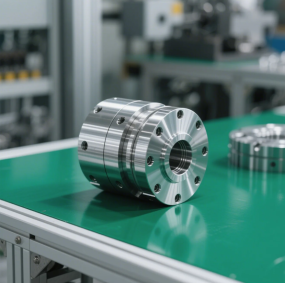
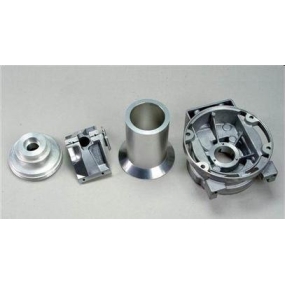
CNC Automotive Mold Processing Technology plays a key role in modern car manufacturing. Automotive molds are used to shape parts like dashboards, bumpers, door panels, and engine components. If the mold is not precise, the final car parts will not fit or function well. This is why many manufacturers rely on CNC technology for accuracy, speed, and consistency.
Why CNC Matters in Automotive Mold Production
In the automotive industry, even a small error in a mold can cause large production problems. Traditional manual machining often cannot meet the strict standards required today. CNC (Computer Numerical Control) machines solve this problem by using programmed instructions to cut and shape metal with very high precision.
The advantages of CNC in automotive mold processing include better accuracy, stable quality, and faster production cycles. It also reduces human error and makes it easier to produce complex shapes that are common in modern vehicle design.
Key Steps in CNC Automotive Mold Processing Technology
Understanding the process helps manufacturers improve efficiency and reduce costs. The key steps in CNC automotive mold processing technology usually include:
- Design and modeling – Engineers create a 3D digital model of the mold using CAD software.
- Programming – CAM software converts the design into CNC machine instructions.
- Material selection – High-strength steel or aluminum is chosen based on mold requirements.
- CNC Machining – The machine precisely cuts and shapes the mold according to the program.
- Surface finishing – Polishing and treatment improve durability and surface quality.
- Inspection and testing – The final mold is checked for accuracy and performance.
Precision Requirements for Automotive Molds
Automotive molds require extremely high precision. Even a deviation of a few microns can affect how parts fit together. The precision requirements for CNC-processed automotive molds are especially strict for components like engine covers and interior panels.
To meet these requirements, CNC machines use advanced multi-axis control systems and high-speed cutting tools. Temperature control and vibration reduction are also important to maintain stability during machining.
Quality Control in CNC Mold Manufacturing
Quality control is a critical part of the entire process. The quality control in CNC automotive mold processing ensures that every mold meets strict automotive industry standards.
- Dimensional inspection using CMM (Coordinate Measuring Machine)
- Surface roughness testing
- Trial assembly and functional testing
- Material hardness verification
These steps help detect problems early and avoid costly production errors later.
Recent Advancements in CNC Automotive Mold Processing Technology
The industry is evolving quickly. The recent advancements in CNC automotive mold processing technology have significantly improved speed and accuracy.
- 5-axis CNC machining allows more complex shapes in a single setup.
- AI-assisted programming improves tool path efficiency and reduces machining time.
- High-speed machining technology increases production efficiency while maintaining precision.
- Digital simulation helps detect errors before actual machining begins.
These innovations are helping manufacturers reduce costs and improve product quality at the same time.
Industry Challenges and Practical Solutions
Despite technological progress, automotive mold processing still faces challenges such as long production cycles, high material costs, and strict precision requirements. Companies must balance speed, cost, and quality carefully.
One effective solution is choosing a reliable CNC partner with strong technical capability and experience in automotive molds. This helps reduce trial-and-error costs and ensures stable output quality.
How EMAR Supports Automotive Mold Manufacturing
In this competitive industry, experience and precision matter. EMAR has built strong expertise in CNC Automotive Mold Processing Technology, focusing on high-precision machining and stable production quality.
With advanced CNC equipment, skilled engineers, and strict quality control systems, EMAR supports customers in producing complex automotive molds with reliable accuracy. From prototype development to mass production, EMAR helps reduce lead time and improve overall efficiency.
By combining engineering knowledge with modern CNC technology, EMAR provides practical solutions for manufacturers who need consistent and high-quality automotive molds.
Conclusion
CNC Automotive Mold Processing Technology is essential for modern car manufacturing. It ensures precision, improves production efficiency, and supports the development of complex automotive parts. With continuous advancements in automation and digital tools, the industry is becoming faster and more accurate.
For manufacturers seeking stable quality and professional support, working with experienced partners like EMAR can make a significant difference in achieving production success.