Spanish
 Arabic
 French
 Portuguese
 Belarusian
 Japanese
 Russian
 Malay
Malay Icelandic
 Bulgarian
 Azerbaijani
 Estonian
 Irish
Irish Polish
 Persian
 Boolean
 Danish
 German
 Filipino
 Finnish
 Korean
 Dutch
Dutch Galician
 Catalan
 Czech
Czech Croatian
 Latin
Latin Latvian
 Romanian
 Maltese
 Macedonian
 Norwegian
 Swedish
 Serbian
 Slovak
 Slovenian
 Swahili
 Thai
Thai Turkish
 Welsh
Welsh Urdu
Urdu Ukrainian
 Greek
Greek Hungarian
 Italian
 Yiddish
 Indonesian
 Vietnamese
 Haitian Creole
 Spanish Basque

HTML
CNC High - Precision Machining Process
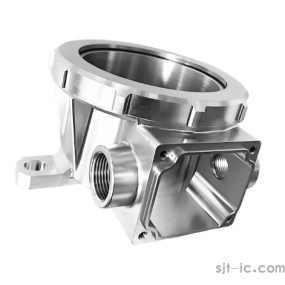
The CNC High - Precision Machining Process is a modern manufacturing method used to produce parts with extremely tight tolerances and high accuracy. It is widely used in industries where even a small error can cause product failure, such as aerospace, medical devices, automotive systems, and robotics.
For many buyers and engineers, the biggest challenges are not just production itself, but finding stable quality, consistent precision, and reliable delivery time. Understanding how this process works helps reduce risk and improve decision-making when choosing a machining partner.
What Makes CNC High - Precision Machining Different?
Unlike standard machining, high precision CNC work focuses on micron-level accuracy, stable repeatability, and excellent surface finish. Machines are controlled by computer programs, which reduces human error and improves consistency.
This process is especially important when parts must fit perfectly into complex assemblies or operate under high stress conditions.
Steps in CNC High - Precision Machining
The steps in CNC high - precision machining are carefully controlled to ensure accuracy at every stage:
- Design and CAD Modeling: Engineers create a 3D model with exact dimensions and tolerances.
- CAM Programming: The model is converted into machine instructions (G-code).
- Material Selection: High-quality metals or engineering plastics are chosen based on application needs.
- Precision Machining: CNC machines cut, drill, and shape the material with programmed accuracy.
- In-Process Inspection: Measurements are taken during production to ensure tolerances are met.
- Final Quality Check: Finished parts are inspected using advanced measuring tools such as CMM.
Each step plays an important role in ensuring that the final product meets strict industrial standards.
Tools Used in High - Precision CNC Machining
The tools used in high - precision CNC machining directly affect accuracy, surface quality, and production efficiency. Common tools include:
- High-speed steel (HSS) tools for general cutting
- Carbide cutting tools for hard materials and long tool life
- Diamond-coated tools for ultra-fine finishing
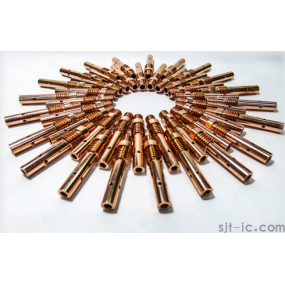
- Micro-drills for small and precise holes
- End mills for complex 3D shaping
Tool selection depends on material type, required tolerance, and part complexity. A professional machining team always matches the correct tool with the right machining strategy.
Precision Control Methods in CNC High - Precision Machining
Achieving consistent accuracy requires advanced control systems. The precision control methods in CNC high - precision machining include:
- Thermal compensation: Adjusts for temperature changes that may affect machine accuracy
- Real-time monitoring: Sensors track vibration, tool wear, and cutting force
- Closed-loop feedback systems: Continuously correct machine movement
- High-resolution encoders: Improve positioning accuracy
These technologies help reduce deviation and ensure every part matches design requirements.
Advantages of CNC High - Precision Machining
The advantages of CNC high - precision machining make it the preferred choice for industries requiring strict quality control:
- Extremely high accuracy and tight tolerances
- Consistent quality in mass production
- Reduced human error due to automation
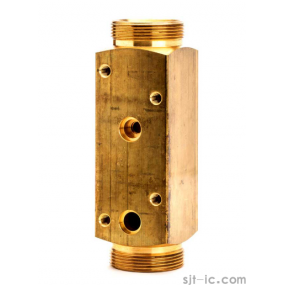
- Ability to produce complex geometries
- Improved production efficiency and repeatability
For businesses, this means fewer defective parts, lower long-term costs, and improved product performance.
Applications of CNC High - Precision Machining
The applications of CNC high - precision machining cover many advanced industries:
- Aerospace components such as turbine blades and structural parts
- Medical devices like surgical instruments and implants
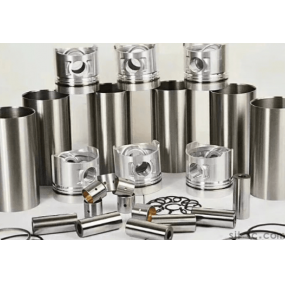
- Automotive parts including engine components and transmission systems
- Electronics housing and micro components
- Industrial automation equipment and robotics parts
These applications require stable performance and high safety standards, which makes precision machining essential.
Why Choosing the Right CNC Partner Matters
Even with advanced machines, the final quality depends heavily on engineering experience, process control, and inspection systems. Many companies face problems such as inconsistent tolerances, delayed delivery, or unstable quality due to weak manufacturing control.
A reliable partner not only operates machines but also understands material behavior, tooling strategy, and quality assurance systems.
For example, :contentReference[oaicite:0]{index=0} is a professional CNC machining service provider focusing on high-precision manufacturing solutions. With experience in precision engineering and strict quality control systems, EMAR supports customers in reducing production risks and improving part consistency across different industries.
Final Thoughts
The CNC High - Precision Machining Process is more than just cutting metal—it is a complete system of engineering, control, and quality assurance. From design to final inspection, every step must be carefully managed to achieve reliable results.
By understanding the process, tools, control methods, and applications, businesses can make better decisions and choose suppliers who truly meet their precision requirements. With the support of experienced manufacturers like EMAR, achieving stable and high-quality production becomes much more achievable.