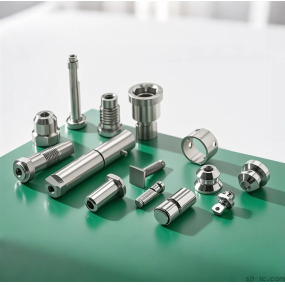
CNC Machining of Sliding Sleeve: Precision, Materials, and Real-World Manufacturing Solutions
The CNC Machining of Sliding Sleeve plays an important role in many mechanical systems, especially in oil and gas equipment, hydraulic assemblies, automotive parts, and industrial machinery. A sliding sleeve must move smoothly, seal properly, and maintain stability under pressure. Even a small machining error can cause leakage, wear, or system failure.
For engineers and buyers, the biggest challenge is not just producing a sliding sleeve, but ensuring consistent quality, high precision, and long service life while keeping costs under control. This is where CNC technology becomes essential.
Why CNC Machining Matters for Sliding Sleeves
The sliding sleeve is a functional component that requires tight tolerance and smooth surface finishing. Traditional machining methods often struggle with consistency, especially in mass production. CNC technology solves this problem by offering stable, repeatable, and highly accurate manufacturing.
One of the key advantages of CNC machining for sliding sleeves is that it reduces human error while maintaining uniform quality across every batch. This is especially important in industries where even micron-level deviations can affect performance.
- High dimensional accuracy
- Stable production quality
- Better surface finish
- Reduced scrap rate
Precision Requirements in CNC Machining Sliding Sleeves
In real applications, precision requirements in CNC machining sliding sleeves are extremely strict. Sliding sleeves often operate under pressure or friction environments, meaning the inner diameter, outer diameter, and sealing grooves must all meet tight tolerances.
Common precision expectations include:
- Tolerance control within ±0.01mm or tighter for critical surfaces
- Perfect concentricity between inner and outer diameters
- Smooth surface roughness to reduce friction and wear
If these standards are not met, the sliding sleeve may cause hydraulic leakage, jamming, or early failure of the entire system. That is why CNC multi-axis machining and precision turning are widely used in production.
Materials Suitable for CNC Machining Sliding Sleeves
Choosing the right material is just as important as machining accuracy. Different working environments require different material properties such as wear resistance, corrosion resistance, or strength.
Common materials suitable for CNC machining sliding sleeves include:
- Stainless steel (304, 316): Excellent corrosion resistance, ideal for marine and chemical environments
- Alloy steel: High strength and durability for heavy-duty applications
- Brass: Good machinability and low friction, often used in hydraulic systems
- Aluminum alloys: Lightweight and suitable for non-high-pressure applications
Material selection directly affects service life, machining cost, and performance stability. A professional CNC supplier can help balance these factors based on your application needs.
Common Issues in CNC Machining Sliding Sleeves
During production, manufacturers often face several technical challenges. Understanding these common issues in CNC machining sliding sleeves helps reduce risks and improve final quality.
- Dimensional deviation: caused by tool wear or machine calibration errors
- Surface roughness problems: affecting sealing performance and friction
- Heat deformation: especially in high-speed machining of alloy materials
- Tool marks or chatter: reducing precision and appearance quality
To solve these issues, manufacturers often use advanced CNC equipment, real-time inspection systems, and optimized machining parameters. Proper tool selection and cooling systems also play a key role in maintaining stability.
Cost-Effective Ways for CNC Machining Sliding Sleeves
Many buyers are concerned about price without sacrificing quality. There are several cost-effective ways for CNC machining sliding sleeves that can help reduce total manufacturing cost.
- Optimize design to reduce unnecessary complex features
- Choose materials based on real working conditions, not over-specification
- Use batch production to reduce unit cost
- Apply standard tooling where possible instead of custom tools
In addition, working with an experienced CNC manufacturer can significantly reduce trial-and-error costs and shorten delivery time. Engineering support during the design stage is often more valuable than post-production correction.
Quality Control in Sliding Sleeve CNC Production
High-quality sliding sleeves require strict inspection at every stage. From raw material testing to final measurement, quality control ensures stable performance in real operation environments.
Key inspection methods include coordinate measuring machines (CMM), surface roughness testing, and dimensional calibration tools. These checks help ensure every part meets design requirements before delivery.
Reliable manufacturers also implement process tracking systems to ensure every batch can be traced, improving accountability and consistency.
How EMAR Supports Precision CNC Machining of Sliding Sleeves
In the field of CNC Machining of Sliding Sleeve, EMAR focuses on delivering stable quality and engineering support for industrial clients. With advanced CNC turning, milling, and multi-axis machining capabilities, EMAR helps customers achieve both precision and efficiency.
EMAR’s engineering team also assists in optimizing designs, selecting suitable materials, and improving manufacturability. This helps reduce unnecessary cost while ensuring functional performance.
Whether you need small batch prototypes or large-scale production, EMAR provides flexible manufacturing solutions tailored to different industrial needs.
Conclusion
The CNC Machining of Sliding Sleeve is a highly technical process that requires careful attention to precision, materials, and production control. From ensuring tight tolerances to selecting the right materials, every step affects final performance.
By understanding key factors such as precision requirements, common machining issues, and cost optimization methods, manufacturers and buyers can make better decisions and achieve more reliable results.
With strong technical capability and practical experience, EMAR offers dependable CNC machining services that support high-quality sliding sleeve production for demanding industrial applications.