Introduction to 5-Axis CNC Machining
5-axis CNC machining is an advanced manufacturing process that uses computer-controlled technology to move a cutting tool or a workpiece along five different axes simultaneously. This includes three linear axes (X, Y, Z) and two rotational axes (typically A, B, or C). This capability allows for the creation of highly complex and precise parts from a wide range of materials, including metals, plastics, and composites, all in a single setup.
Unlike traditional 3-axis machining, which is limited to linear movements, 5-axis machining introduces rotational motion. This enables the cutting tool to approach the workpiece from any direction, allowing manufacturers to create intricate features like curved surfaces, undercuts, and complex contours with greater speed and accuracy. The result is a significant reduction in production time, improved surface finish, and the ability to produce parts that would be impossible to make with conventional methods.

The Five Axes Explained
To understand how a 5-axis machine works, it's essential to know what the five axes are:
X-Axis: Represents horizontal movement along the length of the workpiece (left to right).
Y-Axis: Represents horizontal movement along the width of the workpiece (front to back).
Z-Axis: Represents vertical movement, controlling the depth of the cut (up and down).
A-Axis: A rotary axis that rotates around the X-axis.
B-Axis: A rotary axis that rotates around the Y-axis. In some machine configurations, a C-axis (rotating around the Z-axis) may be used instead of or in addition to these.
The combination of these linear and rotary motions gives the machine its versatility, allowing it to machine five sides of a part in a single operation.
3+2 vs. Simultaneous 5-Axis Machining
There are two primary forms of 5-axis machining, each suited for different applications:
3+2-Axis Machining (Positional 5-Axis)
In 3+2 machining, the two rotary axes are used to tilt the cutting tool or workpiece into a fixed position. Once positioned, all cutting is performed using the three linear axes (X, Y, Z). This method is ideal for machining multiple sides of a part in a single setup without needing to manually reposition it. It allows for the use of shorter, more rigid cutting tools, which improves accuracy and surface finish. It is a cost-effective way to access complex angles but is not suitable for parts with continuous, free-form curves.
Simultaneous 5-Axis Machining (True 5-Axis)
With simultaneous 5-axis machining, all five axes move continuously and interdependently during the cutting process. This allows the tool to maintain an optimal orientation relative to the cutting surface at all times. This method is essential for creating parts with complex, organic shapes like turbine blades, impellers, and orthopedic implants. While it offers maximum flexibility and can produce the most intricate geometries, it requires more advanced CAM programming and machine control.

Key Benefits of 5-Axis Machining
The adoption of 5-axis technology offers numerous advantages that directly impact a shop's productivity and capabilities.
Reduced Setup Times: By machining multiple sides of a part in one setup, 5-axis machines dramatically reduce the need for multiple fixtures and manual repositioning. This not only saves time but also eliminates the cumulative errors associated with re-clamping, leading to higher accuracy.
Superior Accuracy and Precision: Fewer setups mean less chance for human error and misalignment. The ability to use shorter cutting tools by tilting the table or head also reduces vibration, resulting in better surface finishes and tighter tolerances. EMAR’s machines can achieve tolerances as tight as ±0.0001 inches (±0.005 mm) for critical applications in aerospace and medical industries.
Machining Complex Geometries: 5-axis machining unlocks new design possibilities. It enables the production of single-piece components with complex shapes that would otherwise have to be assembled from multiple parts. This reduces potential failure points, weight, and assembly costs.
Improved Surface Finish: By keeping the cutting tool tangent to the cutting surface, 5-axis machining creates smoother finishes and can often eliminate the need for manual polishing in subsequent steps.
Increased Efficiency and ROI: While the initial investment is higher, the reduction in cycle times, labor costs, and scrap rates, combined with the ability to take on more complex work, provides a significant return on investment.
Potential Drawbacks and Considerations
Despite its advantages, 5-axis machining is not always the optimal solution for every part. Key considerations include:
Higher Initial and Operating Costs: 5-axis machines are more expensive to purchase than 3-axis or 4-axis systems. Programming and operation also require more expertise, which can lead to higher hourly operating costs.
Programming Complexity: Generating toolpaths for 5-axis machining requires powerful CAM software and skilled programmers. This can increase lead times for programming, especially for complex simultaneous 5-axis work.
Risk of Over-Engineering: For simple parts that can be easily made on a 3-axis machine, using a 5-axis machine may add unnecessary cost and complexity without providing any tangible benefit.
Advanced Software and Control Features
Modern 5-axis machines from EMAR are equipped with sophisticated CNC controls that simplify operation and enhance performance. Key features include:
Tool Center Point (TCP) Control: This function automatically compensates for the rotation of the axes, ensuring the tool tip remains at the programmed point in space. It simplifies programming by allowing the user to program the tool path without having to constantly calculate the rotary axis positions.
Dynamic Fixture Offset (DFO): This feature eliminates the need to place the part exactly on the center of rotation. The CNC control automatically calculates the workpiece position, dramatically reducing setup time and the skill level required for accurate setups.
Super NURBS (Non-Uniform Rational Basis Spline): This function processes complex curved tool paths more efficiently than standard G-code, resulting in smoother machine motion, faster cycle times, and superior surface finishes by eliminating the faceting effect.
Material and Application Versatility
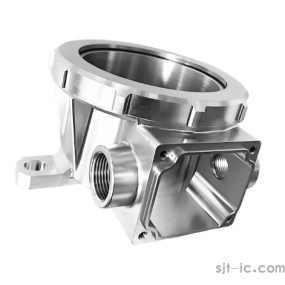
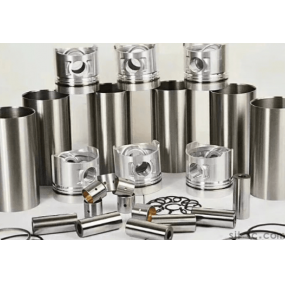
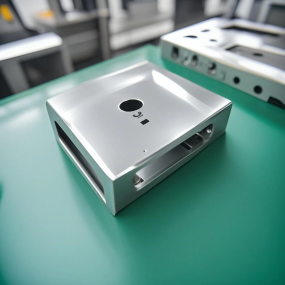
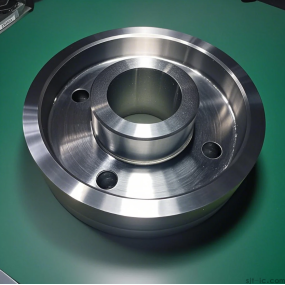
EMAR’s 5-axis machining services are applicable across a vast range of industries, including aerospace, automotive, medical, energy, and mold making. Common applications include turbine blades, engine components, surgical instruments, orthopedic implants, and complex housings.
This versatility is supported by the ability to machine a wide array of materials, such as:
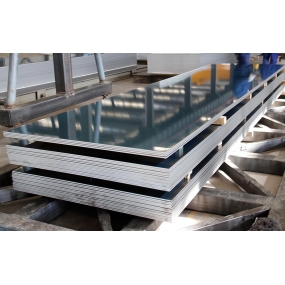
Aluminum (e.g., 7075-T651, 6082-T651)
Stainless Steel (e.g., 316L, 17-4 PH)
Titanium (e.g., Grade 5 / Ti-6Al-4V)
Nickel Alloys (e.g., Inconel 718, Hastelloy C-276)
Tool Steels (e.g., D2, H13)
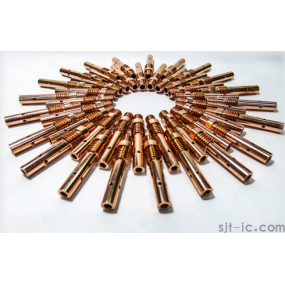
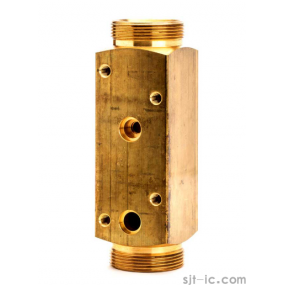
Brass, Copper, and other exotic alloys
Design Guidelines and Tolerances
To fully leverage 5-axis capabilities, parts should be designed with the process in mind. While it offers great flexibility, designers should avoid unnecessary complexity to keep costs down. Adding fillets to internal corners, considering tool access, and planning for efficient fixturing are all critical steps.
EMAR’s 5-axis CNC machining can achieve precision tolerances down to ±0.0001 inches (±0.0025 mm) , depending on the material, geometry, and machine configuration. Standard machining tolerances are typically held to ±0.001 inches (±0.025 mm) . Maximum part sizes can vary, with some EMAR machining centers capable of handling workpieces up to 28" x 24" x 15" and beyond.
Conclusion
5-axis CNC machining represents the pinnacle of milling technology, offering unmatched capabilities for producing high-precision, complex parts efficiently. By reducing setups, improving accuracy, and opening up new design possibilities, it is an indispensable tool for modern manufacturing. While the investment in machinery and expertise is significant, the productivity gains and competitive advantages it provides are substantial. For companies looking to push the boundaries of what's possible in part design and production, exploring 5-axis machining with a trusted partner like EMAR is a critical step.
Contact EMAR Today
To learn more about how EMAR’s 5-axis machining solutions can benefit your next project, contact our team:
Phone: +86 18664342076
Email: sales8@sjt-ic.com


Spanish
Arabic
French
Portuguese
Belarusian
Japanese
Russian
Malay
Icelandic
Bulgarian
Azerbaijani
Estonian
Irish
Polish
Persian
Boolean
Danish
German
Filipino
Finnish
Korean
Dutch
Galician
Catalan
Czech
Croatian
Latin
Latvian
Romanian
Maltese
Macedonian
Norwegian
Swedish
Serbian
Slovak
Slovenian
Swahili
Thai
Turkish
Welsh
Urdu
Ukrainian
Greek
Hungarian
Italian
Yiddish
Indonesian
Vietnamese
Haitian Creole
Spanish Basque