Spanish
 Arabic
 French
 Portuguese
 Belarusian
 Japanese
 Russian
 Malay
Malay Icelandic
 Bulgarian
 Azerbaijani
 Estonian
 Irish
Irish Polish
 Persian
 Boolean
 Danish
 German
 Filipino
 Finnish
 Korean
 Dutch
Dutch Galician
 Catalan
 Czech
Czech Croatian
 Latin
Latin Latvian
 Romanian
 Maltese
 Macedonian
 Norwegian
 Swedish
 Serbian
 Slovak
 Slovenian
 Swahili
 Thai
Thai Turkish
 Welsh
Welsh Urdu
Urdu Ukrainian
 Greek
Greek Hungarian
 Italian
 Yiddish
 Indonesian
 Vietnamese
 Haitian Creole
 Spanish Basque

HTML
Introduction to Five Axis CNC Machining Knowledge Points
Five-axis CNC machining is one of the most advanced manufacturing technologies used today. However, many people who are new to CNC machining often feel confused about how it works, why it is important, what parts make up the machine, and how programming is completed. This article provides a clear Introduction to Five Axis CNC Machining Knowledge Points to help beginners understand the technology and its practical applications.
From aerospace components and medical devices to automotive parts and precision molds, five-axis CNC machining helps manufacturers create complex products with high accuracy. Companies like EMAR use advanced five-axis CNC machining technology, skilled engineers, and strict quality control processes to provide reliable machining solutions for customers who need high-performance precision parts.
What Is Five-Axis CNC Machining?
Five-axis CNC machining is a manufacturing process where a cutting tool or workpiece can move along five different axes at the same time. Usually, these include three linear axes: X, Y, and Z, plus two rotational axes: A, B, or C.
The X, Y, and Z axes control movement in three directions: left and right, front and back, and up and down. The additional rotational axes allow the cutting tool to tilt and rotate around the workpiece. This ability gives the machine access to difficult areas and makes it possible to produce complicated shapes.
For example, an aerospace turbine blade has a curved and complex surface. A traditional three-axis machine may require multiple setups to process different areas. A five-axis CNC machine can approach the blade from different angles in one setup, improving accuracy and reducing production time.
Understanding this basic concept is the first step in learning the basics of five-axis CNC machining and recognizing why this technology is widely used in high-precision industries.
Basics of Five-Axis CNC Machining
Axis Movements
The movement of five axes is the foundation of five-axis machining. Each axis has a specific role during production:
- X, Y, and Z linear axes: These move the cutting tool or workpiece in straight directions to remove material accurately.
- A, B, or C rotational axes: These rotate or tilt the cutting tool so it can reach different surfaces and angles.
A simple example is machining a curved automotive engine part. The linear axes move the tool to the correct position, while the rotational axes adjust the tool angle to follow the curved surface smoothly. Together, these movements create shapes that are difficult or impossible to produce with standard machining methods.
Understanding axis coordination is important because it explains how five-axis machines produce complex parts with fewer setups and better surface quality.
CNC Control System
The CNC control system is the "brain" of a five-axis CNC machine. It reads programmed instructions and controls every movement of the machine. The system calculates the position, speed, and direction of each axis to ensure accurate machining.
For example, when producing a precision mold, the CNC controller manages the tool movement so that every curve and surface matches the digital design. Without an advanced control system, it would be impossible to achieve the high accuracy expected from five-axis machining.
The Significance of Five-Axis CNC
The significance of five-axis CNC comes from its ability to improve precision, reduce production steps, and manufacture highly complex designs.
Enhanced Precision
One major advantage of five-axis CNC machining is improved accuracy. Because the machine can complete more features in a single setup, there is less risk of positioning errors caused by moving the workpiece between different machines.
For example, medical products such as dental implants require extremely accurate dimensions to fit properly. Five-axis machining can produce these components with tight tolerances, sometimes reaching around ±0.05mm depending on the material, machine capability, and inspection process.
High precision is especially important in industries where even a small measurement error can affect product performance and safety.
Complex Shape Machining
Five-axis CNC machining makes it easier to manufacture parts with complicated curves, angles, and detailed designs. Industries such as jewelry, aerospace, and automotive manufacturing benefit greatly from this capability.
For example, a jewelry manufacturer can use five-axis machining to create a detailed ring design with curved surfaces and fine decorative patterns. These shapes require flexible tool movement that traditional machining methods cannot easily provide.
Components of Five-Axis CNC Machines
Spindle and Cutting Tools
The spindle is one of the most important components of a five-axis CNC machine. It rotates the cutting tool at high speed and provides the force needed to remove material from the workpiece.
Different cutting tools are selected depending on the machining task:
- Ball-nose end mills: Commonly used for curved surfaces, 3D shapes, and complex contours.
- Flat-end mills: Suitable for flat surfaces and general material removal.
- Specialized cutters: Used for specific materials or precision requirements.
Choosing the correct spindle speed, cutting tool, and machining conditions is essential for achieving good surface finish and extending tool life.
Workholding Devices
Workholding devices keep the workpiece stable during machining. A secure workpiece position is necessary because even small movements can affect accuracy.
Common workholding solutions include:
- Vises for holding smaller parts.
- Custom fixtures designed for special components.
- Clamping systems for large industrial parts.
For example, when machining a large aerospace component, a specially designed fixture can prevent vibration and keep the part correctly positioned throughout the process.
Machining Operations in Five-Axis CNC
Simultaneous Five-Axis Machining
Simultaneous five-axis machining means all five axes move together during cutting. This allows the tool to follow complex surfaces smoothly and continuously.
A good example is producing a high-performance engine manifold as one complete component. Instead of manufacturing several separate pieces and assembling them later, five-axis machining can create the entire part in one operation. This reduces assembly time and improves structural strength.
This method is especially valuable for industries that require lightweight, strong, and complex components.
Positioning Five-Axis Machining
Positioning five-axis machining uses the rotational axes to move the workpiece or tool into different positions before machining begins. The cutting itself may then be completed using three-axis movement.
For example, a mechanical component with holes and slots on multiple sides can be rotated into different positions. The machine then completes each feature without manually repositioning the part.
This method improves efficiency and reduces setup time for parts with multiple machining surfaces.
Programming for Five-Axis CNC
Complexity of Programming
Programming for five-axis CNC is more advanced than programming for three-axis machines. The programmer must consider tool movement, cutting angles, machine limits, and possible collisions.
For example, when machining an aerospace component with complex curves, the programmer must create accurate toolpaths that allow the cutter to reach every area while avoiding interference with the workpiece or machine parts.
Correct programming is essential because even a small mistake in tool direction can affect product quality and machining efficiency.
CAD/CAM Software Usage
Modern five-axis machining relies heavily on CAD/CAM software. These programs convert 3D designs into machine instructions by creating optimized toolpaths.
CAD/CAM software considers important factors such as:
- Tool direction and angle.
- Material removal strategy.
- Collision prevention.
- Machining efficiency.
For example, when creating a complex mold, CAD/CAM software can automatically generate the best tool movement path. This reduces programming difficulty and helps manufacturers achieve consistent quality.
EMAR's Expertise in Five-Axis CNC Machining
Skilled Team and Advanced Equipment
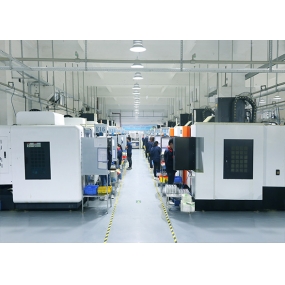
Successful five-axis CNC machining requires experienced engineers, skilled operators, and advanced equipment. EMAR has professional expertise in handling complex five-axis machining projects and understands the challenges involved in producing precision components.
By using advanced CNC equipment and modern CAD/CAM technologies, EMAR can manufacture complex parts for industries such as automotive, electronics, and industrial equipment. Their technical knowledge helps customers achieve reliable results for demanding applications.
Quality-Assured Production
Quality control is a key part of five-axis CNC machining. EMAR applies strict inspection procedures throughout the manufacturing process, from material preparation to final product checking.
For precision electronics components and other high-value parts, careful inspection helps ensure that every product meets design requirements for size, performance, and reliability.
With professional machining experience, advanced technology, and a focus on quality, EMAR provides customers with dependable five-axis CNC machining solutions.
Conclusion
Five-axis CNC machining is an important technology that combines advanced movement control, precise machining operations, and intelligent programming. Understanding the Introduction to Five Axis CNC Machining Knowledge Points helps manufacturers and customers better understand how this technology creates high-quality products.
From learning the basics of five-axis CNC machining to understanding the components of five-axis CNC machines, machining operations in five-axis CNC, and programming for five-axis CNC, each knowledge point plays an important role in successful manufacturing. With experienced teams and advanced production capabilities, companies like EMAR continue to support industries that require accurate, complex, and reliable CNC machining solutions.