Spanish
 Arabic
 French
 Portuguese
 Belarusian
 Japanese
 Russian
 Malay
Malay Icelandic
 Bulgarian
 Azerbaijani
 Estonian
 Irish
Irish Polish
 Persian
 Boolean
 Danish
 German
 Filipino
 Finnish
 Korean
 Dutch
Dutch Galician
 Catalan
 Czech
Czech Croatian
 Latin
Latin Latvian
 Romanian
 Maltese
 Macedonian
 Norwegian
 Swedish
 Serbian
 Slovak
 Slovenian
 Swahili
 Thai
Thai Turkish
 Welsh
Welsh Urdu
Urdu Ukrainian
 Greek
Greek Hungarian
 Italian
 Yiddish
 Indonesian
 Vietnamese
 Haitian Creole
 Spanish Basque

In the world of engine manufacturing, the piston is where power begins. A piston that’s machined to perfection can mean the difference between an engine that delivers relentless performance for decades and one that fails under pressure. At EMAR, we’ve spent years mastering the art and science of CNC Machining of pistons – from lightweight aluminum racing slugs to heavy-duty steel diesel pistons. This comprehensive guide brings together everything you need to know about materials, processes, custom options, surface treatments, and the advanced technologies that drive today’s piston manufacturing. Whether you’re an automotive OEM, a motorsport team, or an industrial machinery builder, understanding these fundamentals will help you make informed decisions and get the most out of your engine program.
What Is Piston Machining?
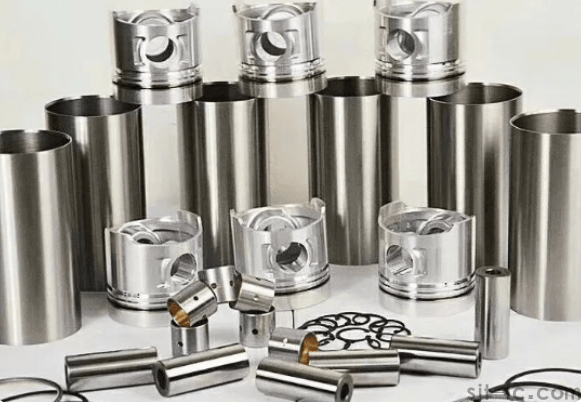
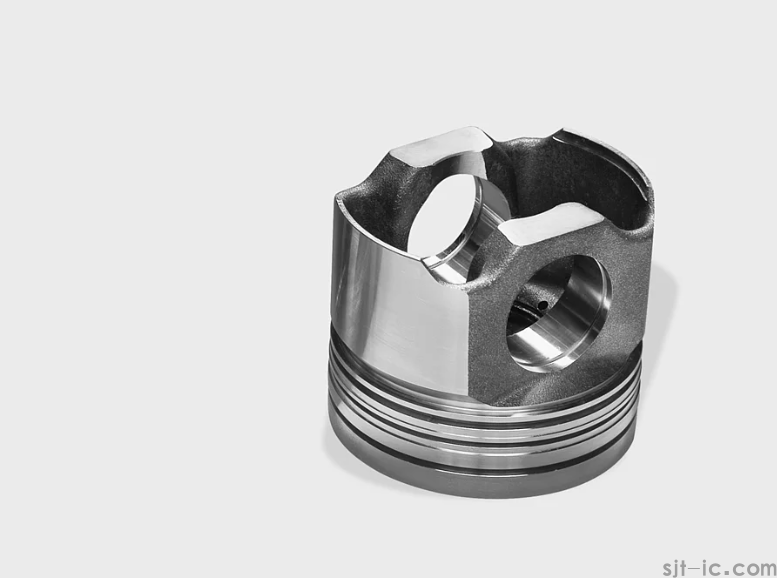
Piston machining is the high-precision CNC process that transforms raw blanks – whether cast, forged, or billet – into finished pistons capable of withstanding explosive combustion pressures, extreme thermal cycling, and constant friction. Unlike simple turned parts, a modern piston features a complex blend of geometries: precision ring grooves, intricate crown profiles, oil galleries, pin bores, and lightweighting pockets. Every surface must meet exacting dimensional and surface finish specifications, often within a few microns, to ensure proper sealing, minimal blow-by, and long service life.
A piston consists of three primary zones, each with its own machining challenges:
Crown: The top surface that forms part of the combustion chamber. It may be flat, domed, or dished, and its shape directly influences flame propagation and compression ratio.
Ring belt (head): Houses the compression and oil control rings. Grooves here demand razor-sharp edge definition and extremely tight axial clearances to prevent gas leakage and oil consumption.
Skirt: The cylindrical guiding surface that contacts the cylinder wall. It requires an optimized ovality and a micro-finish that retains oil film while minimizing friction.
Materials That Power Performance
Choosing the right base material is the first critical decision. EMAR machines pistons from a wide range of alloys, each with distinct properties matched to the application:
Aluminum 2618: The go-to for high-performance and racing engines. It retains strength at elevated temperatures, offers excellent fatigue resistance, and is the standard for many billet piston projects. Because of its lower silicon content, it expands more than 4032, requiring slightly larger cold clearances.
Aluminum 4032: Ideal for street performance, turbocharged, and passenger car applications. Its high silicon content provides lower thermal expansion and superior wear resistance, allowing tighter bore clearances and quieter operation.
Steel Alloys (4140, 4340, 8620): Used in heavy-duty diesel and commercial vehicle engines. These materials deliver exceptional strength, durability, and resistance to high cylinder pressures. 4340 is particularly valued for racing diesels due to its toughness.
Titanium: A premium option for top-tier motorsport and aerospace. It combines extreme strength with minimal weight but requires specialized tooling and slower cutting speeds.
Cast Aluminum Alloys (e.g., ZL101 equivalent): Common in high-volume passenger car production. Gravity casting and squeeze casting provide a cost-effective blank with good mechanical properties when paired with careful heat treatment.
EMAR’s material advisory team helps customers select the right alloy based on peak cylinder pressure, operating temperature, weight targets, and budget.
The CNC Piston Machining Process: Step by Step
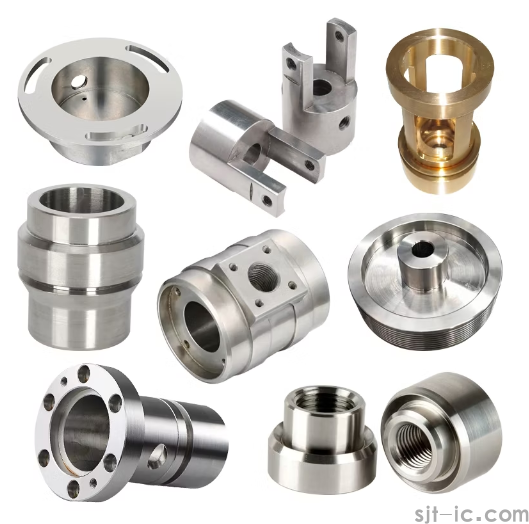
Achieving a finished piston that meets blueprint specifications involves a carefully sequenced series of operations:
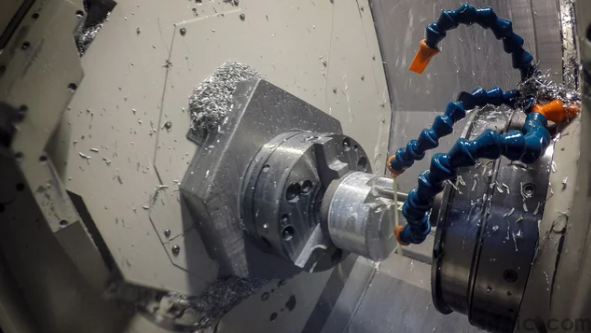
Blank Preparation & Roughing: The process starts with a forging, casting, or billet puck. Initial rough turning and facing remove bulk material, establish a reference datum, and relieve internal stresses.
CNC Milling – Crown & Undercrown: 5-axis milling centers sculpt the combustion bowl, valve pockets, and complex undercrown geometry. Undercrown milling is critical for weight reduction and structural rigidity; 3D toolpaths enable tapered struts and smooth contours that improve strength and airflow.
CNC Turning – Outer Diameter & Ring Grooves: Precision turning operations define the skirt profile, top land, and ring grooves. Modern turning centers hold diameters to ±0.005 mm and produce groove flatness within microns for superior ring seal. Pin boss bores are finish-bored in the same setup for concentricity.
Oil Gallery Drilling: Deep-hole drilling and cross-hole intersection create lubrication paths from the oil ring groove to the pin bosses and undercrown. Special attention is paid to chamfering and deburring so that no restrictions impede oil flow.
Surface Finishing & Honing: The skirt receives a controlled surface texture (typically Ra 0.4 µm) through grinding or super-finishing. Pin bores are honed to precise clearance. Some applications add skirt profiling with a slight barrel shape to match thermal expansion.
Coating Application: Functional coatings (detailed later) are applied before final inspection.
Quality Verification: Every piston passes through a coordinate measuring machine (CMM), roundness testers, profilometers, and ultrasonic inspection. At EMAR, we maintain a 99.7% first-pass yield on critical dimensions by integrating in-process probing and real-time SPC monitoring.
Forged vs. Billet Pistons: Which Is Right for Your Build?
One of the most debated topics in custom piston manufacturing is the choice between forged and billet pistons. Both routes have a place at EMAR, and the decision hinges on volume, lead time, and design freedom.
Forged Pistons: A preheated slug of 2618 (or similar alloy) is pressed into a close-to-net-shape forging die under thousands of tons of force. The resulting blank has a grain flow that follows the piston contours, enhancing fatigue strength. Forging is cost-effective for production runs and shelf-stock applications, though initial dies are expensive. Many custom pistons still start from existing forgings, modified through machining to achieve compression ratio, dome shape, and valve pocket changes.
Billet Pistons: Machined from a solid puck of heat-treated 2618 aluminum, billet pistons require no forging die. This makes them ideal for ultra-custom, one-off, or low-volume racing programs where every detail can be optimized. Because all material is removed by CNC, engineering and programming time is greater, leading to higher unit cost. However, billet offers unmatched flexibility: strut angles, undercrown thickness, and port geometries can be iterated rapidly without tooling investment. EMAR stocks select billet blanks for repeat customers and can turn non-stocking billets in as few as 10 days.
Custom Piston Options and High-Performance Features
When a shelf piston won’t meet your requirements, EMAR’s custom engineering team translates your engine’s specifications into a piston designed exactly for the job. Some of the most impactful custom features include:
Ultra Dome & Inverted Dome Profiles: Optimize compression ratio and quench without compromising flame travel.
3D Under Crown Milling: Removes unnecessary mass while keeping strength where it’s needed; critical for high-RPM stability.
Vertical & Lateral Gas Ports: Tiny ports that allow combustion pressure to force the top ring against the cylinder wall instantly, improving seal and reducing blow-by.
Accumulator Grooves: A small groove between the top and second ring lands that disrupts pressure spikes and reduces ring flutter.
Double Pin Oilers & Bottom Oilers: Increase lubrication to the wrist pin and lower end, especially in severe-duty or endurance engines.
Contact Reduction Grooves: Narrow machined bands on the skirt that limit contact area during piston rock, reducing drag and wear.
Precision Pin Fitting: Honed pin bores matched to specific clearance for the application, including turbocharged or nitrous combinations.
Surface Coatings and Heat Management
Coatings are no longer an afterthought – they’ve become integral to piston durability and performance. EMAR offers a full portfolio, often combined on a single piston:
Hard Anodize (Top Groove / Crown): Increases surface hardness in ring grooves, fights micro-welding, and permits ultra-tight ring side clearance.
Thermal Barrier Crown Coating: A ceramic-based layer that reflects combustion heat back into the chamber, lowering piston temperature and reducing the risk of detonation.
Dry-Film Skirt Coating (e.g., Tuff Skirt): A lubricious, anti-scuff layer that protects during cold starts and break-in, while reducing friction throughout the engine’s life.
Electroless Nickel: Applied to the entire piston except the skirt. It reflects heat, hardens the surface, and provides corrosion resistance – often used in nitromethane and alcohol engines.
KoolKote: A specialized coating for methanol and nitro engines that resists the corrosive effects of fuel wash.
Oil Shed Under Crown Coating: Promotes rapid oil drainage from the undercrown, reducing reciprocating weight and windage losses.
Critical Dimensional Tolerances and Surface Finishes
The difference between a reliable piston and one that scuffs or seizes often comes down to a few microns. EMAR holds typical piston machining tolerances to:
| Feature | Typical Tolerance | Impact of Non-Compliance |
|---|---|---|
| Skirt Diameter | ±0.005 mm | Compression loss, blow-by, or seizure |
| Ring Groove Width | ±0.008 mm | Increased oil consumption, power loss |
| Pin Bore | ±0.002 mm | Piston slap, accelerated wear |
| Crown Height | ±0.010 mm | Altered compression ratio, imbalance |
Surface finish is equally crucial. Skirt surfaces target Ra 0.4–0.8 µm to balance oil retention with low friction, while ring grooves might be finished even finer for gas sealing. Our CNC programs are thermally compensated, and critical machining is performed in a climate-controlled environment to maintain absolute consistency.
Advanced Technologies Transforming Piston Machining
EMAR’s production floor integrates the latest innovations to push quality and efficiency forward:
5-Axis Simultaneous Machining: Complex crowns, undercuts, and angled oil galleries are finished in single setups, eliminating stack-up errors.
Laser Micro-Machining: Used for ultra-fine oil retention textures and high-precision ring groove details.
In-Situ Metrology: Probing systems inside CNC machines perform real-time size checks, automatically adjusting offsets to stay within tolerance.
Digital Twins & Simulation: Toolpaths and material removal are simulated before cutting begins, catching interferences and optimizing chip evacuation.
Industry 4.0 Connectivity: IoT sensors track spindle health and tool wear, feeding analytics that predict maintenance needs and avoid unplanned downtime.
Diamond-Like Carbon (DLC) Pins: DLC coatings on piston pins can reduce friction by up to 40% and more than double wear life, contributing directly to fuel efficiency.
Piston Applications Across Key Industries
While automotive engines are the most recognized home for pistons, EMAR’s precision machining serves a much broader spectrum:
Automotive & Motorsport: Lightweight aluminum pistons for street cars, heavy-duty steel pistons for diesel trucks, and fully custom billet units for drag racing, Pro Mod, and endurance racing.
Aerospace: Pistons for aircraft engines and auxiliary power units, where material traceability and ultra-tight tolerances (±0.005 mm) are mandatory.
Marine: Corrosion-resistant steel and aluminum pistons for commercial vessels and military craft, engineered to handle constant high-load operation in saltwater environments.
Industrial & Power Generation: Large-bore pistons for compressors, hydraulic cylinders, and generator sets, designed for extended service intervals and high reliability.
Overcoming Common Piston Machining Challenges
Every piston project brings its own hurdles. Here is how EMAR addresses the most persistent ones:
Material Inconsistency: We qualify every batch of raw material with spectrometry and hardness testing before it reaches the machine.
Thermal Distortion: Post-heat-treatment stress relief, temperature-controlled machining, and air-blast cooling minimize deformation.
Tool Wear: Advanced coated carbide and CBN inserts, combined with tool-life management software, keep surface finishes consistent.
Complex Thin Walls: Specialized fixturing and vibration-dampened toolholders prevent chatter, ensuring clean profiles even on ultrathin skirts.
Particle Contamination: High-pressure coolant and through-tool coolant completely evacuate chips from deep galleries and ring grooves.
Future Trends Shaping Piston Machining
The piston isn’t standing still. As engine technology evolves, so do manufacturing methods:
Additive Manufacturing: Selective laser melting allows prototypes with conformal cooling channels and lattice structures that would be impossible to machine conventionally.
AI-Driven Process Control: Machine learning algorithms analyze real-time sensor data to optimize feed rates and detect anomalies, pushing scrap rates toward zero.
Sustainable Machining: Recycled aluminum alloys and bio-based cutting fluids are becoming viable alternatives without compromising mechanical properties.
Electrification Adaptations: Even hybrid and some electric drive systems still require piston components in range extenders or hydraulic actuators, demanding new materials and tighter leak-down specs.
Why EMAR Is Your Trusted Partner for Precision Piston Machining
With over 15 years of dedicated CNC machining experience, EMAR has become a single-source solution for automotive, industrial, and motorsport clients around the globe. Our facility combines 5-axis milling, multi-spindle turning, comprehensive in-house metrology, and a seasoned engineering team that understands the thermal, structural, and aerodynamic realities of piston design. We handle everything from rapid prototypes to full production runs in aluminum, steel, titanium, and composites – always backed by complete material certifications and inspection reports.
When you partner with EMAR, you get more than a piston supplier. You get a manufacturing ally committed to improving your engine’s reliability, fuel efficiency, and power output. Our responsive team can help refine your designs for manufacturability, recommend the ideal alloy and coatings, and deliver fully finished pistons that exceed your expectations.
Ready to Elevate Your Engine Performance?
Discuss your piston machining requirements with our specialists today. Contact EMAR at +86 18664342076 or email sales8@sjt-ic.com to request a quote, share your CAD models, or simply talk through your project goals. We’re here to turn your concepts into precision-engineered reality.