Spanish
 Arabic
 French
 Portuguese
 Belarusian
 Japanese
 Russian
 Malay
Malay Icelandic
 Bulgarian
 Azerbaijani
 Estonian
 Irish
Irish Polish
 Persian
 Boolean
 Danish
 German
 Filipino
 Finnish
 Korean
 Dutch
Dutch Galician
 Catalan
 Czech
Czech Croatian
 Latin
Latin Latvian
 Romanian
 Maltese
 Macedonian
 Norwegian
 Swedish
 Serbian
 Slovak
 Slovenian
 Swahili
 Thai
Thai Turkish
 Welsh
Welsh Urdu
Urdu Ukrainian
 Greek
Greek Hungarian
 Italian
 Yiddish
 Indonesian
 Vietnamese
 Haitian Creole
 Spanish Basque

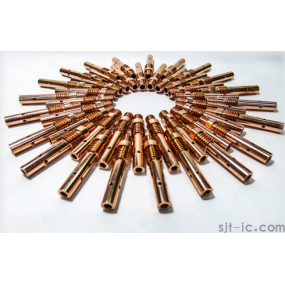
What’s a Precision CNC Machining Screw Part?
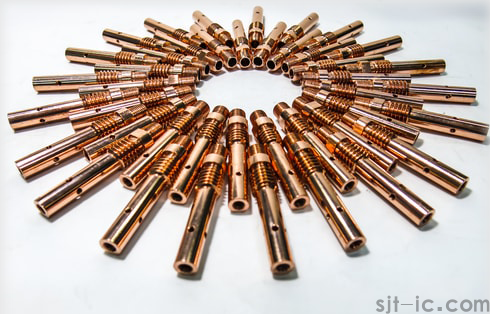
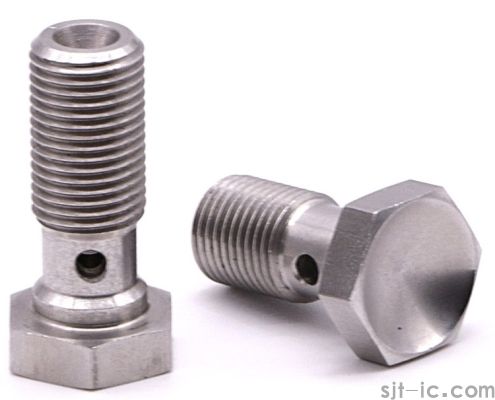
Not just a bolt. Think custom bone screws, aerospace fittings, lead screw shafts, microelectronic connectors. Any turned cylindrical part where the thread is the critical feature.
Core requirement: single-setup multi-axis machining. Swiss-type CNC lathes turn, mill, drill, thread in one clamping. This kills tolerance stacking. If a shop can‘t explain their single-setup workflow, run 🚩.
But should every screw part hit a Swiss machine? No. Shorter, larger-diameter parts with low deflection run fine on conventional CNC turning. The real test: does the supplier match the machine to the geometry, or just throw everything onto whatever lathe is free.
Tolerances: The Real Go/No-Go
The number you need: ±0.005 mm on critical diameters.
Swiss machines hold ±0.0002 inches — about 5 microns. Human hair averages 70 microns. So the allowed deviation is over 10 times tighter than a hair strand.
But diameter alone is useless. Concentricity kills assemblies. A screw with perfect OD and ID, but 0.0005“ TIR runout between them, will still bind. I’ve seen batches scrapped because nobody checked runout — only diameters.
Procurement checklist:
Baseline: ISO 2768-mK
Thread fit: ISO 6H/6g for metric fasteners
Demand FAIR including concentricity data, not just linear dims
If the supplier takes over 48 hours to produce a FAIR, find another.
On tighter tolerances — some claim “tighter always better.” I‘m not convinced. Over-tolerancing can spike cost 30-40% with zero functional gain for most commercial applications. Buy necessary precision, not bragging rights.
Material Picks: Stop Guessing
Material choice drives cost, lead time, and part life. Get it wrong and you pay twice.
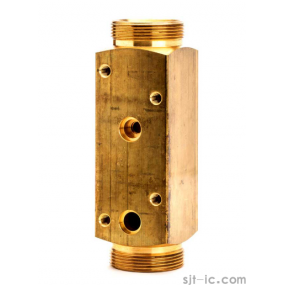
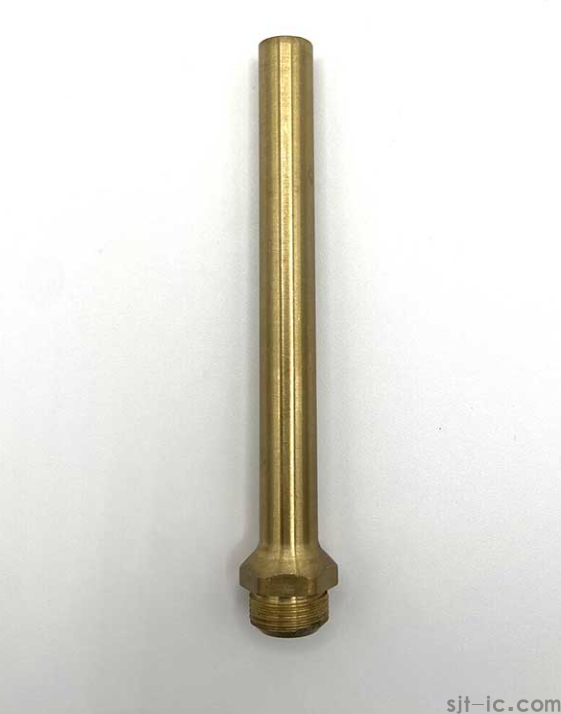
Brass C360 — Machinability index 150. Chips break small and clear the cut instantly. Great for Swiss lathes. Strength is low. Not for load-bearing.
Aluminum 6061 — The default. Index 90, decent strength, machines easy. Prototypes, housings, general parts.
Stainless 304/316 — Index ~45. Work-hardens if feed rates are wrong. Medical, food, marine. No substitute when corrosion resistance matters. Bone screws are almost always 316 or titanium.
Titanium Grade 5 — Index 10-20. Slow, expensive, requires rigid setups and heat control. Aerospace, high-end implants. No shortcuts.
| Material | Machinability Index | Best Use | Relative Cost |
|---|---|---|---|
| Brass C360 | 150 | Connectors, cosmetic | $$ |
| Al 6061 | 90 | Prototypes, housings | $ |
| SS 304 | 45 | Medical, marine | $$$ |
| Ti Gr5 | 10-20 | Aerospace, implants | $$$$ |
Mistake pattern: design specs titanium when 316 works. Procurement defaults to aluminum without checking environment. Fix: align material to actual service condition. Nothing more.
Surface Finish Is Functional
A machined thread isn‘t smooth. Tool marks and micro-burrs affect torque scatter and corrosion.
Ra 3.2 µm — Standard. Commercial fasteners.
Ra 1.6 µm — Medical, auto. Noticeably smooth.
Ra 0.8 µm — Parts with Ra < 0.8 tested ~12% lower assembly stress failures. Fewer binds, tighter torque consistency.
Ra < 0.1 µm — Post-process grinding/polishing. Only where surface friction is critical.
Post-processing must-dos:
Deburr. Non-negotiable.
Passivate stainless. Restores chromium oxide layer.
Anodize aluminum. Adds 15-35% to cost but improves hardness.
Polish for ultra-smooth.
Most buyers say “just deburr it.” Mistake. Field failures often trace back to surface finish spec on drawing but never verified at incoming inspection 🔍.
Read a QC Report in 60 Seconds
Shipment arrives with a report. Check these five items, not just the cover sheet.
CMM dimensional data mapped to CAD nominals. Modern CMMs with laser scanning catch dimensions, roughness, and thread profile in one cycle.
Thread fit verification — Go/No-Go plus actual pitch diameter. Class must be stated (6g / 6H).
Concentricity/runout measurement — most missed on screw parts.
Ra values — measured, not guessed.
Material cert — traceable to heat lot.
What buyers skip: SPC data. Shops that track dimensional trends catch drift before parts go bad. This alone can cut scrap ~18%. If you order 5,000+ pcs, demand SPC. It pays for itself.
Cost & Lead Time: The Numbers
Standard lead times for custom CNC screw parts:
Samples: 7-10 days after drawing sign-off.
Production: 10-20 days standard.
Express: up to 50% faster, expect premium.
Prototyping: average 5-7 days, about 30% need a revision cycle.
Cost drivers:
Material. Titanium > SS > Aluminum. But machining time and tool wear often matter more than stock price.
Complexity. More features, deeper threads = longer cycle.
Batch size. One-off setup cost hits hard. 100 pcs amortizes it.
Rush fees. Shorter deadline, fewer supplier options.
Surface treatments add 15-35%.
Impossible triangle: quality, lead time, cost. Pick two, manage the third.
Smart moves:
Batch orders: 600 parts now vs. three orders of 200.
DFM talk early. Good shops suggest design tweaks that cut machine time.
Spec the tolerance you need, not the machine’s limit.
Consistent Supply: EMAR Precision CNC Screw Parts
A shop can hold tolerance for 50 parts. Holding it for 50,000 is different. Look for:
Single-setup multi-axis to eliminate stack-up.
In-house material knowledge — they recommend the right alloy, not just machine what you send.
Real QC: on-site CMM, laser, SPC — not just calipers.
Fast response: hours, not days.
EMAR focuses on precision CNC machining screw parts for orders needing repeatable quality at volume. Multi-axis Swiss and CNC turning. Aluminum to titanium. Full FAIR, CMM, material certs, surface finish data — standard with every shipment.
Quote or project discussion: +86 18664342076, sales8@sjt-ic.com. Response within hours 📩.