Spanish
 Arabic
 French
 Portuguese
 Belarusian
 Japanese
 Russian
 Malay
Malay Icelandic
 Bulgarian
 Azerbaijani
 Estonian
 Irish
Irish Polish
 Persian
 Boolean
 Danish
 German
 Filipino
 Finnish
 Korean
 Dutch
Dutch Galician
 Catalan
 Czech
Czech Croatian
 Latin
Latin Latvian
 Romanian
 Maltese
 Macedonian
 Norwegian
 Swedish
 Serbian
 Slovak
 Slovenian
 Swahili
 Thai
Thai Turkish
 Welsh
Welsh Urdu
Urdu Ukrainian
 Greek
Greek Hungarian
 Italian
 Yiddish
 Indonesian
 Vietnamese
 Haitian Creole
 Spanish Basque

HTML
The advantages and disadvantages of CNC lathe machining
CNC lathe machining is one of the most important manufacturing methods used today. Many companies choose this technology because it can produce accurate parts quickly and consistently. However, like every manufacturing process, CNC lathe machining also has some limitations, such as high investment costs and technical requirements.
Understanding The advantages and disadvantages of CNC lathe machining helps manufacturers make better decisions when selecting machining methods. This article explains the main benefits and challenges of CNC lathe machining, including how they affect production efficiency, cost control, and product quality.
What Is CNC Lathe Machining?
CNC lathe machining is an automated manufacturing process where a workpiece rotates while cutting tools remove material according to computer-programmed instructions. CNC stands for Computer Numerical Control, meaning the machine follows digital commands instead of relying only on manual operation.
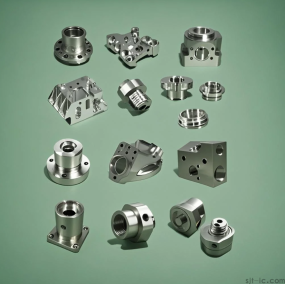
This machining method is widely used in industries such as automotive, aerospace, medical equipment, electronics, and precision machinery. CNC lathes can manufacture many types of parts, including shafts, bushings, threaded components, and complex cylindrical products.
Compared with traditional manual lathes, CNC lathes offer better control, higher production speed, and improved consistency. However, businesses must also consider investment requirements, programming difficulty, and maintenance needs before using this technology.
Precision Advantages of CNC Lathe Machining
High-Precision Machining
One of the biggest precision advantages of CNC lathe machining is its ability to produce parts with extremely tight tolerances. Because the machine movement is controlled by a computer system, cutting tools can follow programmed paths with very high accuracy.
For example, when manufacturing medical implant components such as dental implant parts, a CNC lathe can produce components with tolerances as small as ±0.01mm. This level of accuracy helps ensure that the implant fits correctly and performs safely inside the human body.
High precision is especially important in industries where small errors can create serious problems. Aerospace components, medical devices, and precision electronic parts often require strict dimensional control to guarantee safety and reliability.
Excellent Repeatability
Another important benefit of CNC lathe machining is repeatability. Once the machining program is created and tested, the CNC lathe can produce the same part many times with almost identical results.
For example, in the mass production of small metal pins for electronic devices, a CNC lathe can manufacture thousands of pieces with consistent dimensions. Each pin may only have a diameter difference of about ±0.02mm from the programmed size.
This repeatability allows manufacturers to create interchangeable parts. In industries such as automotive manufacturing, consistent part dimensions are essential because every component must fit correctly during assembly.
Efficiency Benefits of CNC Lathe Machining
Automated Operations Reduce Production Time
The efficiency benefits of CNC lathe machining come mainly from automation. After the machine is properly set up and programmed, it can complete machining operations with limited operator involvement.
For example, when producing long shaft components, a CNC lathe can complete turning, threading, and facing operations in sequence without requiring workers to manually adjust tools after each step.
This automation reduces labor requirements, improves workflow, and allows operators to manage multiple machines at the same time. As a result, manufacturers can increase production capacity while maintaining stable quality.
Faster Machining Speeds
CNC lathes are designed to work at high speeds. Advanced spindle systems and optimized cutting paths allow the machine to remove material faster than many traditional machining methods.
For example, when machining aluminum components, a CNC lathe can operate at high spindle speeds and complete a job much faster. A part that may require around 30 minutes on a manual lathe could potentially be completed in about 10 minutes using CNC technology.
Faster machining speeds help manufacturers produce more parts in less time, which improves delivery efficiency and supports large-scale production.
Cost-Related Disadvantages of CNC Lathe Machining
High Initial Investment Cost
One of the main cost-related disadvantages of CNC lathe machining is the high starting investment. Purchasing a CNC lathe requires significant financial resources because the cost includes the machine, control system, software, tooling, and installation.
For example, a high-end CNC lathe with multi-axis functions may cost hundreds of thousands of dollars. For small manufacturing businesses, this initial expense can be difficult to manage.
Although CNC lathes can reduce labor costs and improve production efficiency over time, companies need to carefully evaluate their production volume and expected return on investment before purchasing equipment.
Maintenance and Repair Expenses
CNC lathes require regular maintenance to maintain accuracy and performance. Maintenance tasks may include checking mechanical components, calibrating control systems, replacing cutting tools, and inspecting electrical systems.
If a major component fails, repair costs can also be high. For example, replacing a damaged spindle may cost several thousand dollars because it requires specialized technicians and precision parts.
Proper maintenance planning is important because unexpected machine downtime can delay production schedules and increase manufacturing costs.
Complexity-Based Disadvantages of CNC Lathe Machining
Programming Complexity
A major complexity-based disadvantage of CNC lathe machining is the need for specialized programming skills. CNC programmers must understand machining processes, cutting tools, tool paths, and G-code programming.
For complex parts with multiple curves, holes, or special features, creating an accurate program can take considerable time. A small programming mistake may cause incorrect dimensions, damaged tools, or even scrapped workpieces.
Therefore, manufacturers need trained technicians who can create, check, and optimize CNC programs before production begins.
Higher Operator Skill Requirements
Although CNC lathes reduce manual work, skilled operators are still necessary. Operators must know how to set up the machine, install tools, load programs, check part quality, and solve machining problems.
For example, if a cutting tool breaks during operation, the operator needs to identify the cause, replace the tool, and adjust machining settings to continue production.
Finding experienced CNC operators can be challenging for some companies. Investment in employee training is often necessary to achieve stable production results.
Versatility in CNC Lathe Machining
Wide Range of Machining Operations
One of the strongest advantages of CNC technology is the versatility in CNC lathe machining. A CNC lathe can perform many operations, including turning, threading, facing, boring, and grooving.
For example, a complex mechanical component can be manufactured in one setup by creating external threads, drilling internal holes, and cutting grooves without moving the part to different machines.
This flexibility reduces production steps, improves accuracy between operations, and helps manufacturers create different product designs efficiently.
Compatibility With Different Materials
CNC lathes can process many materials, including steel, aluminum, titanium, plastics, and composite materials.
For example, aerospace companies may use CNC lathes to produce lightweight titanium components, while consumer product manufacturers may use them to create plastic precision parts.
This wide material compatibility makes CNC lathe machining suitable for many industries with different performance requirements.
How EMAR Maximizes the Advantages of CNC Lathe Machining
Using CNC lathe machining successfully requires not only advanced equipment but also professional experience. EMAR focuses on using the strengths of CNC technology while reducing the challenges that manufacturers often face.
Using Precision and Repeatability to Improve Product Quality
EMAR applies high-precision CNC lathe equipment and professional machining methods to produce reliable components for demanding industries. By using accurate programming and strict quality control processes, EMAR helps ensure that parts meet required specifications.
For industries such as aerospace and medical manufacturing, where accuracy is critical, the precision and repeatability of CNC Machining can help create safer and more dependable products.
Reducing CNC Machining Challenges
EMAR also addresses common CNC machining disadvantages through experienced technicians, skilled programmers, and planned equipment maintenance.
Professional programming helps reduce errors caused by complex machining requirements, while regular maintenance helps prevent unexpected downtime and expensive repairs.
Through careful process management, EMAR helps customers achieve efficient, cost-effective, and high-quality CNC lathe machining solutions.
Conclusion: Balancing the Pros and Cons of CNC Lathe Machining
CNC lathe machining provides many important benefits, including high precision, excellent repeatability, fast production speed, and strong versatility. These advantages make it a valuable solution for industries that require reliable and efficient manufacturing.
However, companies should also consider disadvantages such as high initial investment, maintenance costs, programming complexity, and the need for skilled workers.
By choosing the right machining partner and applying professional production management, manufacturers can maximize the benefits of CNC lathe machining while controlling its limitations. With advanced equipment and technical expertise, companies like EMAR help customers achieve consistent quality, efficient production, and long-term manufacturing success.