
CNC Machining Services for Aluminum Plates: Precision, Quality, and Cost-Effective Solutions
Aluminum plates are widely used in electronics, automotive parts, construction equipment, aerospace components, and industrial machines because they are lightweight, strong, and corrosion-resistant. However, many customers have concerns when ordering custom aluminum plates, including machining accuracy, surface quality, production cost, and delivery time.
CNC Machining Services for Aluminum Plates provide a reliable solution for producing high-quality aluminum components with accurate dimensions, smooth surfaces, and consistent performance. With advanced CNC equipment and skilled machining teams, manufacturers can create simple plates as well as complex aluminum parts with tight tolerances.
Why Choose CNC Machining for Aluminum Plates?
CNC machining is an excellent manufacturing method for aluminum plates because it combines precision, flexibility, and efficiency. Computer-controlled machines can follow detailed CAD designs and produce parts with repeatable accuracy, which is difficult to achieve with manual machining.
For industries that require reliable aluminum components, CNC machining offers several advantages:
- High precision: CNC machines can achieve very tight tolerances, ensuring that aluminum plates fit correctly into assemblies and systems.
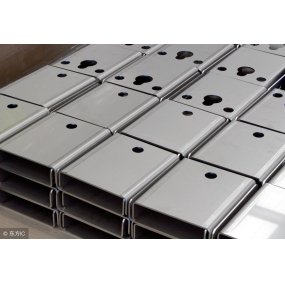
- Complex shape production: CNC machining can create detailed cut-outs, slots, holes, grooves, and curved features.
- Consistent results: Once the machining program is created, multiple aluminum plates can be produced with the same quality.
- Cost efficiency: Automated machining reduces human errors and improves production efficiency, helping control manufacturing costs.
Design Considerations for CNC-Machined Aluminum Plates
Good design is the first step toward successful aluminum plate machining. Understanding the final application helps engineers select the right dimensions, materials, and machining methods.
The main design considerations for CNC-machined aluminum plates include:
- Application requirements: Aluminum plates used in electronics may need excellent conductivity and precise openings for components. Construction or automotive plates may require higher strength and durability.
- Plate thickness: The thickness should match the required strength, weight limits, and machining requirements. Very thin plates may need special methods to avoid deformation.
- Flatness requirements: Large aluminum plates often require strict flatness control to ensure proper installation and reliable performance.
- Hole and cut-out patterns: The location, size, and quantity of holes or openings should be carefully designed to maintain strength and simplify machining.
- Edge and surface requirements: Designers should consider whether sharp edges, smooth edges, polished surfaces, or special finishes are needed.
Experienced CNC machining providers can review designs before production and suggest improvements that reduce machining difficulty and cost.
Choosing the Right Aluminum Alloy for Plate Machining
Different applications require different aluminum properties. Proper aluminum alloy selection for aluminum plate machining helps achieve the best balance between strength, weight, corrosion resistance, and machinability.
- 6061 aluminum: A popular choice for general CNC machining. It offers good strength, corrosion resistance, and excellent machinability for industrial parts and structural components.
- 7075 aluminum: Known for high strength and is often used in aerospace and high-performance applications where load resistance is important.
- 5052 aluminum: Provides excellent corrosion resistance and good forming ability, making it suitable for marine equipment, panels, and outdoor applications.
- 2024 aluminum: Offers high strength and fatigue resistance, commonly used for demanding mechanical applications.
- 6063 aluminum: Suitable for applications requiring good surface quality and moderate strength, such as architectural components.
The correct alloy choice depends on factors such as mechanical strength, electrical conductivity, environmental exposure, and budget requirements.
Main CNC Machining Operations for Aluminum Plates
CNC machines can perform multiple operations on aluminum plates to create finished parts with accurate features.
Milling Operations on Aluminum Plates
Milling operations on aluminum plates are commonly used to create pockets, grooves, flat surfaces, and complex contours. CNC milling machines use rotating cutting tools to remove material with high accuracy.
When machining aluminum, manufacturers usually select tools designed for soft metals, such as carbide end mills with sharp cutting edges. Proper cutting parameters are important:
- Cutting speed: Aluminum usually allows higher cutting speeds compared with harder metals because of its softer structure.
- Feed rate: A suitable feed rate improves surface quality and prevents excessive tool wear.
- Depth of cut: The cutting depth should balance machining efficiency and part stability.
Cutting, Drilling, and Engraving
Other common CNC operations include:
- Cutting: CNC cutting creates the basic plate shape and removes unnecessary material.
- Drilling: CNC drilling produces accurate holes for screws, bolts, connectors, and assembly purposes.
- Engraving: CNC engraving adds product numbers, logos, markings, or identification information.
Using the correct tools and machining parameters helps achieve clean edges, accurate dimensions, and a better surface finish.
Solving Common Challenges in Aluminum Plate CNC Machining
Although aluminum is easy to machine, manufacturers must manage several challenges to maintain quality.
Preventing Warping in Aluminum Plate CNC Machining
Preventing warping in aluminum plate CNC machining is important, especially for large or thin plates. Excessive cutting force, heat, or uneven material removal can cause deformation.
Common solutions include:
- Using proper clamping methods to support the plate during machining.
- Removing material gradually instead of taking very deep cuts at once.
- Using suitable cutting speeds and cooling methods to control heat.
- Balancing machining operations on both sides when necessary.
Reducing Burrs and Maintaining Accurate Dimensions
Burrs can affect assembly quality and safety. CNC manufacturers reduce burr formation by selecting proper cutting tools, optimizing machining parameters, and applying finishing operations when needed.
Accurate inspection during and after machining ensures that every aluminum plate meets the required specifications.
Surface Finishing Options for CNC Machined Aluminum Plates
After machining, aluminum plates can receive additional treatments to improve appearance, durability, and performance.
- Anodizing: Improves corrosion resistance and creates a durable surface layer. It is also available in different colors for product appearance.
- Painting: Provides additional protection and allows customized colors for different industries.
- Polishing: Creates a smoother and more attractive surface finish.
- Brushing: Produces a consistent textured appearance for decorative applications.
Quality Control in CNC-Machined Aluminum Plates
Reliable quality control is essential for CNC aluminum machining projects. Professional manufacturers use inspection processes to verify that each part meets customer requirements.
Quality control in CNC-machined aluminum plates usually includes:
- Dimensional inspection: Measuring thickness, length, width, hole positions, and other critical features using precision measuring equipment.
- Surface roughness checks: Testing the smoothness of machined surfaces to ensure they meet finishing requirements.
- Material verification: Confirming the aluminum alloy type and checking material properties when required.
- Final inspection: Reviewing finished parts before delivery to ensure consistent quality.
Working with an Experienced CNC Aluminum Plate Machining Partner
Choosing the right machining supplier can greatly influence product quality, cost, and delivery performance. A professional CNC machining company should have advanced equipment, experienced technicians, strong engineering support, and a clear quality management system.
EMAR provides professional CNC machining solutions for aluminum plates, supported by state-of-the-art CNC equipment and experienced technicians. The company focuses on understanding customer requirements, optimizing machining processes, and delivering reliable aluminum components for different industries.
From prototype production to larger manufacturing projects, EMAR applies a customer-focused approach to help clients achieve accurate, efficient, and cost-effective CNC machined aluminum plates.
Conclusion
CNC machining is a dependable choice for producing aluminum plates with high precision, complex designs, and consistent quality. By selecting the correct aluminum alloy, optimizing machining processes, controlling deformation risks, and applying suitable surface treatments, manufacturers can create aluminum plates that meet demanding industrial requirements.
Professional CNC Machining Services for Aluminum Plates help businesses reduce production risks, improve product performance, and achieve better value throughout the manufacturing process.