
CNC Machining Services for Precision Aluminum Parts: A Complete Guide to Quality, Cost, and Reliable Production
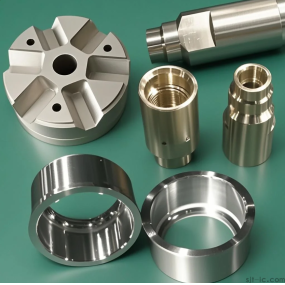
When companies need lightweight, accurate, and durable components, CNC Machining Services for Precision Aluminum Parts are often the best solution. Aluminum parts are widely used in industries such as aerospace, automotive, electronics, medical equipment, and industrial automation because they offer an excellent balance of strength, weight, and performance.
However, finding the right CNC machining partner is not always easy. Customers often worry about machining quality, production costs, material selection, delivery time, and whether the supplier understands the special characteristics of aluminum. A professional CNC machining service provider must solve these problems through advanced equipment, skilled engineers, strict quality control, and efficient production methods.
Why Aluminum Is Popular for Precision CNC Machined Parts
Aluminum is one of the most commonly used materials for precision machining because it has several valuable properties. It is easy to machine while still providing reliable mechanical performance.
- Lightweight: Aluminum has a low density compared with steel, making it ideal for applications where reducing weight is important, such as aircraft components, automotive parts, and portable electronic devices.
- Good thermal conductivity: Aluminum transfers heat efficiently, which makes it suitable for heat sinks, cooling components, and electronic housings.
- Corrosion resistance: Aluminum naturally forms an oxide layer that protects the surface from corrosion, improving part durability.
- Good machinability: Aluminum can be cut at high speeds, allowing CNC machines to produce complex parts efficiently.
- Excellent surface finish: CNC machining can create smooth surfaces and precise details on aluminum components.
Different applications require different aluminum properties. Understanding aluminum alloy types in precision CNC is important when selecting the correct material for a project.
Common Aluminum Alloys Used in Precision CNC Machining
A reliable CNC machining provider should offer a wide range of aluminum alloys and understand how each alloy behaves during machining.
6061 Aluminum
6061 aluminum is one of the most popular choices for CNC machining. It provides a good combination of strength, corrosion resistance, weldability, and machinability. It is commonly used for structural parts, machine components, brackets, and housings.
6063 Aluminum
6063 aluminum is known for its excellent surface finish and extrusion performance. It is often used for decorative parts, frames, and applications where appearance is important.
7075 Aluminum
7075 aluminum offers much higher strength than 6061 aluminum. It is commonly selected for aerospace and high-performance applications where strength-to-weight ratio is critical. However, it requires more careful machining because of its hardness.
Other Aluminum Alloys
Other alloys, such as 2024 and 5052 aluminum, may also be selected depending on the required strength, corrosion resistance, and manufacturing conditions. An experienced machining provider should recommend the best alloy based on the final application rather than simply choosing the lowest-cost option.
Why CNC Machining Is Ideal for Precision Aluminum Parts
CNC machining is a preferred manufacturing method for aluminum parts because it combines accuracy, flexibility, and repeatability. Unlike manual machining, CNC equipment follows programmed instructions to produce consistent results even for complex designs.
The main advantages of CNC machining aluminum include:
- High precision: CNC machines can achieve tight tolerances required for precision components.
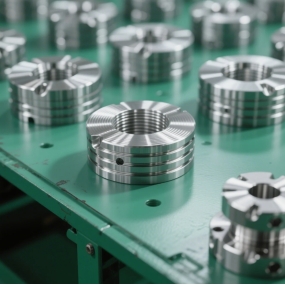
- Repeatable quality: The same program can produce thousands of identical parts with stable quality.
- Complex geometries: CNC machining can create detailed shapes, pockets, holes, curves, and thin walls.
- Fast production: High-speed machining reduces production time for aluminum parts.
- Design flexibility: CNC machining supports prototypes, small batches, and large-volume production.
Choosing a CNC Service for Aluminum Parts
Choosing a CNC service for aluminum parts requires careful evaluation. The lowest price is not always the best choice because poor machining quality can lead to production delays, additional costs, and part failures.
Important factors to consider include:
- Experience with aluminum machining: The provider should understand aluminum cutting behavior, tool selection, chip control, and surface finishing.
- Available aluminum alloys: The supplier should support common alloys such as 6061, 6063, and 7075.
- Advanced CNC equipment: Modern CNC milling machines, turning centers, and inspection equipment improve accuracy and efficiency.
- Engineering support: A professional supplier should help optimize designs for better manufacturability and lower costs.
- Quality management system: The provider should have clear inspection procedures and follow industry standards.
Companies such as EMAR provide professional CNC machining solutions for precision aluminum parts, supporting customers from material selection and design review to machining and quality inspection. Their experience with different aluminum materials helps customers achieve reliable parts for various applications.
The CNC Machining Process for Precision Aluminum Parts
A professional machining provider usually follows a structured process to ensure every aluminum part meets customer expectations.
1. Understanding Customer Requirements
The process begins with understanding the customer's needs, including:
- Part dimensions and drawings
- Required tolerances
- Surface finish requirements
- Production quantity
- Final application and working conditions
Understanding the end-use helps engineers select the correct aluminum alloy, machining method, and inspection requirements.
2. Design Optimization
Before machining begins, experienced engineers may review the design and suggest improvements. Design optimization can reduce machining difficulty, lower material waste, and improve production efficiency.
Examples include adjusting wall thickness, improving tool access, reducing unnecessary machining areas, and selecting suitable tolerances.
3. CNC Machining Operations
The main machining operations for precision aluminum parts include milling, turning, drilling, and grinding.
CNC Milling
CNC milling uses rotating cutting tools to remove material and create complex shapes, slots, pockets, and surfaces. Carbide end mills are commonly used for aluminum because they provide high cutting performance and long tool life.
For aluminum alloys, high cutting speeds and proper feed rates are usually preferred. However, parameters must be adjusted based on alloy hardness, tool type, and part design.
CNC Turning
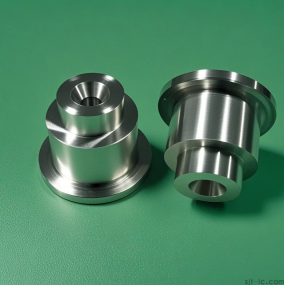
CNC turning is mainly used for round aluminum components such as shafts, rings, and connectors. The workpiece rotates while a cutting tool removes material.
Sharp cutting tools and suitable speeds help prevent surface damage and maintain accurate dimensions.
Drilling
Drilling creates accurate holes for assembly and connection purposes. Aluminum drilling requires proper tool selection and chip removal methods to prevent chips from blocking the cutting area.
Grinding and Finishing
Grinding is used when extremely accurate dimensions or smooth surface finishes are required. Additional finishing processes, such as anodizing, may also improve corrosion resistance and appearance.
Handling Challenges in Aluminum CNC
Handling challenges in aluminum CNC requires technical knowledge because aluminum behaves differently from harder metals.
Chip Evacuation Problems
Aluminum produces long, sticky chips during machining. If chips are not removed properly, they can damage the surface or affect cutting accuracy.
Solutions include:
- Using optimized cutting tools
- Applying proper coolant or lubrication
- Using effective chip removal systems
- Adjusting cutting parameters
Surface Galling
Aluminum can stick to cutting tools because of its softness and adhesive properties. This may reduce surface quality and shorten tool life.
Professional machining providers solve this problem by using sharp tools, suitable coatings, correct speeds, and proper lubrication.
Maintaining Tight Tolerances
Temperature changes during machining can affect aluminum dimensions because aluminum expands and contracts easily.
To maintain accuracy, suppliers use temperature control, stable machining conditions, and in-process measurement systems.
Quality Control in CNC-Machined Aluminum Parts
Quality control in CNC-machined aluminum parts is essential for ensuring reliable performance. A professional supplier should inspect parts throughout the entire manufacturing process.
In-Process Inspection
During machining, technicians check critical dimensions to detect problems early. Common inspection tools include:
- Coordinate measuring machines (CMM)
- Digital calipers and micrometers
- Surface roughness testers
- Precision gauges
Final Product Testing
Before shipment, finished parts may undergo:
- Dimensional testing: Confirming measurements meet drawing requirements.
- Hardness testing: Checking material performance when required.
- Functional testing: Ensuring parts work correctly in their final application.
- Surface inspection: Checking appearance and finish quality.
Professional suppliers may also follow standards such as ISO quality management requirements to maintain consistent production performance.
How CNC Machining Services Balance Quality and Cost
Many customers worry that high precision means high cost. However, experienced CNC machining providers can control costs while maintaining quality.
Cost-effective strategies include:
- Optimizing machining processes: Reducing unnecessary operations lowers production time.
- Reducing material waste: Proper programming and design improvements maximize material usage.
- Using efficient tooling: Correct tools improve machining speed and reduce replacement costs.
- Supporting volume production: Larger production quantities often reduce the cost per part.
A good CNC supplier focuses on overall value, not only the initial price. Reliable quality reduces future expenses caused by rework, delays, and part failures.
Examples of CNC Machining Service Providers for Aluminum Parts
Several well-known CNC machining companies provide aluminum machining services with different strengths:
- EMAR: Provides precision CNC machining services for aluminum parts, including engineering support, CNC milling, CNC turning, quality inspection, and customized manufacturing solutions.
- Protolabs: Known for rapid prototyping and quick-turn CNC manufacturing services.
- Xometry: Offers a large manufacturing network for custom CNC machining and production needs.
- Fictiv: Provides digital manufacturing services with engineering collaboration and supply chain support.
When selecting a supplier, companies should consider machining experience, quality systems, technical communication, production capability, and long-term reliability.
Conclusion
CNC Machining Services for Precision Aluminum Parts provide an effective way to produce lightweight, accurate, and durable components for modern industries. Aluminum's excellent properties, combined with CNC machining's precision and flexibility, make this combination suitable for everything from prototypes to high-volume production.
The right machining partner should understand aluminum alloy selection, optimize designs, manage machining challenges, and maintain strict quality control. By choosing an experienced provider such as EMAR, customers can achieve reliable aluminum parts with excellent performance, competitive costs, and consistent quality.