
CNC Machining Transmission Worm Gear: Process, Materials, and Precision Control Guide
CNC machining transmission worm gear is an important manufacturing solution for producing high-precision worm gears used in power transmission systems. These gears are widely used in CNC machine tools, automation equipment, industrial robots, and precision measuring machines because they can provide high reduction ratios, stable torque output, and reliable motion control.
When companies need worm gears for demanding applications, they often face challenges such as choosing the right material, controlling machining accuracy, reducing production costs, and finding a reliable machining partner. Understanding the manufacturing process and quality requirements can help buyers make better decisions.
What Is CNC Machining Transmission Worm Gear?
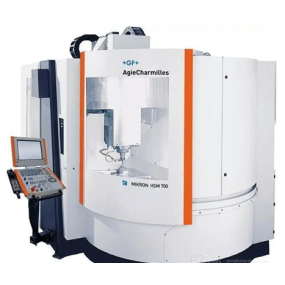
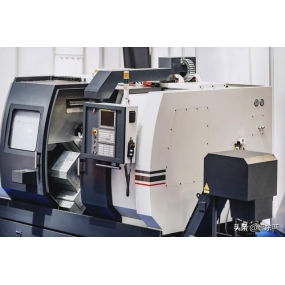
CNC machining transmission worm gear refers to the use of computer numerical control technology to manufacture worm gears and related transmission components. CNC machines use programmed instructions to control cutting tools, allowing manufacturers to achieve consistent dimensions, complex tooth profiles, and high repeatability.
A worm gear system usually consists of a worm and a worm wheel. The worm rotates to drive the worm wheel, allowing power transmission between two non-intersecting shafts, commonly positioned at a 90-degree angle. This design is useful when equipment requires compact structure, smooth operation, and high torque transmission.
Features and Applications of CNC-Machined Transmission Worm Gears
The features and applications of CNC-machined transmission worm gears make them suitable for many industrial fields. Their unique design provides several advantages:
- High reduction ratio: Worm gears can achieve large speed reductions in a compact space.
- Large torque output: They can transmit strong loads while maintaining stable operation.
- Self-locking capability: Some worm gear designs can prevent reverse movement, improving equipment safety.
- Smooth and quiet operation: The sliding contact between the worm and gear reduces vibration and noise.
Common applications include CNC machine tools, automatic production lines, packaging equipment, medical equipment, lifting systems, and precision control devices. For example, in CNC machine tools, worm gears help control worktable movement and improve positioning accuracy.
Common Materials for CNC Machining Transmission Worm Gears
Choosing suitable materials is one of the most important steps in manufacturing reliable worm gears. The common materials for CNC machining transmission worm gears depend on load requirements, working environment, and expected service life.
- Hardened steel: Often used for worms because it provides excellent strength and wear resistance.
- Bronze and phosphor bronze: Common choices for worm wheels because they offer good friction performance and reduce wear.
- Cast iron: Suitable for applications requiring good vibration resistance and cost control.
- Stainless steel such as 17-4PH: Used in environments requiring corrosion resistance and high mechanical strength.
The correct material combination can greatly affect gear performance. Using a hard worm with a softer bronze worm wheel is a common approach because it balances durability, lubrication performance, and manufacturing cost.
Machining Process of CNC-Machined Transmission Worm Gears
The machining process of CNC-machined transmission worm gears requires careful control at every stage. A typical production process includes:
- Blank preparation: Selecting and preparing suitable raw materials according to design requirements.
- Rough machining: Removing excess material through turning, milling, or other CNC operations.
- Heat treatment: Improving hardness and wear resistance through processes such as carburizing and quenching.
- Finish machining: Performing precise cutting, grinding, and tooth profile processing to achieve final dimensions.
- Mating and inspection: Testing the interaction between the worm and worm wheel to ensure smooth operation.
For high-precision applications, grinding is often necessary after heat treatment. This helps achieve tighter tolerances and better surface quality, especially when customers require precision levels based on DIN standards.
How Is Precision Controlled in CNC Machining Transmission Worm Gears?
Precision control in CNC machining transmission worm gears is critical because even small errors can affect efficiency, noise levels, and service life. Manufacturers need to control several important factors:
- Dimensional accuracy: CNC equipment ensures that gear sizes meet engineering drawings.
- Tooth profile accuracy: Proper machining prevents uneven contact between the worm and worm wheel.
- Backlash control: Correct clearance improves motion accuracy and reduces vibration.
- Surface finish: Smooth surfaces reduce friction and extend operating life.
For precision transmission systems, advanced designs such as double-lead worms can help reduce backlash to around 1–3 minutes, while standard single-lead designs may have slightly larger clearance depending on the application requirements.
Advantages of CNC-Machined Transmission Worm Gears Over Other Manufacturing Methods
The advantages of CNC-machined transmission worm gears over other manufacturing methods include better accuracy, flexibility, and production consistency.
- CNC machining can produce complex gear profiles with stable quality.
- Digital programming allows quick adjustment for different designs and specifications.
- Automated machining reduces human errors during production.
- It is suitable for both prototype development and medium-volume production.
Compared with traditional manual machining methods, CNC processing provides better repeatability and easier quality control, making it a preferred choice for industries that require reliable transmission components.
How to Choose a Reliable CNC Machining Partner for Worm Gears?
Selecting the right supplier is just as important as selecting the right design. A reliable CNC machining partner should have:
- Experience with precision mechanical components.
- Advanced CNC equipment and inspection tools.
- Knowledge of different engineering materials.
- Strict quality control procedures.
- The ability to support customized designs and small-batch production.
Companies such as EMAR provide professional CNC processing services for precision mechanical parts, helping customers develop and manufacture components according to specific drawings and performance requirements. With experience in CNC machining, precision control, and customized production, EMAR can support applications that require reliable transmission parts such as worm gears.
How to Reduce CNC Machining Transmission Worm Gear Costs?
Cost control is an important concern for many manufacturers. The following methods can help reduce expenses without sacrificing quality:
- Choose suitable materials: Avoid using expensive materials when standard options can meet performance requirements.
- Optimize the design: A simpler design can reduce machining time and tool wear.
- Plan production volume: Larger quantities often reduce the average machining cost.
- Select an experienced supplier: Professional CNC manufacturers can reduce errors, waste, and unnecessary processing steps.
Working with an experienced CNC machining company allows customers to balance performance, accuracy, and cost. A professional supplier can recommend practical solutions based on the actual working conditions of the worm gear.
Conclusion
CNC machining transmission worm gear plays an important role in modern industrial equipment that requires accurate and reliable power transmission. Understanding the materials, machining process, and precision requirements helps companies choose the right solution for their applications.
From material selection to final inspection, every manufacturing step affects worm gear performance. By working with an experienced CNC machining provider like EMAR, businesses can achieve high-quality customized transmission components while improving production efficiency and reliability.