
CNC Precision Machining Parts: How to Achieve High Accuracy, Quality, and Cost Efficiency
Modern industries need parts that are accurate, reliable, and consistent. From aircraft systems to medical devices and electronic products, even a small machining error can affect performance and safety. CNC Precision Machining Parts provide a solution by using computer-controlled machines to produce complex components with tight tolerances and stable quality.
Many customers have common concerns when ordering precision machined parts. They may worry about whether the parts will meet exact dimensions, whether production costs will stay within budget, and whether every batch will maintain the same quality. A professional CNC Machining provider helps solve these problems through advanced equipment, experienced engineers, optimized processes, and strict inspection systems.
Why CNC Precision Machining Parts Are Important for Modern Industries
CNC precision machining is widely used because it can create parts with complex shapes, high accuracy, and repeatable quality. Unlike traditional manual machining, CNC equipment follows programmed instructions, reducing human errors and improving production consistency.
Industries such as aerospace, medical, and electronics depend heavily on precision machining:
- Aerospace industry: Aircraft components require excellent strength, lightweight designs, and extremely accurate dimensions. Precision machining helps produce parts that can handle high loads, vibration, and strict safety requirements.
- Medical industry: Medical components often need smooth surfaces, precise sizes, and safe materials. CNC machining supports the production of surgical tools, implants, and medical equipment parts with reliable performance.
- Electronics industry: Electronic devices require small and accurate components for proper assembly and signal performance. CNC machining can produce miniature parts with complex features.
The ability to achieve tight tolerances is one of the biggest advantages of CNC machining. Advanced CNC machines can produce parts that fit perfectly with other components, improving product reliability and reducing assembly problems.
Design Considerations for CNC Precision Parts
The design stage has a major impact on the final machining result. Clear communication between the customer and the machining provider is essential. A good CNC manufacturer should understand not only the drawing requirements but also how the part will be used.
When discussing design considerations for CNC precision parts, customers should provide important details such as:
- Required dimensions and tolerance levels
- Operating environment and temperature conditions
- Expected service life of the component
- Load-bearing requirements for aerospace or industrial parts
- Biocompatibility requirements for medical components
- Surface requirements and assembly conditions
For example, an aerospace part may need high mechanical strength and resistance to repeated stress. A medical component may require special materials that are safe for contact with the human body. Understanding the final application helps engineers choose the right machining method and material.
Companies with CNC machining experience, such as EMAR, support customers during the design review stage by analyzing part structures, suggesting manufacturing improvements, and helping reduce unnecessary costs while maintaining performance.
Material Selection for Precision Machining
The choice of material directly affects part performance, machining difficulty, and total cost. Proper material selection for precision machining requires balancing mechanical properties and manufacturing requirements.
Common factors to consider include:
- Strength: Materials must withstand expected forces without failure.
- Hardness: Hard materials provide wear resistance but may require specialized machining methods.
- Corrosion resistance: Important for parts used in harsh environments or medical applications.
- Weight: Lightweight materials are valuable in aerospace and transportation applications.
- Cost-effectiveness: The material should meet performance needs while controlling production expenses.
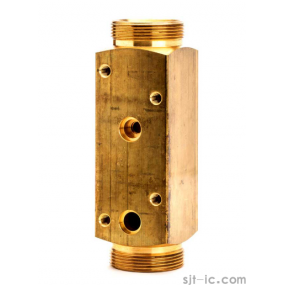
Common CNC machining materials include aluminum, stainless steel, titanium, brass, copper, engineering plastics, and other specialty alloys. Engineers select materials based on the part function, production volume, required precision, and budget.
Key CNC Machining Operations for Precision Parts
CNC precision machining uses different manufacturing processes depending on the part design and accuracy requirements.
CNC Turning
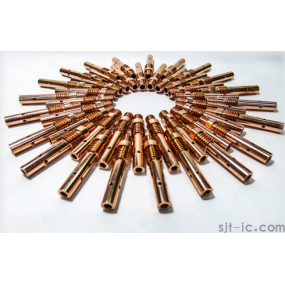
CNC turning is suitable for producing round or cylindrical components. The workpiece rotates while cutting tools remove material. It is commonly used for shafts, connectors, and precision mechanical parts.
CNC Milling
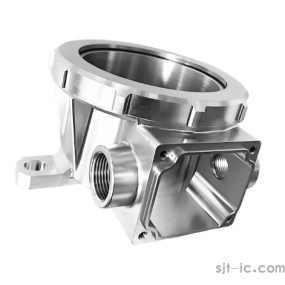
CNC milling uses rotating cutting tools to create complex shapes, slots, holes, and detailed surfaces. Multi-axis milling machines can manufacture parts with difficult geometries that are challenging to produce using traditional methods.
Grinding
Grinding is used when extremely smooth surfaces and high dimensional accuracy are required. It is often applied after other machining operations to achieve final precision.
EDM (Electrical Discharge Machining)
EDM is useful for machining hard materials and creating complicated features such as narrow slots or small holes. It provides excellent accuracy without applying large cutting forces to the workpiece.
During these operations, engineers carefully select cutting tools, cutting speeds, feed rates, and machining parameters. Proper optimization improves accuracy, extends tool life, and reduces production costs.
Challenges in CNC Precision Machining and How to Solve Them
Producing high-quality precision parts requires careful control of many factors. Small changes in machining conditions can affect final dimensions.
Handling Tool Wear in CNC Precision Machining
Tool wear can reduce machining accuracy and create inconsistent part quality. Handling tool wear in CNC precision machining requires regular tool inspection, proper cutting parameters, suitable tool materials, and timely tool replacement.
Experienced manufacturers monitor tool conditions during production to prevent unexpected defects and maintain stable machining performance.
Preventing Thermal Distortion
Heat generated during cutting can cause material expansion and dimensional changes. Manufacturers reduce thermal problems by controlling cutting conditions, using proper cooling methods, and selecting suitable machining strategies.
Maintaining Dimensional Stability
Precision parts must keep their designed dimensions after machining. Stable machine structures, controlled environments, accurate programming, and proper material treatment all help maintain dimensional consistency.
Post-Machining Processes for CNC Precision-Machined Parts
After machining, additional processes may be required to improve part performance. Post-machining processes for CNC precision-machined parts can enhance strength, durability, appearance, and functionality.
- Heat treatment: Improves mechanical properties such as hardness, strength, and fatigue resistance.
- Surface finishing: Processes such as polishing, anodizing, coating, or plating improve corrosion resistance, appearance, and surface performance.
- Deburring: Removes sharp edges and improves safety and assembly quality.
The correct post-machining process depends on the material and the working environment of the final product.
Quality Control in CNC Precision Part Manufacturing
Strict inspection is necessary to ensure every CNC precision part meets customer expectations. Quality control in CNC precision part manufacturing includes multiple inspection steps throughout production.
- In-process inspections: Machinists check dimensions during production to identify problems early.
- CMM measurements: Coordinate Measuring Machines verify complex dimensions with high accuracy.
- Material property verification: Material tests confirm strength, hardness, and other required properties.
- Final inspection: Completed parts are checked against drawings and customer specifications before delivery.
A reliable CNC machining partner focuses on preventing problems instead of only detecting defects at the end. This approach improves quality consistency and reduces production delays.
Choosing the Right CNC Precision Machining Partner
Selecting the right manufacturer is important for achieving the expected quality, cost, and delivery time. Customers should consider factors such as machining capability, quality systems, engineering support, material experience, and production capacity.
EMAR provides professional CNC precision machining services with experience in producing high-accuracy components for different industries. By combining advanced CNC equipment, skilled engineers, strict inspection processes, and customer-focused communication, EMAR helps customers develop reliable CNC Precision Machining Parts that meet demanding application requirements.
Whether the project requires complex geometries, tight tolerances, special materials, or consistent mass production quality, working with an experienced machining partner can reduce risks and improve overall product performance.