
CNC Precision Parts Manufacturing Factory: How to Choose a Reliable Partner for High-Quality Machined Parts
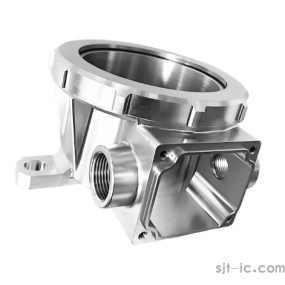
Choosing the right CNC Precision Parts Manufacturing Factory is an important decision for companies that need accurate, reliable, and cost-effective custom parts. Many customers worry about quality problems, unexpected costs, long delivery times, and whether a factory can handle complex designs. A professional CNC factory should not only produce parts but also provide engineering support, quality assurance, and efficient production solutions.
A trusted CNC precision parts manufacturer works closely with customers from the beginning of the project. By understanding the part’s purpose, working environment, required tolerances, production quantity, and material needs, the factory can create a machining plan that balances performance, cost, and manufacturing efficiency.
Working with Customers During the Design Phase
The design stage is the foundation of successful CNC precision parts manufacturing. Before production starts, an experienced factory communicates with customers to understand every detail of the part requirements.
Engineers review important factors, including:
- Part application: Understanding where and how the part will be used helps determine strength, durability, and precision requirements.
- Tolerance requirements: Critical dimensions and fitting areas must be clearly defined to ensure the final part works correctly.
- Material preferences: The selected material should match the part’s mechanical, environmental, and cost requirements.
- Production volume: Prototype, small-batch, and mass production projects require different machining strategies.
A professional factory can also review customer drawings and 3D models to identify possible manufacturing issues. Design improvements, such as changing unnecessary complex features or adjusting wall thickness, can reduce machining costs while maintaining part performance.
What to Look for When Choosing a CNC Precision Parts Manufacturing Factory
When choosing a CNC precision parts manufacturing factory, customers should evaluate more than just the quoted price. A low-cost supplier may create problems if it lacks proper equipment, experienced staff, or quality control systems.
A top CNC precision parts factory should have the following advantages:
Advanced CNC Equipment for High-Precision Machining
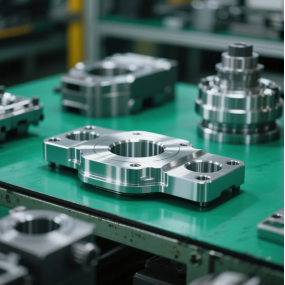
The equipment in a CNC precision parts factory directly affects machining accuracy, production speed, and part consistency. Modern factories use advanced CNC machines that can handle complex geometries and tight tolerances.
Common equipment includes:
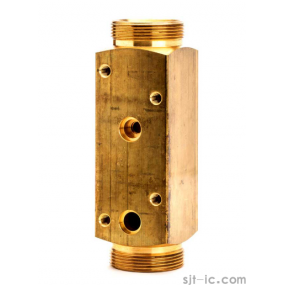
- CNC milling machines: Suitable for producing complex shapes, pockets, holes, and multi-surface features with high accuracy.
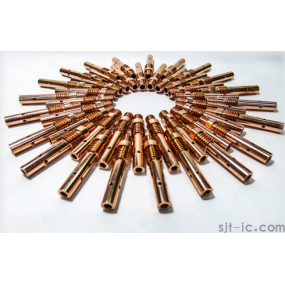
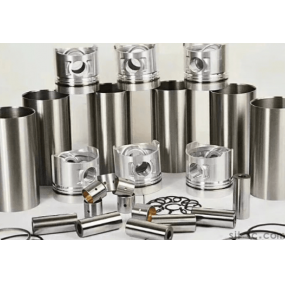
- CNC turning machines: Ideal for cylindrical components, shafts, and threaded parts.
- CNC grinding machines: Used for achieving extremely smooth surfaces and very tight dimensional accuracy.
- EDM machines: Useful for machining hard materials and creating detailed features that traditional cutting tools cannot easily produce.
Advanced CNC equipment allows factories to improve repeatability, reduce human errors, and maintain stable quality during large production runs.
Experienced Engineers and Skilled Technicians
High-quality CNC Machining depends on both technology and people. Skilled engineers analyze drawings, select suitable machining methods, and optimize production processes. Experienced technicians understand how to set up machines, adjust cutting conditions, and solve unexpected machining problems.
A professional team can help customers improve manufacturability, shorten production time, and avoid costly mistakes before machining begins.
Strong Quality Control System
Quality control in CNC precision parts factories is essential because even small errors can affect the performance of precision components. A reliable factory should have a complete inspection process from raw materials to finished products.
Important quality control steps include:
- Checking incoming materials to confirm specifications and material certificates.
- Performing in-process inspections during machining to detect problems early.
- Using precision measuring equipment such as coordinate measuring machines (CMM), micrometers, and optical inspection tools.
- Conducting final inspections before shipment.
- Maintaining production records for traceability and quality improvement.
Factories that follow international quality standards can provide customers with more confidence and stable product performance.
Material Selection for CNC Precision Parts
Material selection for CNC precision parts depends on the part’s working conditions, strength requirements, weight limits, and budget. Different materials provide different advantages.
Common Metal Materials
- Aluminum: Lightweight, corrosion-resistant, and easy to machine. It is widely used in aerospace, electronics, automotive, and industrial components.
- Steel: Provides high strength, durability, and wear resistance. It is suitable for mechanical parts that need strong load-bearing capability.
- Titanium: Offers excellent strength-to-weight ratio and corrosion resistance. It is often used in aerospace, medical, and high-performance applications.
Plastic Materials
- ABS: Provides good impact resistance and is suitable for housings and prototypes.
- PEEK: Offers excellent chemical resistance and high-temperature performance for demanding applications.
- Nylon: Provides good wear resistance and is commonly used for gears, bushings, and mechanical parts.
A skilled CNC factory helps customers choose the most suitable material by considering performance needs and production costs.
CNC Machining Operations and Process Optimization
A CNC precision parts manufacturing factory uses different machining methods depending on part design and material properties.
CNC Turning
CNC turning is mainly used for round parts. The workpiece rotates while cutting tools remove material. Proper cutting speed, feed rate, and depth of cut are selected based on the material and tool type to achieve accurate dimensions and good surface quality.
CNC Milling
CNC milling uses rotating cutting tools to create slots, holes, curves, and complex surfaces. Engineers optimize tool paths, cutting speed, feed rate, and cutting depth to improve efficiency while reducing tool stress.
Grinding
Grinding is used when very high accuracy and smooth surface finishes are required. Proper wheel selection and controlled machining parameters help achieve precise results without damaging the surface.
EDM Machining
Electrical discharge machining (EDM) uses controlled electrical sparks to remove material. It is especially useful for hardened metals and detailed features with difficult geometries.
Overcoming Common CNC Machining Challenges
Precision machining involves many challenges, especially when producing complex parts or large quantities. A reliable factory needs effective solutions to maintain accuracy and consistency.
Handling Thermal Distortion in CNC Precision Parts Manufacturing
Handling thermal distortion in CNC precision parts manufacturing is important because heat generated during cutting can change part dimensions. Factories reduce this risk by controlling cutting conditions, selecting suitable tools, improving coolant systems, and using stable machining strategies.
Reducing Tool Wear
Tool wear can affect surface quality and dimensional accuracy. Professional manufacturers reduce tool wear by selecting the correct cutting tools, optimizing cutting parameters, monitoring tool conditions, and replacing tools before quality problems occur.
Maintaining Consistent Quality in Large Production Runs
For high-volume manufacturing, consistency is critical. Automated inspection systems, standardized operating procedures, and regular machine maintenance help factories produce identical parts throughout the entire production process.
Post-Machining Services for Complete Solutions
A full-service CNC Precision Parts Manufacturing Factory may provide additional processes after machining to improve part performance and appearance.
- Heat treatment: Improves hardness, strength, and mechanical properties of metal parts.
- Surface coating: Provides corrosion protection, wear resistance, or improved appearance.
- Assembly services: Allows customers to receive completed products instead of separate components.
Offering these additional services reduces supply chain complexity and helps customers save time.
From Order Placement to Part Delivery
A professional CNC machining process usually follows several clear steps:
- Design review: Engineers communicate with customers, check drawings, and confirm specifications.
- Material preparation: The factory selects and verifies suitable materials.
- Process planning: Engineers choose machining methods, tools, and production parameters.
- CNC machining: Skilled operators manufacture parts using advanced CNC equipment.
- Inspection: Parts are measured and tested according to customer requirements.
- Post-processing: Additional treatments are completed if needed.
- Packaging and delivery: Finished parts are safely packed and shipped on schedule.
Why EMAR Is a Reliable CNC Precision Parts Manufacturing Factory
EMAR focuses on providing customers with dependable CNC precision machining solutions for different industries and applications. With advanced machining equipment, experienced engineers, and strict quality management, EMAR supports projects from initial design communication to final delivery.
The company understands that every customer has different requirements. By offering professional design support, flexible production capabilities, careful material selection, and complete inspection procedures, EMAR helps customers achieve high-quality precision parts while controlling cost and delivery time.
For businesses searching for a CNC Precision Parts Manufacturing Factory, selecting a partner with strong technical ability, reliable production management, and a customer-focused approach can make a major difference in product success.