CNC Turning of Spline Shafts: Process, Quality Control, and How to Choose a Reliable Supplier
Spline shafts are important mechanical parts used to transfer torque and movement between connected components. They are widely used in automotive systems, industrial machinery, automation equipment, and many other applications. Because spline shafts require accurate dimensions and strong surface quality, choosing the right machining method and supplier is very important.
CNC turning of spline shafts is a common manufacturing process that uses computer-controlled machines to produce shafts with high accuracy and consistent quality. This method helps manufacturers create complex shaft designs while reducing production errors and improving efficiency.
For companies that need stable quality, fast delivery, and reasonable costs, working with an experienced CNC Machining supplier can make a big difference. EMAR provides professional CNC turning services for spline shafts, supporting prototype development and large-volume production with reliable machining capabilities.
What Is the Process of CNC Turning of Spline Shafts?
The process of CNC turning of spline shafts uses CNC machines to rotate a metal workpiece while cutting tools remove material according to a programmed design. The process allows manufacturers to control shaft diameter, length, surface finish, and other important features.
A typical machining process includes the following steps:
- Drawing and requirement review:
The supplier checks the technical drawing, material requirements, spline dimensions, tolerances, and production quantity before machining begins.
- Material preparation:
Common materials include steel, stainless steel, alloy steel, and aluminum. The material choice depends on strength, wear resistance, and working conditions.
- CNC turning:
The CNC lathe machines the basic shaft shape, including the outer diameter, length, and other key features.
- Spline machining:
The spline teeth are produced using suitable machining methods based on the design requirements. Accurate control is needed to ensure proper connection with mating parts.
- Inspection and finishing:
The finished spline shaft is measured to confirm that it meets drawing specifications. Additional processes such as heat treatment or surface finishing may be applied when required.
Why Is CNC Turning Used for Spline Shafts?
Traditional machining methods may require more manual operations, which can increase production time and create quality differences between parts. CNC turning provides better repeatability and efficiency.
The main advantages include:
- High accuracy: CNC machines can maintain stable dimensions during production.
- Consistent quality: The same program can produce many identical spline shafts.
- Flexible customization: Different sizes, materials, and designs can be produced according to customer drawings.
- Lower production costs: Automation reduces unnecessary labor and improves production efficiency.
- Better production control: Digital programming helps reduce human errors.
How to Find a Reliable CNC Turning Supplier for Spline Shafts?
Finding a reliable machining partner is one of the most important steps for businesses that need spline shafts. A low price does not always mean a good supplier. Poor machining quality can lead to assembly problems, machine downtime, and higher long-term costs.
When choosing a supplier, consider the following factors:
1. Machining Experience
A supplier with experience in shaft machining understands common problems such as incorrect spline dimensions, poor surface finish, and inaccurate tolerances. Experienced manufacturers can provide better solutions during the design and production stages.
2. Equipment and Production Capability
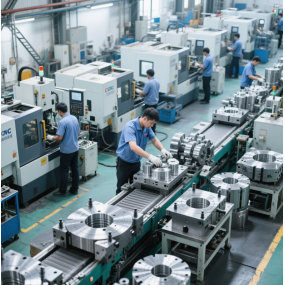
Check whether the supplier has modern CNC equipment, inspection tools, and production management systems. Reliable equipment is especially important for CNC turning of high-precision spline shafts, where small errors can affect the final assembly.
3. Quality Control System
A professional supplier should inspect raw materials, machining processes, and finished parts. Quality checks may include dimensional inspection, surface testing, and functional testing.
4. Customization Ability
Different industries often require different spline shaft designs. A good supplier should be able to manufacture parts based on customer drawings, samples, or specific application requirements.
5. Production Capacity
For customers requiring continuous supply, the supplier should have enough production capacity. A company experienced in reliable CNC turning of spline shafts for large-batch production can help maintain stable delivery schedules.
How to Ensure the Quality of CNC Turned Spline Shafts?
Quality control is essential because spline shafts directly affect mechanical performance. Even small dimensional errors may cause poor fitting, vibration, or reduced service life.
Customers should pay attention to these quality factors:
- Dimensional accuracy: The shaft size and spline profile should match the design requirements.
- Material quality: The correct material grade should be selected according to strength and operating conditions.
- Surface condition: Smooth surfaces help reduce wear and improve operation.
- Heat treatment: Some applications require additional hardness and durability.
- Inspection records: Quality reports provide confidence that parts meet specifications.
CNC Turning of Spline Shafts for Different Industries
Spline shafts are used in many industries because they provide reliable power transmission. The machining requirements can vary depending on the application.
CNC Turning of Spline Shafts for Automotive Applications
Automotive components require strong durability and precise fitting. CNC turning of spline shafts for automotive applications is commonly used for transmission systems, steering components, and other power transfer parts. Manufacturers must focus on accuracy, material strength, and long service life.
CNC Turning of Spline Shafts for Industrial Machinery
Industrial machines often operate under heavy loads. CNC turning of spline shafts for industrial machinery requires careful material selection and strict quality control to ensure stable operation in demanding environments.
How to Control the Cost of CNC Turning Spline Shafts?
Many customers want high quality while keeping machining costs under control. The best way to reduce costs is not simply choosing the cheapest supplier but improving the entire production process.
- Provide complete drawings and technical information to reduce communication delays.
- Select suitable materials instead of overusing expensive materials.
- Choose a supplier with efficient production planning and advanced equipment.
- Order suitable quantities to improve production efficiency.
- Work with a manufacturer that can provide both machining and quality support.
Professional manufacturers can offer cost-efficient CNC turning of spline shafts by optimizing machining processes, reducing waste, and improving production stability.
Why Choose EMAR for CNC Turning of Spline Shafts?
Choosing the right CNC machining partner helps businesses reduce risks and improve product reliability. EMAR offers CNC turning services for customized spline shafts, supporting customers from prototype production to large-batch manufacturing.
With experience in precision machining, EMAR focuses on:
- Manufacturing spline shafts based on customer drawings and specifications.
- Supporting different materials and customized designs.
- Maintaining stable machining quality through inspection processes.
- Providing practical solutions for different industries and production volumes.
Whether customers need prototypes, small quantities, or reliable CNC turning of spline shafts for large-batch production, selecting an experienced machining supplier can improve efficiency and reduce manufacturing risks.
Practical Example: Improving Spline Shaft Production Efficiency
A machinery manufacturer needed a large quantity of spline shafts for equipment assembly. Their previous supplier had inconsistent dimensions, causing assembly delays. After working with a professional CNC machining supplier, the company improved inspection control, reduced defective parts, and achieved more stable production.
This example shows that supplier selection is not only about machining a part. It is about finding a partner who understands quality requirements, production challenges, and long-term manufacturing goals.
Final Thoughts
CNC turning of spline shafts is an effective solution for producing accurate and reliable shaft components. The success of a project depends on choosing the right material, controlling machining quality, and working with an experienced supplier.
For companies looking for customized spline shafts, EMAR's CNC turning services provide professional support, flexible production options, and reliable quality control. A trusted machining partner can help ensure better performance, lower costs, and smoother production.