Hardware CNC Lathe Parts Processing and You Talk About Mold Hardware Parts
Hardware CNC Lathe Parts Processing and You Talk About Mold Hardware Parts is an important topic for manufacturers who need accurate, durable, and reliable mold components. In modern mold manufacturing, mold hardware parts are the foundation that supports the entire mold system. These parts control movement, positioning, shaping, and production accuracy.
Many manufacturers have questions about how mold hardware parts are processed, what quality requirements they need to meet, and why precision machining is so important. Hardware CNC lathe parts processing provides an effective solution by using computer-controlled machines to produce complex parts with high accuracy and stable quality.
For companies that require professional machining support, experienced manufacturers such as EMAR focus on advanced CNC lathe technology, strict inspection processes, and customized solutions to help customers produce high-quality mold hardware parts.
The Connection Between CNC Lathe Processing and Mold Hardware Parts
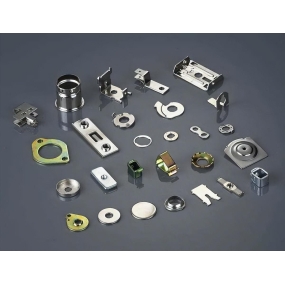
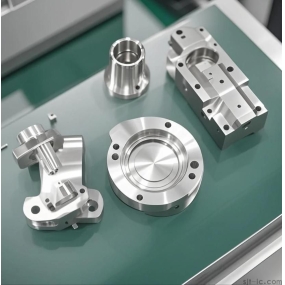
Mold hardware parts are key components used in injection molds, die-casting molds, stamping molds, and other industrial molds. They include mold cores, inserts, guide pins, bushings, ejector pins, screws, and other precision components.
The quality of these parts directly affects mold performance. If a mold hardware part has incorrect dimensions or poor surface quality, the entire mold may experience problems such as inaccurate assembly, shorter service life, production delays, or defective products.
Through CNC lathe processing for mold hardware, manufacturers can achieve accurate cutting, stable dimensions, and consistent production results. CNC lathes use programmed instructions to control cutting speed, tool movement, and machining steps, reducing human errors and improving processing efficiency.
Materials Selection for Mold Hardware CNC Lathe Parts
Common Materials Used for Mold Hardware Parts
Choosing the correct material is one of the most important steps in mold hardware production. Different molds work under different conditions, so the material must match the working environment.
- P20 steel: P20 is widely used for general-purpose molds because it has good machinability and balanced strength. It is suitable for many plastic injection mold components.
- H13 steel: H13 provides excellent heat resistance and toughness. It is commonly used in high-temperature applications such as die-casting molds, where parts must withstand repeated heating and cooling.
- Tool steels: Materials such as A2 tool steel offer high hardness and wear resistance, making them suitable for mold inserts, punches, and other parts exposed to heavy pressure.
- Alloy steels: Materials like 4140 alloy steel provide a good combination of strength, toughness, and machinability, making them suitable for structural mold components.
Why Material Selection Matters
The correct material improves the durability and performance of mold hardware parts. For example, a high-volume production mold requires materials with strong wear resistance because the mold may operate thousands or millions of times.
If a mold works in a high-temperature environment, choosing heat-resistant materials like H13 can prevent deformation and early failure. Proper material selection helps manufacturers reduce maintenance costs and improve production stability.
CNC Lathe Techniques for Mold Hardware
Turning and Facing Operations
Turning is one of the most common machining methods in CNC lathe manufacturing. During turning, the workpiece rotates while a cutting tool removes material to create accurate cylindrical shapes.
For example, when producing a mold core pin or guide pin, CNC turning can create the required outside diameter with precise control. The machine can adjust cutting depth, feed speed, and rotation speed to achieve stable results.
Facing is another important process. It creates a flat surface perpendicular to the part axis. For example, when producing a mold base component, facing ensures a smooth and flat connection surface so other mold parts can be installed correctly.
Drilling and Boring
Drilling creates holes in mold hardware parts, while boring improves the accuracy and finish of existing holes. These operations are important because many mold components require precise holes for assembly and movement.
For example, ejector pins need accurate holes inside a mold plate to move smoothly. Cooling channels in injection molds also require accurate drilling to maintain proper temperature control during production.
Thread Processing
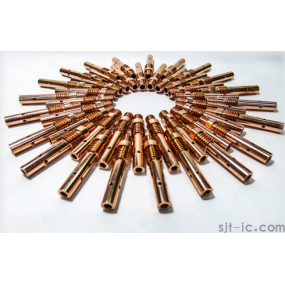
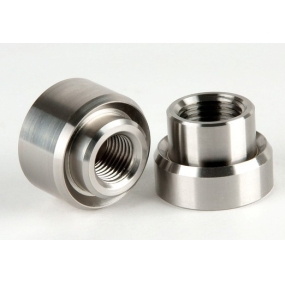
Threading is another important CNC lathe technique for mold hardware. Mold screws, threaded inserts, and connection parts require accurate threads to ensure secure assembly.
A CNC lathe can produce different thread types according to design requirements. Accurate threading prevents loose connections and improves the reliability of the mold structure.
Quality Standards of Mold Hardware Parts
Dimensional Accuracy Control
Precision is the most important quality requirement for mold hardware parts. Even a small size error can affect mold operation.
For example, if an ejector pin is slightly larger than the required size, it may become stuck during operation. If a mold insert is too small, gaps may appear and affect the final product quality.
Manufacturers use inspection tools such as calipers, micrometers, and coordinate measuring machines (CMM) to check dimensions and ensure parts meet design requirements.
Surface Finish Requirements
Surface finish also plays an important role in mold performance. A rough surface can increase friction, cause faster wear, and affect the appearance of molded products.
For example, a plastic injection mold with a smooth cavity surface can produce parts with better appearance and easier release. Processes such as grinding, polishing, and precision machining help improve surface quality.
Strict quality control of mold hardware parts ensures that every component can work reliably inside the mold system.
The Significance of Mold Hardware in Manufacturing
Improving Mold Performance and Production Efficiency
High-quality mold hardware parts help molds operate smoothly and efficiently. Accurate cores, cavities, and guide components allow machines to produce products faster with fewer defects.
For example, in plastic injection molding, precisely processed mold cores and cavities ensure that melted plastic fills the mold correctly, improving production speed and product consistency.
Extending Mold Service Life
Durable mold hardware parts can withstand repeated pressure, friction, and temperature changes. This reduces wear and lowers the need for frequent mold repairs or replacements.
A mold built with high-quality CNC processed components can maintain stable performance over a longer production period, helping manufacturers save time and costs.
Common Mold Hardware Parts Processed by CNC Lathe
Mold Cores and Cavities
Mold cores and cavities are among the most important components in mold manufacturing. The core forms the internal shape of the product, while the cavity creates the external shape.
For example, in a plastic bottle mold, the core creates the hollow inside area and the cavity creates the bottle's outer appearance. CNC lathe processing allows these parts to achieve accurate dimensions and smooth surfaces.
Guide Pins and Bushings
Guide pins and bushings help align different mold sections during operation. Their precise fit ensures that the upper and lower mold parts close correctly.
If these parts are inaccurate, the mold may become misaligned, causing product defects and reducing mold life.
Mold Inserts and Ejector Pins
Mold inserts create special product features, while ejector pins remove finished products from the mold.
CNC lathe machining produces these parts with the required accuracy so they can perform their functions smoothly during repeated production cycles.
EMAR's Expertise in Hardware CNC Lathe Parts Processing for Mold Hardware
Advanced CNC Lathe Equipment
EMAR has professional experience in hardware CNC lathe parts processing for mold hardware. By using advanced CNC Machining equipment, EMAR can handle complex turning, drilling, threading, and precision processing requirements.
Modern CNC machines allow stable production accuracy and help create mold hardware parts that meet strict manufacturing requirements. This is especially important for industries that require reliable molds and consistent product quality.
Professional Team and Strict Quality Management
In addition to advanced equipment, skilled technicians and engineers are essential for successful mold hardware production. EMAR focuses on process control, material understanding, machining experience, and inspection procedures.
Through careful quality management, each part is checked to ensure it meets customer specifications. This professional approach helps manufacturers obtain dependable mold hardware solutions and improve overall production performance.
Conclusion
Hardware CNC Lathe Parts Processing and You Talk About Mold Hardware Parts explains the close relationship between precision machining and modern mold manufacturing. From material selection and CNC machining techniques to quality inspection and final application, every step affects mold performance.
High-quality mold hardware parts improve production efficiency, product accuracy, and mold lifespan. With professional CNC machining capabilities and strict quality control, companies like EMAR help manufacturers create reliable mold components for different industrial applications.