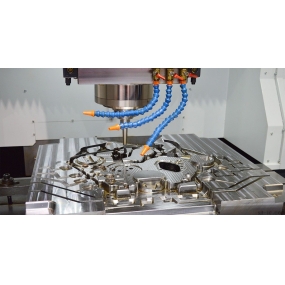
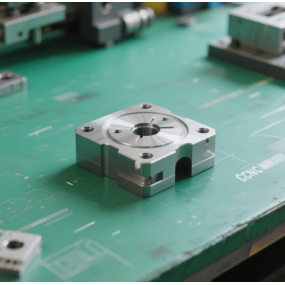
Manufacturer of CNC Machined Stainless Steel Parts: How to Choose the Right Partner
Finding a reliable Manufacturer of CNC Machined Stainless Steel Parts is important for companies that need strong, accurate, and long-lasting metal components. Stainless steel CNC parts are widely used in industries such as medical equipment, aerospace, automotive, electronics, food processing, and industrial machinery because they can work in demanding environments.
However, choosing the right manufacturer is not always easy. Many customers worry about inconsistent quality, high production costs, limited material choices, or whether a supplier can produce complex custom parts. A professional CNC Machining partner should provide not only precise manufacturing but also engineering support, material knowledge, quality control, and cost-effective solutions.
Why Stainless Steel Is a Popular Material for CNC Machined Parts
Stainless steel is one of the most commonly selected materials for CNC machining because it offers an excellent balance of strength, durability, and corrosion resistance. It can maintain performance in harsh environments where other materials may fail.
- Excellent corrosion resistance: Stainless steel contains chromium, which creates a protective oxide layer on the surface. This helps parts resist rust and chemical damage.
- High strength: Stainless steel parts can handle heavy loads, impact, and mechanical stress, making them suitable for demanding applications.
- Heat resistance: Many stainless steel grades can maintain their mechanical properties at high temperatures.
- Good surface finish: CNC machining can create smooth and precise surfaces suitable for functional and appearance-focused components.
- Long service life: Stainless steel parts usually require less maintenance and provide reliable performance over time.
Because of these advantages, companies often choose stainless steel when they need parts that must remain accurate and stable for years.
Important Stainless Steel Grades for CNC Machined Parts
Understanding stainless-steel grades for CNC parts helps customers select the right material for their application. Different grades provide different levels of corrosion resistance, hardness, machinability, and strength.
304 Stainless Steel
304 stainless steel is one of the most common grades for CNC machining. It provides good corrosion resistance, excellent formability, and reliable mechanical performance. It is often used for industrial components, brackets, housings, and general-purpose machine parts.
316 Stainless Steel
316 stainless steel offers better corrosion resistance than 304, especially in marine, chemical, and medical environments. It is a preferred choice when parts may contact saltwater, chemicals, or corrosive substances.
410 Stainless Steel
410 stainless steel is a heat-treatable martensitic grade with higher hardness and strength. It is suitable for components such as shafts, valves, and mechanical parts that require wear resistance.
A professional CNC manufacturer should understand the differences between these materials and recommend the best option based on the part's working environment, load requirements, and budget.
How to Choose a CNC Stainless Steel Parts Manufacturer
When choosing a CNC stainless-steel parts manufacturer, customers should evaluate several important factors instead of focusing only on price.
- Experience with stainless steel machining: Stainless steel is harder to machine than many aluminum alloys because it creates more cutting heat and can cause work-hardening. An experienced manufacturer knows how to control machining conditions.
- Available material options: A reliable supplier should support different stainless steel grades, including 304, 316, and 410, with proper material certificates.
- Machining capability: The manufacturer should handle simple parts as well as complex geometries, tight tolerances, thin walls, deep holes, and precision features.
- Engineering support: Good manufacturers help customers improve designs, reduce production difficulties, and lower unnecessary costs.
- Quality management system: Inspection equipment, production records, and quality standards are important signs of manufacturing reliability.
Companies such as EMAR provide CNC machining services focused on precision metal parts. With experience in stainless steel machining, advanced CNC equipment, and engineering support, EMAR helps customers produce customized stainless steel components for different industries.
The Manufacturing Process of CNC Machined Stainless Steel Parts
1. Understanding Customer Requirements
A professional manufacturer begins by reviewing the customer's technical requirements. Engineers evaluate:
- Part dimensions and 3D drawings
- Required tolerances and surface finishes
- Material grade selection
- Production quantity
- Final application and operating environment
This step ensures the manufacturer understands how the part will be used and selects the correct machining method.
2. Design Optimization for Manufacturability
Before production begins, engineers often perform a Design for Manufacturing (DFM) review. The goal is to make the part easier and more economical to produce without reducing performance.
Design optimization may include:
- Reducing unnecessary complex features
- Adjusting wall thickness
- Improving tool access
- Choosing suitable corner radii
- Reducing material waste
A well-optimized design can shorten machining time and reduce production costs.
Machining Operations in CNC Stainless Steel Parts
Machining operations in CNC stainless-steel parts require careful control because stainless steel has high strength and low thermal conductivity. Incorrect cutting conditions may cause tool wear, poor surface quality, or work-hardening.
CNC Milling
CNC milling uses rotating cutting tools to remove material and create features such as pockets, slots, holes, and complex surfaces.
Suitable tools: Carbide end mills with strong cutting edges are commonly used because stainless steel can quickly wear softer tools.
Recommended cutting conditions:
- Cutting speed: approximately 60–120 m/min depending on stainless steel grade and tool type
- Feed rate: approximately 0.05–0.2 mm per tooth
- Depth of cut: commonly 1–3 mm for stable machining
Using proper coolant and avoiding excessive tool pressure helps prevent work-hardening.
CNC Turning
CNC turning is used to manufacture round parts such as shafts, pins, and bushings. The workpiece rotates while a cutting tool removes material.
Suitable tools: Carbide inserts with proper chip breakers are commonly selected for stainless steel.
Recommended cutting conditions:
- Cutting speed: approximately 80–180 m/min
- Feed rate: approximately 0.1–0.3 mm/rev
- Depth of cut: around 1–4 mm depending on machining requirements
CNC Drilling
Drilling creates accurate holes for assembly and connection purposes. Stainless steel drilling requires stable tools and proper chip removal.
Suitable tools: Cobalt drills or carbide drills are commonly used.
Recommended cutting conditions:
- Cutting speed: approximately 15–50 m/min
- Feed rate: approximately 0.05–0.25 mm/rev
- Depth of cut: controlled according to hole diameter and tool strength
CNC Grinding
Grinding is used when very high surface accuracy or tight tolerances are required. It improves surface finish and dimensional precision.
Suitable tools: Abrasive grinding wheels designed for stainless steel.
Recommended parameters:
- Wheel speed: commonly 20–35 m/s
- Light cutting depth: usually 0.01–0.1 mm per pass
- Controlled feed rate to avoid overheating
Quality Control in CNC Machined Stainless Steel Parts
Quality control in CNC-machined stainless-steel parts is essential because customers depend on accurate dimensions and reliable performance.
In-Process Inspection
During production, manufacturers check critical dimensions and machining conditions. Common inspection methods include:
- Coordinate measuring machines (CMM)
- Calipers and micrometers
- Surface roughness testing
- Tool condition monitoring
Final Product Testing
Before shipment, finished parts may receive additional testing, including:
- Dimensional inspection: Confirms the part matches drawings and tolerance requirements.
- Hardness testing: Ensures the material has the required strength and wear resistance.
- Corrosion resistance testing: Verifies performance in environments where rust protection is important.
Professional manufacturers also follow relevant industry standards and provide inspection reports or material certificates when required.
How Manufacturers Improve Cost-Effectiveness
Cost-effectiveness in CNC stainless-steel parts production does not mean choosing the cheapest supplier. It means achieving the best balance between price, quality, and long-term performance.
Experienced manufacturers reduce costs through:
- Efficient production planning: Optimizing machining sequences reduces unnecessary machine time.
- Material utilization: Better nesting and cutting strategies reduce stainless steel waste.
- Automation: Modern CNC equipment improves consistency and reduces labor costs.
- Batch production advantages: Larger production volumes can reduce the cost per part.
- Design improvement: DFM suggestions help prevent expensive manufacturing problems.
A trusted supplier focuses on reducing total production costs while maintaining strict quality requirements.
Examples of CNC Stainless Steel Parts Manufacturers
Several well-known manufacturers provide CNC stainless steel machining services with different strengths:
- EMAR: Provides custom CNC machining solutions for stainless steel components, supporting precision manufacturing, complex part designs, and various industrial applications.
- Protolabs: Known for rapid CNC prototyping services and fast online quotation systems, making it suitable for customers needing quick development cycles.
- Xometry: Offers a large manufacturing network and supports different CNC machining requirements for prototype and production projects.
The best manufacturer depends on the customer's needs, including required precision, production volume, material requirements, and delivery expectations.
Conclusion: Selecting the Right CNC Stainless Steel Manufacturing Partner
A reliable Manufacturer of CNC Machined Stainless Steel Parts should provide more than machining equipment. The right partner combines stainless steel material knowledge, advanced CNC processes, strong quality control, engineering support, and cost management.
By evaluating machining experience, available stainless steel grades, customization ability, inspection methods, and production efficiency, customers can choose a supplier that delivers accurate, durable, and cost-effective stainless steel parts.
With professional CNC machining capabilities and experience in stainless steel components, manufacturers like EMAR help businesses turn complex designs into reliable finished products.