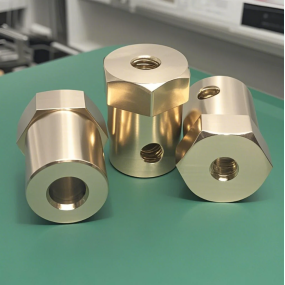

How to Carry Out CNC Machining of Parts: A Complete Step-by-Step Guide
CNC machining is widely used in industries such as aerospace, automotive, medical equipment, and electronics because it can produce accurate and reliable parts. Understanding How to carry out CNC machining of parts is important for manufacturers because every step, from design to inspection, affects the final quality, production cost, and delivery time.
Many companies face challenges when starting CNC part machining. They may not know how to prepare a suitable design, choose the correct material, create machining programs, set up machines properly, or control quality during production. A clear understanding of each step helps manufacturers avoid errors, reduce waste, and produce high-quality parts efficiently.
This article explains the complete CNC machining process in simple terms, including CNC part design basics, programming, material selection, machine setup, and quality control. It also introduces how professional manufacturers such as EMAR support customers with reliable CNC machining solutions.
1. CNC Part Design Basics: Creating the Right Foundation
The first step in CNC machining is creating a detailed design of the part. A good design provides the foundation for every following step, including programming, machining, and inspection.
CAD Design Creation
CNC part machining usually begins with a CAD (Computer-Aided Design) model. A CAD model is a digital drawing or 3D model that shows the exact shape and dimensions of the part.
For example, if a manufacturer needs to produce a custom mechanical bracket, engineers first create a CAD model of the bracket. The design includes important details such as:
- Overall part dimensions
- Hole locations and sizes
- Slots, curves, and other features
- Required tolerances and surface requirements
The CAD model works like a blueprint for the CNC machine. It tells engineers what the final part should look like and provides the information needed to create the machining program.
Design for Machinability Considerations
Good CNC design is not only about making a part look correct. Engineers also need to consider whether the part can be manufactured easily and efficiently.
Designers should consider factors such as:
- The material being used
- The available CNC machine capabilities
- The cutting tools required
- The complexity of part features
For example, when designing a stainless steel component, extremely deep narrow slots may require special tools and longer machining time. A simpler design that achieves the same function can reduce manufacturing difficulty and cost.
Proper design for machinability helps reduce production time, prevent machining problems, and improve overall efficiency.
2. Programming for CNC Part Machining: Turning Designs into Machine Instructions
After completing the CAD design, the next step is creating instructions that tell the CNC machine how to manufacture the part. This process is known as programming for CNC part machining.
CNC Programming Basics
A CNC program contains detailed commands that control machine movement, cutting speed, tool operation, and machining processes.
Common CNC programs include:
- G-codes: Commands that control tool movement and machining paths.
- M-codes: Commands that control machine functions, such as starting or stopping the spindle.
For example, G01 is commonly used for straight-line cutting movement, while M03 starts the spindle rotation in a clockwise direction.
Accurate programming is essential because even a small programming mistake can cause incorrect dimensions, damaged tools, or defective parts.
Using CAM Software
Most modern CNC manufacturers use CAM (Computer-Aided Manufacturing) software to simplify programming. CAM software converts the CAD model into machining instructions automatically.
The software can help engineers:
- Create toolpaths
- Select suitable cutting tools
- Set cutting speeds and feed rates
- Generate CNC programs
For example, when machining a part with multiple holes and curved surfaces, CAM software can calculate the best drilling and milling paths to improve accuracy and reduce machining time.
Using CAM software reduces manual programming errors and helps achieve more consistent CNC machining results.
3. Material Selection for CNC Parts: Choosing the Right Material
Choosing the correct material is one of the most important steps in CNC machining. The material affects machining difficulty, part performance, durability, and production cost. This makes material selection for CNC parts a key factor in successful manufacturing.
Considering Material Properties
Different applications require different material properties. Engineers usually consider:
- Strength
- Hardness
- Weight
- Heat resistance
- Corrosion resistance
- Machinability
For example, aerospace components often use aluminum alloys because they are lightweight and easy to machine. Titanium is selected for some high-performance applications because it provides excellent strength while keeping weight low.
For general industrial parts, materials such as stainless steel, carbon steel, brass, and engineering plastics may be suitable depending on the working environment.
Balancing Performance and Cost
The most expensive material is not always the best choice. Manufacturers need to balance technical requirements with production costs.
For example, a consumer product component may not need aerospace-grade materials. A lower-cost aluminum alloy or plastic material may provide enough strength while keeping the final product affordable.
Choosing the right material helps companies control costs while ensuring the part performs properly.
4. Machine Setup in CNC Part Machining: Preparing for Production
After programming and material selection, the CNC machine must be prepared. Proper machine setup in CNC part machining directly affects machining accuracy and production efficiency.
Machine Preparation
Before machining starts, operators check the CNC machine to ensure it is working correctly.
Important preparation steps include:
- Checking machine mechanical components
- Confirming spindle condition
- Checking lubrication systems
- Calibrating machine axes
- Testing CNC control functions
A machine that is not properly prepared may create problems such as inaccurate dimensions, vibration, or tool damage.
Tool and Workpiece Setup
The correct cutting tools must be selected based on the material and machining operation.
For example:
- Carbide cutting tools are often used for hard metals.
- High-speed steel tools may be suitable for softer materials.
- Special tools may be required for complex shapes.
The workpiece must also be fixed securely using fixtures, clamps, or vises. Proper alignment ensures that holes, surfaces, and other features are machined in the correct positions.
5. Quality Control in CNC Part Machining: Ensuring Reliable Results
Quality control is essential throughout the CNC machining process. Even a well-designed and programmed part can fail if inspection is not performed properly. Effective quality control in CNC part machining ensures that every finished part meets customer requirements.
In-Process Inspection
In-process inspection means checking parts during machining instead of waiting until production is complete.
Operators may use measuring tools such as:
- Micrometers
- Calipers
- Height gauges
- Other precision measuring equipment
For example, after machining a cylindrical component, an operator may measure its diameter. If the size is outside the required tolerance, adjustments can be made before continuing production.
This early inspection helps prevent large quantities of defective parts.
Final Inspection
After machining is finished, the final inspection checks whether the part meets all specifications.
Final inspection may include:
- Dimension measurement
- Surface finish checking
- Appearance inspection
- Functional testing
Advanced equipment such as coordinate measuring machines (CMMs) can measure complex parts with very high accuracy.
A complete inspection process gives customers confidence that the CNC parts will work correctly in their applications.
6. EMAR: Professional Support for CNC Part Machining
For companies that need reliable CNC machining services, choosing an experienced manufacturing partner can make the process easier and more efficient.
EMAR has professional experience in CNC part machining and understands every important stage of production, including design analysis, CNC programming, material selection, machine setup, and quality inspection.
Expertise in CNC Part Machining
EMAR's engineering team can support customers from the early design stage to final production. By reviewing part designs, selecting suitable machining methods, and optimizing manufacturing processes, EMAR helps customers achieve accurate and cost-effective results.
For example, when producing precision components for industries with strict requirements, EMAR can manage the complete process from CAD preparation to final inspection to ensure stable quality.
Quality-Assured Machining Services
EMAR focuses on quality control throughout the CNC machining process. Through careful machine setup, professional operators, and inspection procedures, EMAR provides CNC-machined parts that meet customer specifications.
Whether customers need prototypes, small-batch production, or complex precision components, EMAR's CNC machining capabilities help deliver reliable parts with consistent quality.
Conclusion
Understanding How to carry out CNC machining of parts helps manufacturers make better decisions and avoid common production problems. The process involves several important steps, including creating a suitable CAD design, preparing CNC programs, selecting the right materials, setting up machines correctly, and performing strict quality control.
Each stage affects the final accuracy, cost, and performance of the part. By working with an experienced CNC machining provider such as EMAR, companies can improve production efficiency and receive high-quality CNC parts that meet their application requirements.