
How to Solve the Deformation During the Processing of Titanium Alloy Parts?
Titanium alloys are widely used in aerospace, medical devices, automotive, and high-performance industrial equipment because they have excellent strength, corrosion resistance, and lightweight properties. However, titanium alloy parts are also difficult to machine. One of the biggest challenges during processing is deformation.
Deformation during titanium alloy machining can reduce dimensional accuracy, affect assembly performance, and increase manufacturing costs. The main reasons include high cutting temperatures, large cutting forces, residual stress, poor clamping methods, and unsuitable machining processes.
So, How to solve the deformation during the processing of titanium alloy parts? Manufacturers need to control the entire machining process, including machining parameters, cutting tools, fixturing methods, heat treatment, and machining sequence. The following solutions explain how to reduce deformation in practical production.
1. Optimize Machining Parameters for Titanium Alloy Deformation Control
Choosing the correct machining parameters is one of the most effective ways to reduce deformation. Titanium alloys have low thermal conductivity, meaning heat generated during cutting is difficult to transfer away. Excessive heat can soften the material and increase the risk of shape changes.
Control Cutting Speed and Feed Rate
The cutting speed and feed rate must be carefully selected according to the specific titanium alloy, cutting tool material, and part structure.
A cutting speed that is too high creates excessive heat in the cutting area. This heat can reduce material strength temporarily and cause deformation. However, an extremely low cutting speed may increase cutting forces and friction, which can also deform the part.
For example, when machining a titanium alloy aerospace component such as a turbine blade, reducing the cutting speed to a suitable range, such as approximately 30 - 60 m/min depending on the alloy and tool type, can help control heat generation. Adjusting the feed rate to around 0.05 - 0.15 mm/tooth can also balance cutting efficiency and machining stability.
Using suitable machining parameters for titanium alloy deformation helps reduce thermal stress and cutting force, improving dimensional accuracy.
Optimize Depth of Cut
The depth of cut directly affects cutting force. A large depth of cut removes more material quickly, but it also creates higher stress on the titanium alloy part.
For example, when machining a titanium alloy structural component for a medical device, a smaller depth of cut can be used during different stages:
- Rough machining: Use a depth of cut around 0.5 - 1 mm to remove material while controlling cutting force.
- Finish machining: Reduce the depth of cut to around 0.1 - 0.3 mm to achieve higher accuracy and minimize deformation.
This step-by-step material removal method keeps machining forces more stable and prevents sudden distortion.
2. Select Suitable Cutting Tools to Prevent Titanium Alloy Part Deformation
The cutting tool has a direct influence on heat generation, cutting force, and surface quality. Titanium alloys are known for their tendency to react with cutting tools, which can cause tool wear and increase machining stress.
Choose High-Performance Tool Materials
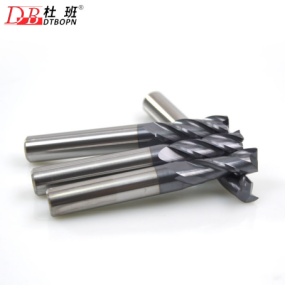
Carbide cutting tools with advanced coatings are commonly used for titanium alloy machining. Coatings such as titanium nitride (TiN) and titanium aluminum nitride (TiAlN) improve wear resistance and reduce friction.
For example, when turning a titanium alloy shaft, a TiAlN-coated carbide insert can handle high temperatures and cutting forces. The coating reduces material adhesion between the titanium alloy and the tool, lowering heat accumulation and reducing deformation risk.
Using suitable cutting tools to prevent titanium alloy part deformation can improve tool life and maintain stable machining conditions.
Optimize Tool Geometry
Tool shape also affects deformation. A sharp cutting edge with proper rake angle and clearance angle can reduce cutting resistance.
During titanium alloy milling, a tool with a positive rake angle helps cut the material more smoothly. This reduces the force transferred to the workpiece.
A suitable helix angle also improves chip removal. Efficient chip evacuation prevents chips from being cut repeatedly, which can create extra heat and stress on the part.
3. Improve Fixturing and Support Methods for Titanium Alloy Parts
Titanium alloy components often have thin walls, complex shapes, or large size-to-thickness ratios. These structures are easily affected by machining forces. Proper fixturing is essential for deformation control.
Design a Stable Fixturing System
A fixture should hold the part firmly while avoiding excessive clamping pressure. Too much clamping force can create internal stress and cause deformation after the part is removed.
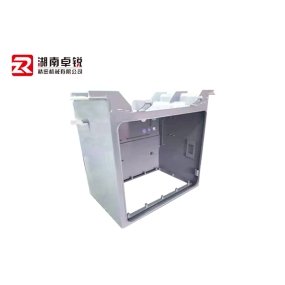
For example, when machining a thin-walled titanium alloy box-shaped component, a custom fixture that supports multiple edges and surfaces can distribute clamping forces evenly.
The fixture material can be high-strength steel or aluminum alloy depending on production requirements. The design should consider:
- The shape and thickness of the titanium alloy part.
- The cutting direction and expected machining forces.
- The areas that require support during machining.
Proper fixturing for titanium alloy part deformation control reduces vibration and prevents local stress concentration.
Add Auxiliary Supports When Necessary
Long and slender titanium alloy parts are especially sensitive to bending forces. Additional support devices can improve machining stability.
For example, when turning a long titanium alloy rod, using steady rests or follow rests along the length of the part can reduce deflection and maintain straightness during cutting.
4. Apply Heat Treatment and Stress-Relieving Processes
Titanium alloy deformation is not only caused by cutting forces. Internal stress inside the material can also affect machining accuracy. Heat treatment processes help control these stresses.
Pre-Machining Heat Treatment
Heat treatment before machining can improve material stability. Annealing is commonly used to reduce internal stress and make titanium alloys easier to process.
For titanium alloy parts used in high-stress applications, annealing at an appropriate temperature, often around 700 - 800°C depending on the alloy and application, can reduce internal stress and improve machinability.
This process makes the material less likely to move or change shape during cutting.
Post-Machining Stress Relief
After machining, residual stress may remain inside the titanium alloy part. Over time, these stresses can cause delayed deformation.
Stress-relieving treatment heats the part to a controlled temperature below the material's recrystallization temperature, holds it for a certain period, and then cools it slowly.
This process relaxes internal stress and improves long-term dimensional stability. Applying proper heat-treatment for titanium alloy deformation control is especially important for precision aerospace and medical components.
5. Arrange the Correct Machining Operation Order
The order of machining operations has a major effect on deformation. Removing too much material at one time or machining sensitive features too early can create uneven stress distribution.
Separate Roughing and Finishing Operations
Rough machining removes large amounts of material but usually creates higher heat and stress. Finishing operations should be performed separately with lower cutting forces.
For example, when machining a titanium alloy mold cavity:
- Perform rough milling first to remove most of the excess material.
- Allow the part to stabilize if necessary.
- Use finishing milling with a smaller depth of cut and lower feed rate.
This method improves final accuracy and reduces deformation caused by rough machining stress.
Machine Features in the Proper Sequence
The machining order of different features also affects part stability.
For a titanium alloy component containing multiple holes and slots, machining larger and more important features first can help distribute stress more evenly. Smaller features can then be processed after the main structure becomes stable.
Following the correct machining operation order for titanium alloy parts helps avoid distortion and improves production consistency.
Practical Experience in Titanium Alloy Part Processing
Reducing deformation in titanium alloy machining requires experience in material behavior, process planning, and quality control. A single solution is usually not enough. The best results come from combining optimized cutting parameters, suitable tools, stable fixtures, stress control methods, and a reasonable machining sequence.
Companies with professional titanium alloy machining experience, such as EMAR, focus on controlling deformation through process optimization, advanced machining equipment, and strict quality inspection. By analyzing part structure and application requirements before production, manufacturers can achieve accurate titanium alloy components while keeping machining costs under control.
Whether producing aerospace parts, medical components, or industrial precision parts, selecting the right deformation control strategy is the key to improving quality, reducing waste, and achieving reliable titanium alloy machining results.