What to Expect from a Precision Metal Stamping Factory
A precision metal stamping factory plays an important role in producing accurate and reliable metal parts for many industries, including automotive, electronics, medical equipment, aerospace, and industrial machinery. Choosing the right factory is not only about finding a supplier that can make parts. It is about finding a manufacturing partner that understands your design needs, maintains stable quality, and delivers products on time.
For companies looking for metal stamping solutions, understanding the factory’s production abilities, technology, quality management, customization services, and cost control methods can help them make better decisions. A professional precision metal stamping factory should provide complete support from design review to final production.
Understanding the Production Capabilities of Precision Metal Stamping Factories
The first thing customers should check is the production capabilities of precision metal stamping factories. A capable factory should have experience with different stamping processes and a wide range of metal materials.
Common metal stamping processes include:
- Progressive die stamping: A continuous process that uses multiple steps to create complex parts quickly and efficiently.
- Deep drawing: A method used to make cup-shaped or hollow metal components, such as housings and containers.
- Blanking: A process used to cut metal sheets into specific shapes.
- Bending and forming: Used to create angles, curves, and special shapes according to product designs.
- Fine stamping: Used for parts that require high accuracy and smooth edges.
A reliable factory should also work with different materials, such as stainless steel, aluminum, copper, brass, and carbon steel. Each material has different advantages. For example, aluminum is lightweight and corrosion-resistant, while stainless steel provides strength and durability.
Before choosing a supplier, customers should ask about the factory’s experience with similar products. For example, a factory producing electronic connectors should understand thin metal sheets and high-precision requirements, while an automotive supplier may need stronger materials and large-volume production abilities.
Quality Control in Precision Metal Stamping
High-quality metal parts require strict management during every production stage. Quality control in precision metal stamping ensures that every component meets customer requirements and performs correctly in real applications.
A professional precision metal stamping factory normally uses several inspection methods, including:
- Incoming material inspection to confirm metal quality before production.
- First article inspection to check the first completed part against drawings and specifications.
- In-process inspection during stamping to detect problems early.
- Final inspection before shipment to ensure finished parts meet requirements.
Advanced measurement tools, such as coordinate measuring machines (CMM), optical inspection equipment, and precision gauges, help factories check dimensions, shapes, and surface quality.
Customers should also consider whether the factory follows recognized quality management systems, such as ISO standards. These certifications show that the manufacturer has established procedures for controlling production quality.
Equipment and Technology in Precision Metal Stamping Factories
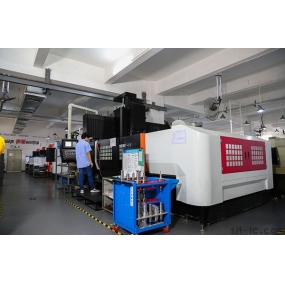
Modern manufacturing depends heavily on advanced equipment. The equipment in precision metal stamping factories directly affects production speed, accuracy, and product consistency.
A professional factory may use:
- High-speed stamping machines for efficient mass production.
- Precision stamping presses for complex and detailed parts.
- Automatic feeding systems to improve production stability.
- Computer-controlled equipment to reduce human errors.
- CAD/CAM systems for accurate product design and mold development.
CAD/CAM technology allows engineers to create digital designs, test production ideas, and improve tooling before manufacturing begins. This helps reduce development time and avoid unnecessary costs.
For example, when developing a small electronic metal bracket, engineers can use digital modeling to check the design, optimize the stamping process, and create a suitable mold before actual production starts.
Customization in Precision Metal Stamping
Every industry has different requirements, so customization is a key service provided by experienced manufacturers. Customization in precision metal stamping allows companies to receive parts designed specifically for their products.
A reliable factory can help customers with:
- Custom part design based on product requirements.
- Material selection according to strength, weight, and cost needs.
- Tooling and mold development.
- Surface treatments such as coating, polishing, or plating.
- Small-batch testing and large-scale production.
For example, a medical equipment company may need small stainless steel components with strict accuracy requirements. A professional stamping factory can adjust the material, tooling design, and inspection process to meet these special needs.
EMAR provides precision metal stamping services that support customized part development, helping customers turn design concepts into reliable metal components. With experience in manufacturing different metal parts, EMAR focuses on accurate production, stable quality, and solutions based on customer requirements.
Cost-Effectiveness of Precision Metal Stamping Factories
The cost-effectiveness of precision metal stamping factories is an important factor for businesses. A low price does not always mean the best value. A factory with better technology and quality control can help reduce long-term costs by preventing defects, delays, and production problems.
Factors that influence stamping costs include:
- Material type and quantity.
- Part complexity and design requirements.
- Tooling and mold costs.
- Production volume.
- Inspection and finishing requirements.
For large production orders, stamping can be highly cost-effective because automated processes reduce labor time and improve production efficiency. A good factory can also suggest design improvements that lower manufacturing costs without reducing product performance.
How to Choose the Right Precision Metal Stamping Factory
When selecting a manufacturing partner, companies should evaluate more than just the quotation. The following questions can help:
- Does the factory have experience producing similar metal parts?
- Can it handle the required materials and production volume?
- What quality inspection methods are used?
- Does it have modern stamping equipment and design technology?
- Can it provide customized solutions and technical support?
A factory visit, sample review, or discussion with engineers can provide a clearer understanding of the supplier’s real capabilities.
Conclusion
A dependable precision metal stamping factory should provide more than basic manufacturing. It should offer strong production capabilities, strict quality control, modern equipment, flexible customization, and reasonable cost management.
By choosing an experienced partner like EMAR, businesses can gain access to professional precision metal stamping solutions designed for accuracy, reliability, and long-term production success. Understanding what to expect from a stamping factory helps companies make smarter supplier decisions and achieve better product results.