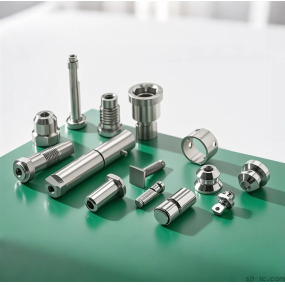
Premium CNC Machining Services for Precision Aluminum Parts
Precision aluminum parts are widely used in industries such as aerospace, electronics, automotive, medical equipment, and industrial machinery. These applications often require parts with strict tolerances, complex designs, lightweight structures, and reliable performance. Choosing the right machining partner is important because poor quality parts can lead to higher costs, production delays, and product failures.
Premium CNC Machining Services for Precision Aluminum Parts provide a reliable solution for companies that need accurate, consistent, and high-quality aluminum components. With advanced CNC equipment, skilled engineers, and strict quality control systems, professional machining providers can produce complex aluminum parts while controlling costs and reducing lead times.
Why Premium CNC Machining Services Are Important for Precision Aluminum Parts
Many customers worry about three main issues when ordering precision aluminum parts: quality, cost, and delivery time. Premium CNC machining services help solve these problems by combining advanced technology, professional experience, and efficient production methods.
One of the main advantages of premium CNC machining for precision aluminum parts is the ability to achieve very tight tolerances. CNC machines use computer-controlled programs to remove material with high accuracy. This allows manufacturers to create parts with precise dimensions that meet strict engineering requirements.
Premium CNC machining is also suitable for complex geometries. Aluminum parts may include thin walls, curved surfaces, deep cavities, fine holes, and complicated thread structures. Modern CNC milling and turning centers can handle these challenging designs while maintaining stable quality from one part to the next.
- High precision: CNC machining can produce accurate dimensions and repeatable results.
- Complex design capability: Multi-axis machining can create difficult shapes and detailed features.
- Consistent production quality: Automated processes reduce human errors and improve part-to-part consistency.
- Efficient production: Optimized machining processes help reduce waste and shorten delivery times.
Companies like EMAR focus on providing premium CNC machining services for precision aluminum parts by combining advanced manufacturing equipment, experienced engineers, and a customer-focused production approach. This helps customers receive parts that match their technical requirements and application needs.
Design Collaboration: The First Step Toward High-Quality Aluminum Parts
A successful CNC machining project begins with clear communication between the customer and the machining provider. During the design phase, engineers work with customers to understand how the aluminum part will be used and what performance requirements it must meet.
For example, aerospace parts may require extremely low weight and high strength. Electronics components may need excellent thermal management and precise assembly dimensions. Automotive parts may require durability, vibration resistance, and stable performance under different operating conditions.
The machining provider reviews important design factors, including:
- Part function and operating environment
- Required dimensions and tolerances
- Material requirements
- Surface finish expectations
- Production quantity and delivery schedule
Design reviews can identify possible machining difficulties before production begins. Engineers may suggest design improvements that reduce machining time, lower costs, and improve part performance without changing the intended function.
Aluminum Alloy Selection for Precision Part Machining
Choosing the correct aluminum material is essential because different aluminum alloys provide different levels of strength, corrosion resistance, and thermal performance. Proper aluminum alloy selection for precision part machining ensures that the finished component can handle its working environment.
- 6061 aluminum: A popular choice because it offers a good balance of strength, corrosion resistance, and machinability. It is commonly used for industrial parts, frames, and structural components.
- 7075 aluminum: Known for its high strength-to-weight ratio. It is often selected for aerospace and high-performance applications where strength is critical.
- 2024 aluminum: Provides excellent fatigue resistance and is commonly used in aerospace applications.
- 5052 aluminum: Offers strong corrosion resistance and good formability, making it suitable for applications exposed to moisture.
- 6063 aluminum: Provides good surface quality and thermal conductivity, making it useful for decorative and heat-related applications.
Professional CNC machining companies evaluate the application requirements before recommending the best aluminum alloy. Factors such as mechanical strength, weight limits, operating temperature, and environmental exposure all influence material selection.
Precision CNC Machining Operations for Aluminum Parts
Premium CNC machining services use different machining operations depending on the part design. Aluminum is easier to machine than many other metals, but achieving high precision still requires the correct tools, cutting speeds, and machining strategies.
CNC Milling
CNC milling is commonly used for aluminum parts with complex shapes, slots, pockets, and curved surfaces. Multi-axis milling machines allow cutting tools to reach different areas of the part while maintaining accuracy.
CNC Turning
CNC turning is suitable for cylindrical aluminum components such as shafts, rings, and precision housings. The workpiece rotates while cutting tools remove material to achieve accurate diameters and smooth surfaces.
Drilling and Hole Machining
Precision aluminum parts often require accurate holes for assembly. CNC drilling, boring, and tapping operations help create holes with correct positions, sizes, and thread quality.
Specialized Machining Operations
Some aluminum components require additional processes, such as reaming, engraving, surface contour machining, or five-axis machining. These operations help produce complex parts with detailed features.
Machining aluminum requires optimized cutting conditions. Experienced manufacturers adjust cutting parameters based on alloy type, tool material, and part design.
- Cutting speed: Aluminum usually allows higher cutting speeds because it is a soft and lightweight material.
- Feed rate: Proper feed rates help balance machining efficiency and surface quality.
- Depth of cut: Controlled cutting depth reduces tool stress and improves dimensional stability.
- Cutting tools: Sharp carbide tools with suitable coatings are commonly used for aluminum machining.
Solving Common Challenges in Precision Aluminum CNC Machining
Although aluminum is easy to machine, precision parts still require careful process control. Small mistakes can affect dimensions, appearance, and final performance.
Handling Burrs in Precision Aluminum Part CNC Machining
Handling burrs in precision aluminum part CNC machining is an important step in producing high-quality components. Burrs can affect assembly, safety, and surface appearance.
Manufacturers reduce burr formation by selecting suitable cutting tools, optimizing cutting parameters, improving tool paths, and using deburring processes after machining.
Preventing Warping and Deformation
Thin aluminum parts can deform because aluminum expands easily when exposed to heat or machining stress. Manufacturers prevent warping by using proper clamping methods, balanced machining strategies, and controlled cutting conditions.
Maintaining Tight Tolerances
Temperature control, machine calibration, tool inspection, and careful process monitoring are necessary to maintain strict tolerances throughout production.
Post-Machining Processes for Premium CNC-Machined Precision Aluminum Parts
After machining, additional treatments can improve the performance, appearance, and durability of aluminum components. The correct finishing process depends on the application requirements.
Post-machining processes for premium CNC-machined precision aluminum parts commonly include:
- Anodizing: Improves corrosion resistance, increases surface hardness, and provides attractive color options.
- Heat treatment: Enhances mechanical properties such as strength and hardness for specific aluminum alloys.
- Surface finishing: Processes such as polishing, brushing, and bead blasting improve appearance and surface texture.
- Coating: Additional protective coatings may be applied for special environmental requirements.
These finishing processes help aluminum parts achieve better performance in demanding applications while improving their visual quality.
Quality Control in Premium CNC-Machined Precision Aluminum Parts
Reliable quality control is essential for precision aluminum machining. Professional suppliers use inspection systems throughout the manufacturing process to ensure every part meets customer specifications.
Quality control in premium CNC-machined precision aluminum parts usually includes:
- Material inspection: Confirming that the selected aluminum alloy meets requirements.
- In-process inspection: Checking dimensions during machining to identify problems early.
- Final inspection: Using measuring equipment such as coordinate measuring machines (CMMs) to verify accuracy.
- Performance testing: Confirming that parts meet strength, surface, and functional requirements.
- Documentation control: Maintaining inspection records and production information for traceability.
Experienced CNC machining providers follow industry standards and quality management practices to deliver dependable aluminum parts for demanding industries.
Choosing the Right Premium CNC Machining Partner
Selecting a CNC machining supplier is not only about finding the lowest price. A reliable partner should provide a balance of quality, cost control, technical support, and delivery performance.
When evaluating a machining provider, customers should consider:
- Experience with precision aluminum machining
- Advanced CNC equipment and manufacturing capabilities
- Engineering support during the design stage
- Strong quality inspection systems
- Ability to meet production schedules
EMAR provides premium CNC machining services for precision aluminum parts with modern machining equipment, skilled technical teams, and a customer-oriented approach. By supporting customers from design review to final inspection, EMAR helps create reliable aluminum components for aerospace, electronics, automotive, and other advanced industries.
Conclusion
Premium CNC machining services are a strong choice for companies that need accurate, complex, and reliable aluminum parts. Through careful design collaboration, proper aluminum alloy selection, optimized machining processes, advanced finishing methods, and strict quality control, professional CNC machining providers can deliver parts that meet demanding application requirements.
For businesses seeking high-performance aluminum components, working with an experienced CNC machining partner can reduce production risks, control costs, and ensure consistent product quality.