Price of Metal Stamping and Stretching Parts: A Complete Guide to Cost Factors
The price of metal stamping and stretching parts is not fixed. It depends on many factors, including material selection, tooling requirements, production quantity, part design, surface finishing, and delivery time. Understanding these factors helps buyers make better decisions, control costs, and choose the right manufacturing partner.
For companies that need custom metal parts, working with an experienced supplier can reduce unnecessary expenses and improve product quality. EMAR provides professional metal stamping and stretching parts services, helping customers develop suitable solutions from design review to mass production.
What Determines the Price of Metal Stamping and Stretching Parts?
Metal stamping and stretching processes use pressure and specialized tools to form metal sheets into different shapes. The final price is usually calculated by combining several cost elements:
- Tooling and die manufacturing costs
- Raw material type and thickness
- Production quantity
- Part structure and complexity
- Surface treatment and delivery requirements
A simple metal bracket may cost only a few dollars per piece, while a complex deep-drawn metal housing with special finishing may cost much more. Knowing what affects the price allows customers to plan projects more effectively.
Tooling Cost in Metal Stamping and Stretching Parts Price
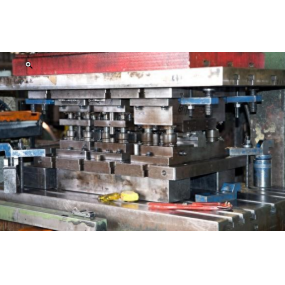
Tooling cost in metal stamping and stretching parts price is one of the most important factors, especially for custom products. The stamping die is created according to the shape, size, and production requirements of the part.
The general tooling cost range depends on the design:
- Simple stamping dies: Usually cost around $800 - $2,500. They are suitable for basic flat brackets, covers, and simple shapes.
- Medium-complexity dies: Often cost between $2,500 - $10,000 when parts require multiple forming steps.
- Complex progressive dies: Can cost $5,000 - $50,000 or more for high-volume production with multiple operations.
Although tooling creates an initial investment, the cost per part becomes lower when production volume increases. For example, a company producing 100,000 parts can spread the die cost across many units, reducing the average price.
Material Influence on Metal Stamping and Stretching Parts Price
Material influence on metal stamping and stretching parts price is another major cost factor. Different metals have different prices, forming abilities, and strength characteristics.
Common materials used for stamping and stretching parts include:
- Cold-rolled steel: Approximately $0.45 - $0.70 per pound. It is widely used because it is affordable and easy to process.
- Stainless steel 304: Around $1.80 - $2.40 per pound. It provides corrosion resistance and a clean appearance.
- Aluminum 5052: About $1.20 - $1.60 per pound. It is lightweight and suitable for industries that require weight reduction.
- Brass C260: Around $2.50 - $3.20 per pound. It is often used for decorative or electrical applications.
Material thickness also affects the price. Thicker sheets require more raw materials and stronger tooling, which may increase tooling costs by 20% - 40%.
How Production Volume Changes Metal Stamping and Stretching Parts Price
Production volume and metal stamping and stretching parts price have a close relationship. Higher quantities usually reduce the cost of each individual part because fixed costs are distributed across more products.
For example:
- For about 100 pieces, the price may be around $8.00 - $15.00 per piece.
- For around 5,000 pieces, the price may decrease to about $0.80 - $1.50 per piece.
- For more than 100,000 pieces, the price may drop to around $0.20 - $0.50 per piece.
Before starting production, customers should estimate future demand. Ordering too few parts may result in a higher unit price, while ordering a suitable quantity can improve cost efficiency.
Part Complexity and Metal Stamping and Stretching Parts Price
Part complexity and metal stamping and stretching parts price are directly connected. Simple shapes are easier to manufacture, while complex designs require more processes, longer production time, and stricter quality control.
Features that may increase costs include:
- Multiple holes or special hole positions
- Tight dimensional requirements
- Deep stretching shapes
- Special bending angles
- Additional processes such as deburring, tapping, welding, or assembly
For medium-volume production, each additional operation may add about $0.10 - $0.50 per part. A detailed design review before production can help identify unnecessary features and reduce costs.
Lead Time and Finishing in Metal Stamping and Stretching Parts Price
Lead time and finishing in metal stamping and stretching parts price also influence the final quotation. Faster delivery often requires additional production resources.
- Rush production: Orders completed within 5 - 7 days may increase the total cost by 25% - 50%.
- Powder coating: Usually adds about $0.30 - $0.80 per part.
- Zinc plating: May add around $0.15 - $0.35 per part.
- Anodizing: Can increase the cost by about $0.40 - $0.90 per part.
The required finish should match the product application. For example, outdoor equipment may need corrosion-resistant coating, while internal machine components may only need basic surface treatment.
Real-Life Example of Metal Stamping and Stretching Part Cost Calculation
Suppose a customer needs 10,000 stainless steel stamped housings. The project may include:
- Stainless steel 304 material
- A custom stamping die
- Several forming steps
- Powder coating after stamping
- Standard production delivery time
The initial tooling cost may be several thousand dollars, but because the order quantity is large, the final cost per housing becomes much lower compared with producing only a few hundred pieces.
This example shows why customers should evaluate the complete production plan instead of looking only at the single-piece price.
How to Reduce the Price of Metal Stamping and Stretching Parts
Customers can use several methods to control manufacturing costs:
- Choose suitable materials: Select materials that meet performance needs without unnecessary extra cost.
- Optimize part design: Reduce complex features that do not provide real value.
- Plan production quantities: Larger production runs usually reduce the average cost.
- Work with experienced manufacturers: Professional suppliers can suggest better processes and avoid production problems.
- Plan finishing requirements early: Early decisions help prevent unexpected costs.
Choosing a Reliable Metal Stamping and Stretching Parts Manufacturer
A reliable manufacturer should provide more than a low quotation. Buyers should check:
- Experience with similar metal stamping and stretching projects
- Advanced stamping machines and inspection equipment
- Professional engineering support
- Stable production capacity
- Clear communication and quality management procedures
EMAR offers customized metal stamping and stretching parts services with experience in product development, tooling, precision forming, and mass production. By working closely with customers, EMAR helps balance quality, delivery time, and manufacturing cost.
Conclusion
The price of metal stamping and stretching parts depends on many combined factors, including tooling cost, material choice, production volume, part complexity, finishing, and delivery requirements. A low price is not always the best choice. A professional manufacturer can help customers achieve the right balance between cost and quality.
By understanding these cost factors and cooperating with an experienced supplier like EMAR, businesses can make smarter purchasing decisions and develop reliable metal stamping and stretching products.