Talk About the Specific Content of Shenzhen Hardware Precision Parts Processing
Shenzhen hardware precision parts processing is an important part of modern manufacturing. As one of the major manufacturing centers in China, Shenzhen has strong production capabilities, advanced equipment, skilled engineers, and many experienced precision parts manufacturers. These advantages allow Shenzhen to provide high-quality hardware parts for global industries, including electronics, automobiles, medical equipment, aerospace, and industrial machinery.
Many companies outside China want to understand what Shenzhen hardware precision parts processing actually includes. They often have questions about the types of hardware parts in Shenzhen, the manufacturing methods used, how manufacturers control quality, and where these precision parts are applied. This article explains these key points with practical examples to help buyers and engineers better understand the industry.
Overview of Shenzhen Hardware Precision Parts Processing
Shenzhen is known as a major hardware and electronics manufacturing hub. Its complete industrial supply chain covers raw materials, precision machining, surface treatment, assembly, and quality testing. This makes Shenzhen an important region in the global supply chain for precision hardware components.
The development of Shenzhen's manufacturing industry is closely connected with industries such as consumer electronics, communication equipment, automation systems, and new energy products. Many manufacturers have invested in advanced equipment, including CNC machines, automatic stamping equipment, and precision testing systems.
Companies like EMAR have accumulated experience in precision hardware processing and understand the technical requirements of different industries. With professional manufacturing knowledge, suppliers in Shenzhen can support customers from prototype development to mass production.
Types of Hardware Precision Parts Processed in Shenzhen
The types of hardware parts in Shenzhen are very diverse. Different industries require different materials, structures, and precision levels. The main categories include electronic hardware parts, mechanical hardware parts, and precision fasteners.
Electronic Hardware Parts
Electronic hardware parts are one of the most common products processed in Shenzhen. Because Shenzhen has a strong electronics manufacturing industry, local precision processing companies produce many small and complex metal components.
Smartphone metal frames: Mobile phone frames require extremely accurate dimensions because they must perfectly match internal components such as the motherboard, battery, cameras, and screens. Small errors can affect assembly quality and product appearance.
Electronic connectors: Connectors need precise size control to ensure stable electrical connections. A small deviation in thickness or shape may cause poor contact or product failure.
Heat sinks and cooling parts: Electronic devices generate heat during operation. Precision-made aluminum or copper heat sinks help improve heat dissipation and maintain stable performance.
Shenzhen manufacturers also produce miniature hardware parts for wearable devices. Smartwatches, wireless earbuds, and other compact products require tiny screws, clips, brackets, and metal supports. These parts must be manufactured with high accuracy because there is limited space inside small devices.
Mechanical Hardware Parts
Shenzhen hardware precision processing also includes many mechanical components used in industrial equipment and vehicles.
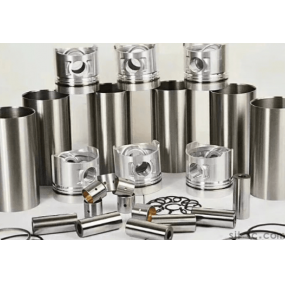
Engine parts: Components such as pistons require strict dimensional control. Proper size and tolerance help engines operate efficiently and reduce wear.
Gears: Precision gears need accurate tooth shapes to transfer power smoothly. Incorrect gear dimensions can create noise and reduce machine performance.
Shafts: Shafts must maintain correct diameter and straightness to ensure stable rotation in mechanical systems.
Precision Fasteners
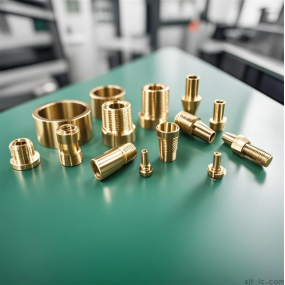
Precision fasteners are another important category of Shenzhen hardware parts. These include screws, bolts, nuts, and special fastening components used in machinery, electronics, and construction.
For example, high-rise buildings and industrial machines rely on precision bolts to create strong and reliable connections. In electronic products, tiny screws must have accurate threads so that components can be assembled securely without damaging delicate parts.
Manufacturing Processes in Shenzhen
The manufacturing processes in Shenzhen include many advanced methods. Manufacturers select different processes depending on the material, design complexity, production quantity, and accuracy requirements.
CNC Machining
CNC machining is one of the most widely used technologies in Shenzhen precision hardware processing. Computer-controlled machines can produce parts with high accuracy and repeatability.
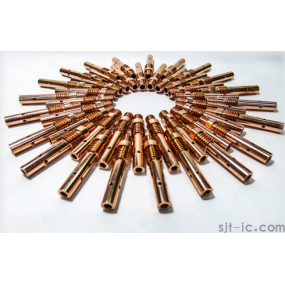
CNC turning: This process is mainly used for cylindrical parts. For example, a metal rod can be machined into a precision shaft with a specific diameter and length.
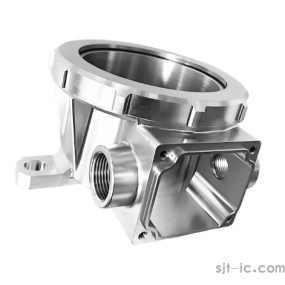
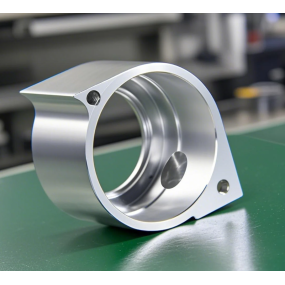
CNC milling: Milling creates complex shapes, grooves, holes, and surface features. For example, gear parts or aluminum housings often require CNC milling.
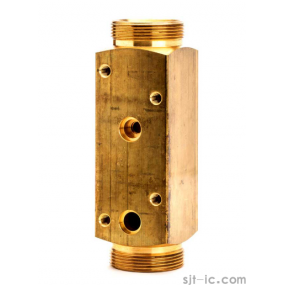
CNC drilling: Drilling creates accurate holes for assembly, mounting, or fluid channels in mechanical components.
Modern multi-axis CNC machines allow Shenzhen manufacturers to produce parts with complex curves and structures. For example, custom molds with complicated internal designs can be processed with high precision.
Stamping and Pressing
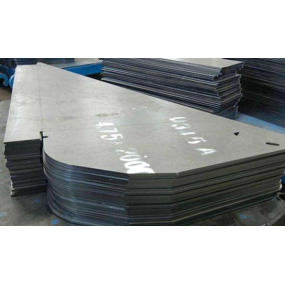
Stamping is widely used for producing large quantities of sheet metal parts. A metal sheet is placed between a punch and die, then pressed into the required shape.
Common examples include laptop metal shells, electronic equipment covers, brackets, and protective enclosures. This process provides fast production speed and consistent quality, making it suitable for mass manufacturing.
Pressing can also create bends and flanges in metal parts. These shapes improve strength and make assembly easier. For example, a metal bracket can be formed with a specific angle so it can fit accurately into a machine structure.
Electrical Discharge Machining (EDM)
EDM is used when manufacturers need to process very hard materials or create very detailed shapes. It uses electrical discharge energy to remove material with high accuracy.
For example, EDM is often used to manufacture stamping dies, precision molds, and hard alloy components. It can create small cavities and complex structures that are difficult to achieve through traditional cutting methods.
Quality Control in Shenzhen Parts
The quality control in Shenzhen parts is a key factor that determines whether precision components can meet customer requirements. Reliable manufacturers usually apply inspection throughout the entire production process instead of only checking the final products.
In-Process Inspection
During manufacturing, technicians regularly check dimensions and surface conditions.
Dimensional inspection: Tools such as calipers, micrometers, and coordinate measuring machines (CMM) are used to verify size accuracy. For example, when producing a shaft, workers check its diameter and length during different machining stages.
Surface finish inspection: Surface quality is important for both appearance and performance. Parts that require smooth movement, such as precision mechanical components, need careful surface testing.
Final Inspection and Functional Testing
After production is completed, manufacturers perform final inspections to confirm that every requirement has been achieved.
Dimensional verification: Finished parts are measured again to confirm they match engineering drawings.
Functional testing: Parts are tested according to their actual use. For example, electronic connectors are checked for conductivity, while gears are tested for smooth operation under load.
A strong quality control system reduces production problems, improves reliability, and helps customers maintain stable product quality.
Applications in Electronics in Shenzhen and Other Industries
The applications in electronics in Shenzhen are one of the most important areas for precision hardware parts. Shenzhen-made components are widely used in smartphones, laptops, smart home devices, communication equipment, and industrial electronics.
Consumer Electronics
Precision hardware parts support the structure and performance of everyday electronic products.
For example, smartphone frames, buttons, internal brackets, and connectors must all meet strict accuracy requirements. A well-made metal button provides a better user experience, while a precise connector ensures stable operation.
Industrial Electronics
Industrial control systems, automation equipment, and communication systems also depend on precision hardware components. Heat-dissipation parts, circuit connectors, and mechanical supports help these systems operate continuously and safely.
Automotive Applications of Shenzhen Parts
The automotive applications of Shenzhen parts continue to grow as vehicle technology develops. Precision components are used in engines, braking systems, electronic systems, and interior structures.
For example, precision-machined engine components influence vehicle power and fuel efficiency. High-quality brackets and connectors support vehicle electronics and improve safety.
Aerospace Applications
Aerospace products require extremely reliable components because safety is the highest priority. Precision parts from Shenzhen can be used in aircraft systems, navigation equipment, and mechanical structures where accuracy and durability are essential.
Medical Equipment and General Machinery
Medical devices also require high-precision hardware parts. Surgical tools, diagnostic equipment components, and medical instrument parts need strict control of size, material, and surface quality.
In general machinery, Shenzhen precision parts help equipment run smoothly. Construction machines, agricultural equipment, and factory automation systems all depend on reliable mechanical components.
Why Understanding Shenzhen Hardware Precision Parts Processing Matters
Understanding Shenzhen hardware precision parts processing helps companies choose suitable suppliers, control product quality, and reduce manufacturing risks. Different products require different materials, processes, and inspection standards.
A professional Shenzhen precision parts manufacturer does not only provide machining services. It also helps customers improve designs, select suitable manufacturing methods, solve production problems, and achieve stable mass production.
With its complete supply chain, advanced technology, and experienced manufacturers, Shenzhen continues to play an important role in global precision hardware manufacturing. Companies with strong technical experience, such as EMAR, can contribute valuable knowledge and manufacturing capability to customers looking for reliable precision parts solutions.